
Author name: Dr Kiran Chotaliya

Hair Transplant Cost Pune – Complete Cost Breakdown by Dr Kiran Chotaliya Hair Transplant Surgeon in Pune
Hair Transplant

How Much Does a Hair Transplant Really Cost? A Complete Breakdown

How Much Does a Hair Transplant Really Cost? A Complete Breakdown Table of Contents Hair transplant cost Pune varies from patient to patient depending on individual hair loss patterns and treatment requirements. It is determined after a detailed consultation where the surgeon evaluates factors such as donor area availability, number of grafts needed, and the chosen hair transplant technique. Hair loss can affect confidence, appearance, and self-esteem. As more people seek permanent hair restoration solutions, one of the most frequently asked questions is about the hair transplant cost Pune patients can expect. While many clinics advertise attractive packages, the actual cost depends on several factors, including the number of grafts required, the technique used, and the expertise of the surgeon. If you’re considering a hair transplant, understanding the complete cost breakdown can help you make an informed decision. A consultation with Dr Kiran Chotaliya hair transplant surgeon in Pune can provide a personalized assessment of your hair loss pattern, donor area quality, and the estimated hair transplant cost Pune based on your individual needs. Is Hair Transplant Permanent, Hair transplant growth after surgery, Hair Transplant In Pune, dr. kiran chotaliya clinic, Is Hair Transplant Permanent, Hair transplant growth after surgery, Hair Transplant In Pune, dr. kiran chotaliya clinic,Is Hair Transplant Permanent, Hair transplant growth after surgery, Hair Transplant In Pune, dr. kiran chotaliya clinic What Determines Hair Transplant Cost Pune? The hair transplant cost Pune varies from person to person because every hair restoration procedure is customized. Some individuals may only need a minor hairline correction, while others may require extensive coverage for advanced baldness. The major factors that influence the cost include: Number of grafts required Hair loss severity Hair transplant technique Surgeon’s experience Clinic facilities and technology Donor hair availability Average Hair Transplant Cost Pune The average hair transplant cost Pune generally ranges between ₹30,000 and ₹1,50,000 or more. Estimated Cost Based on Graft Requirement Grafts Required Approximate Cost 1000 Grafts ₹30,000 – ₹50,000 1500 Grafts ₹45,000 – ₹75,000 2000 Grafts ₹60,000 – ₹1,00,000 3000 Grafts ₹90,000 – ₹1,50,000 4000+ Grafts ₹1,20,000+ The final Hair Transplant Cost Pune depends on individual requirements and treatment goals. How Hair Loss Stage Affects Cost Patients with early-stage hair loss usually require fewer grafts, resulting in lower treatment costs. However, individuals experiencing advanced baldness may need larger graft sessions, increasing the overall cost of hair transplant in Pune. A consultation with a qualified specialist helps determine the exact number of grafts needed. FUE Hair Transplant Cost Pune Follicular Unit Extraction (FUE) is among the most preferred hair transplant methods today. It involves extracting individual follicular units and implanting them into the recipient area. The FUE hair transplant cost Pune is often higher than older techniques because it offers: Minimal scarring Faster recovery Natural-looking results High graft survival rates Patients seeking a modern and minimally invasive procedure often choose FUE for its excellent cosmetic outcomes. Talk To Our Hair Expert Why Surgeon Expertise Matters When comparing the Hair Transplant Price Pune, it’s important to look beyond the numbers. An experienced surgeon can design a natural hairline, ensure proper graft placement, and maximize graft survival. Choosing a highly skilled specialist may increase the upfront cost, but it can significantly improve the quality and longevity of the results. Additional Factors That Influence Hair Transplant Charges Pune Clinic Infrastructure Advanced clinics use modern equipment and maintain strict safety protocols. These facilities may charge more, but they often provide better patient experiences and outcomes. Donor Area Quality A healthy donor area allows surgeons to harvest quality grafts effectively. Complex donor management can affect the overall hair transplant cost Pune. Number of Sessions Required Some patients require multiple sessions to achieve their desired density, which can increase the total treatment cost. Should You Choose the Cheapest Hair Transplant? While many patients search for an affordable hair transplant Pune, selecting a clinic based solely on price can be risky. Low-cost procedures may result in: Poor graft survival Unnatural hairlines Overharvesting of donor hair Unsatisfactory density Need for corrective procedures Instead, focus on the surgeon’s experience, clinic reputation, and patient results. Is a Hair Transplant Worth the Cost? A hair transplant is often viewed as a long-term investment. Unlike temporary solutions such as wigs or concealers, transplanted hair grows naturally and can last for many years. When evaluating the Hair Transplant Cost Pune, consider the long-term benefits, including improved appearance, confidence, and convenience. Conclusion The hair transplant cost Pune depends on several factors, including graft requirements, hair loss severity, treatment technique, and surgeon expertise. While prices generally range from ₹30,000 to ₹1,50,000 or more, quality should always be prioritized over cost alone. Choosing an experienced surgeon and a reputable clinic can help ensure natural-looking, long-lasting results and maximize the value of your hair restoration investment. FAQ’s 1. What is the average Hair Transplant Cost Pune? Most procedures range between ₹30,000 and ₹1,50,000 depending on the number of grafts required and the technique used. 2. How is Hair Transplant Cost Pune calculated? The cost is usually determined by graft count, surgeon expertise, clinic facilities, and the complexity of the procedure. 3. What is the FUE Hair Transplant Cost Pune? The cost varies based on graft requirements, but FUE procedures generally cost more due to their precision and natural results. 4. Can I find an affordable Hair Transplant Pune? Yes, many reputable clinics offer affordable options without compromising safety and quality. However, choosing solely based on price is not recommended. 5. Is a hair transplant permanent? Yes. Transplanted hair follicles are typically resistant to hair loss and can provide long-lasting, natural-looking results. Most procedures range between ₹30,000 and ₹1,50,000 depending on the number of grafts required and the technique used. The cost is usually determined by graft count, surgeon expertise, clinic facilities, and the complexity of the procedure. The cost varies based on graft requirements, but FUE procedures generally cost more due to their precision and natural results. Yes, many reputable clinics offer affordable options without compromising safety and quality. However,


Hair Transplant Overharvesting Pune showing an overharvested donor area with visible thinning and patchy hair loss after excessive graft extraction.
Hair Transplant

The Risk of Overharvesting in Hair Transplant: What You Need to Know

The Risk of Overharvesting in Hair Transplant: What You Need to Know Table of Contents In India, just like globally, hair transplants are becoming increasingly popular. Many people suffering from hair loss dream of a natural-looking hairline and renewed confidence. However, it’s essential to understand that even with advancements, there are risks involved. One of the most significant and often irreversible complications is overharvesting of the donor area. This isn’t just a minor setback; it can permanently damage the very source of your new hair, leaving you in a worse situation than before. If you are researching hair transplant overharvesting, understanding this risk is crucial before undergoing any procedure. This post will help you understand what overharvesting means, how to spot it, what causes it, and most importantly, how you can prevent it. Consulting an experienced specialist such as Dr. Kiran Chotaliya hair transplant surgeon in Pune, can help ensure your donor area is managed safely while achieving natural-looking results. Is Hair Transplant Permanent, Hair transplant growth after surgery, Hair Transplant In Pune, dr. kiran chotaliya clinic, Is Hair Transplant Permanent, Hair transplant growth after surgery, Hair Transplant In Pune, dr. kiran chotaliya clinic,Is Hair Transplant Permanent, Hair transplant growth after surgery, Hair Transplant In Pune, dr. kiran chotaliya clinic Key Takeaways About Hair Transplant Overharvesting Donor area overharvesting in hair transplant occurs when excessive grafts are extracted from the donor region, leading to thinning and an unnatural appearance. Proper surgical planning is essential to maintain donor density and ensure balanced, natural-looking results. Overharvesting is Permanent: Once hair follicles are removed excessively, they are gone forever, leading to permanent thinning and scarring in the donor area. Surgeon’s Responsibility: The primary cause of overharvesting is the surgeon’s error, whether due to inexperience, overestimating graft needs, or trying to meet unrealistic expectations. Prevention is Crucial: The most effective way to avoid overharvesting is by choosing a highly skilled, certified, and reputable surgeon after thorough research. Know the Limits: A typical hair transplant session should generally not exceed 3,000 to 4,000 grafts for most individuals. Surgeons must respect your donor area’s finite capacity. Limited Solutions Post-Overharvesting: Once overharvested, medical treatments can only thicken existing hair, not replace lost follicles. Artificial hair or pigmentation are alternatives. What is Hair Transplant Overharvesting? Let’s start with the basics. When you get a hair transplant, the hair grafts or follicular units aren’t usually from another person. They are typically extracted from areas of your own body, known as donor areas. These areas are usually the back and sides of your head, which are resistant to balding, and sometimes even your beard. Overharvesting, simply put, happens when too many hair follicles are extracted from the donor area. Imagine it like a garden: if you pull out too many plants from one section, that section will look sparse and never fully recover. Similarly, when too many follicles are taken, it leads to a permanent reduction in density in that donor area. Unlike temporary hair shedding (called shock loss), the follicles removed during overharvesting are “gone forever” and will not grow back. This can have “disastrous effects on the area itself”. The Visible Signs: How Does an Overharvested Donor Area Look? Recognizing the signs of hair transplant overharvesting is extremely important. If you notice any of these signs, it is a clear red flag. Visible Thinning The most immediate and obvious sign is a noticeably thinner appearance in the donor area. It won’t look uniformly dense; instead, it can appear “patchy or ‘see-through’ under certain lighting”. This means the hair at the back or sides of your head, where grafts were taken, looks significantly sparser than before. A Moth-Eaten Look This is a very specific and unfortunate outcome. Instead of a natural, consistent density, the donor area might show small, circular bald spots where grafts were extracted too closely together. It resembles a fabric that has been eaten by moths, with uneven, noticeable gaps. Scarring While modern techniques like FUE (Follicular Unit Extraction) are known for being minimally invasive, excessive harvesting can lead to visible scarring. This scarring can manifest as a dotted or patterned appearance, making the donor area look unnatural even if you try to grow your hair longer to cover it. The long-term consequence of an overharvested donor area is severe: it becomes practically useless for follow-up procedures and results in the inability to get future hair transplant procedures. This means if you need another transplant later, you might not have enough donor hair left, leaving you with no options to address further hair loss. Talk To Our Hair Expert The Causes: Why Does Overharvesting Happen? It’s crucial to understand that the sole blame for overharvesting falls on your hair transplant surgeon, whether it happened by accident or by design. This isn’t something the patient causes. Overharvesting typically occurs when a surgeon overestimates the number of hair grafts needed for a successful hair transplant surgery. This leads them to make too many excisions and extracting too many follicular units (FUs), which, as we discussed, leaves the donor area thinning and patchy. Here are the main reasons why this unfortunate situation can arise: Inexperienced or Unqualified Surgeons A surgeon who lacks the necessary surgical skill and awareness required to identify the risks associated with overharvesting is a major contributing factor. Choosing an expert is paramount. Unrealistic Patient Expectations Sometimes, surgeons might try to overcompensate to meet a patient’s unrealistic expectations. Patients might demand an incredibly dense result in a single session, pushing the surgeon to take too many grafts. Curing in One Go Mentality Some surgeons might try to cure the patient’s hair loss in one go, without considering the need for future transplants. This short-sighted approach can deplete the donor area prematurely. Lack of Awareness of Previous Transplants If you’ve had a hair transplant before, and your current surgeon isn’t aware of how many excisions your previous surgeon made in the same donor area, they might unknowingly overharvest the already depleted area. This highlights the need for a thorough medical history. Prevention is Key: How to Avoid Overharvesting Prevention is truly the best (and only permanent) cure for overharvesting. Once the follicles are gone, they’re gone. Your choice of your surgeon is the most

Channel opening in hair transplant showing slit creation for graft placement in scalp
Hair Transplant

The Role of Channel Opening in Hair Transplant Success in Pune

The Role of Channel Opening in Hair Transplant Success Table of Contents During the channel opening in hair transplant, the surgeon creates precise micro-incisions in the recipient area according to the planned hairline and natural hair growth pattern. This stage is closely followed by the hair graft implantation process, where grafts are carefully placed into the created channels with accurate angle, depth, and direction to ensure natural-looking density and long-lasting results. Hair transplantation has indeed come a long way. The journey from older, more invasive methods to today’s high-precision procedures has made it possible to achieve more natural and long-lasting results than ever before. At the core of this transformation lies a critical step: channel opening. This stage is profoundly important, as it dictates the density, direction, and naturalness of your new hair. For patients seeking Hair Transplant Success in Pune, slit making in hair transplant (channel opening) plays a vital role in ensuring that transplanted follicles grow in a way that closely mimics natural hair patterns. Many experts even consider this phase to be the true artistry of hair transplant surgery. Is Hair Transplant Permanent, Hair transplant growth after surgery, Hair Transplant In Pune, dr. kiran chotaliya clinic, Is Hair Transplant Permanent, Hair transplant growth after surgery, Hair Transplant In Pune, dr. kiran chotaliya clinic,Is Hair Transplant Permanent, Hair transplant growth after surgery, Hair Transplant In Pune, dr. kiran chotaliya clinic Key Takeaways for Hair Transplant Success in Pune Hair transplant results natural look depends on precise planning, proper channel opening, and expert graft placement techniques. These factors ensure balanced density, correct direction, and long-lasting natural growth. Channel Opening is Critical: This precise step dictates the density, direction, and naturalness of new hair growth. Advanced Tools Enhance Precision: Specialized blades, crafted from precious materials, create smaller, V-shaped incisions with millimeter-level precision, leading to higher density and less trauma. Faster, More Comfortable Recovery: Smaller incisions result in less bleeding, swelling, and scabbing, allowing for a quicker return to daily activities. High Follicle Survival Rate: Precise channel creation and secure placement improve the chances of transplanted follicles thriving. Dr. Kiran Chotaliya’s Expertise: As a leading expert, Dr. Kiran Chotaliya offers advanced FUE and FUT techniques, personalized treatment plans, and comprehensive patient care, ensuring natural and lasting results. Permanent Results: Transplanted hair follicles are generally resistant to the hormones causing balding, providing permanent hair restoration. Understanding a Key Step: The Artistry of Channel Opening The success of a modern hair transplant hinges significantly on the meticulousness of channel opening. Unlike traditional steel blades, advanced specialized blades, often crafted from precious minerals, create micro-incisions in the recipient area that are significantly smaller and more precise. This precision minimizes trauma to the surrounding tissue, which is a crucial factor in the procedure’s success. These state-of-the-art tools enable millimeter-level precision, which is a significant leap forward in the field. Studies have shown that techniques utilizing these advanced blades lead to a higher graft success rate and faster hair growth, primarily due to the reduced trauma inflicted on the surrounding tissue. The specialized blades are much thinner and sharper than their steel counterparts, allowing the surgeon to create finer, V-shaped incisions. This is a key differentiator from the U-shaped incisions typically made by steel blades. The specific V-shape, combined with the extreme precision, facilitates superior follicular density. The Advanced Hair Transplant Process: A Step-by-Step Overview The process of an advanced hair transplant in Pune is a carefully orchestrated sequence designed for optimal results: Step 1: Follicle Extraction Healthy hair follicles are meticulously extracted one by one from the donor area, typically located at the back of the scalp, using a precise micromotor. This ensures minimal impact on the donor site. Step 2: Storage and Preservation The extracted follicles are then carefully stored in a specialized solution. This solution is crucial for maintaining their vitality and ensuring they remain viable before implantation. Step 3: Precise Channel Creation This is where the artistry and advanced technology truly shine. Using the specialized blades, the surgeon opens micro-channels in the recipient area. During this critical step, the surgeon precisely controls the density, exact direction, angle, and depth of each incision for the new hair. This meticulous control is essential because an incorrect angle can lead to unnatural-looking hair growth. The V-shape of these advanced blades also allows follicles to be seated more securely, significantly increasing the follicle survival rate and overall hair density. Step 4: Follicle Implantation Each individual follicle is then carefully implanted into the newly created channels. This step ensures that each follicle attaches correctly and begins its new growth cycle in its permanent position. Step 5: Recovery and Growth Following the implantation, the transplanted area recovers quickly. Within a few months, the new hair begins to grow naturally, gradually leading to a fuller, denser head of hair. Key Advantages of Advanced Hair Transplant Techniques The advantages of utilizing advanced hair transplant in Pune, particularly those incorporating specialized blades, are numerous and impactful: Enhanced Precision and Naturalness Millimeter-level precision and the ability to create V-shaped incisions contribute directly to achieving higher hair density and remarkably natural-looking results. Minimized Tissue Trauma and Faster Healing The smaller, more precise incisions significantly reduce trauma to the scalp. This translates to less bleeding, reduced swelling, and a notable decrease in post-operative scabbing. Consequently, patients experience a faster and more comfortable healing process. Increased Follicle Survival Rate The secure placement of follicles into the precisely crafted V-shaped channels dramatically improves their chances of survival and successful integration into the scalp. Reduced Risk of Complications The smooth, often antibacterial surface of specialized blades minimizes the risk of infection and contributes to a more comfortable recovery experience for the patient. Quicker Return to Daily Activities Thanks to the efficient recovery, most patients can return to their normal daily activities much sooner compared to traditional hair transplant methods. Talk To Our Hair Expert Expert Care in Hair Restoration: The Approach of Dr. Kiran Chotaliya While technology provides the tools, the surgeon’s skill and experience are equally, if not more, critical to the

Norwood Hair Loss Scale Pune showing Norwood Scale 1 hairline
Hair Loss

Understanding the Norwood Hair Loss Scale Pune: What Does Norwood Scale 1 Mean for You?

Understanding the Norwood Hair Loss Scale Pune: What Does Norwood Scale 1 Mean for You? Table of Contents   Hair loss is a common concern among men, and one of the most widely used systems for measuring male pattern baldness is the norwood hair loss scale. If you have recently noticed slight changes in your hairline, you may be wondering whether it is normal or an early sign of hair loss. Understanding the norwood hair loss scale Pune can help you identify the stage of hair loss you are experiencing and determine whether treatment may be beneficial. In this article, we will explain what Norwood Scale 1 means, how it differs from other stages, and when you should consider consulting a hair restoration specialist. Is Hair Transplant Permanent, Hair transplant growth after surgery, Hair Transplant In Pune, dr. kiran chotaliya clinic, Is Hair Transplant Permanent, Hair transplant growth after surgery, Hair Transplant In Pune, dr. kiran chotaliya clinic,Is Hair Transplant Permanent, Hair transplant growth after surgery, Hair Transplant In Pune, dr. kiran chotaliya clinic What Is the Norwood Hair Loss Scale? The Norwood hair loss scale, also known as the Norwood-Hamilton Scale, is a classification system used to measure the progression of male pattern baldness. It ranges from Stage 1 to Stage 7, with Stage 1 representing minimal or no hair loss and Stage 7 indicating advanced baldness. When discussing Understanding the Norwood hair loss scale Pune, it is important to recognize that the scale helps doctors assess hair loss patterns and recommend appropriate treatment options based on the severity of the condition. What Does Norwood Scale 1 Mean? Norwood Scale 1 is considered the earliest stage on the hair loss scale. At this stage, there is little to no visible hair loss. The hairline remains intact and typically maintains its natural shape without significant recession. Characteristics of Norwood Scale 1 include: A full and natural hairline No noticeable thinning on the crown Minimal or no recession at the temples Healthy hair density across the scalp Many men at this stage do not require any medical intervention. However, understanding your hairline and monitoring changes over time can be beneficial, especially if you have a family history of baldness. Is Norwood Scale 1 Normal? Yes, Norwood Scale 1 is generally considered a normal and healthy hairline. Most young men and adults with no signs of male pattern baldness fall into this category. While some individuals worry about minor variations in their hairline, not every change indicates hair loss. Genetics, facial structure, and natural hairline shape can all influence how your hairline appears. When discussing Understanding the Norwood Hair Loss Scale Pune, it is essential to understand that Norwood Scale 1 does not necessarily mean you will experience future hair loss. However, regular monitoring can help detect early changes if they occur. Talk To Our Hair Expert How Is Norwood Scale 1 Different from Norwood Scale 2? One of the most common questions patients ask is how Norwood Scale 1 differs from Stage 2. Norwood Scale 1 Full hairline No significant recession No visible thinning Norwood Scale 2 Slight recession at the temples Formation of a mature hairline Early signs of male pattern baldness may begin The transition from Stage 1 to Stage 2 can be subtle. This is why understanding the Norwood Hair Loss Treatment Pune is important for identifying early changes before significant hair loss occurs. Can Hair Loss Be Prevented at Norwood Scale 1? Although Norwood Scale 1 represents minimal hair loss, maintaining healthy hair habits can support long-term hair health. Some preventive measures include: Following a balanced diet rich in vitamins and minerals Managing stress levels Avoiding excessive heat and harsh hair treatments Using dermatologist-recommended hair care products Seeking professional evaluation if you notice unusual shedding Early awareness plays a key role in preserving hair density and identifying potential issues before they progress. Can a Hair Transplant Help at Norwood Scale 2? Most patients at Norwood Scale 2 do not immediately require a hair transplant. Since hair loss is still in its early stages, doctors typically focus on preserving existing hair through medical and regenerative treatments. However, individuals with significant temple recession or specific cosmetic concerns may be evaluated for hair restoration procedures after a thorough consultation. A personalized assessment is essential to determine the most suitable treatment approach. When Should You Consult a Hair Specialist? If you are unsure whether your hairline is changing or if you have a family history of baldness, consulting a hair restoration expert can provide clarity. A specialist can: Evaluate your scalp and hair density Compare current hairline patterns with previous photographs Identify early signs of male pattern baldness Recommend preventive treatments if necessary Many patients seeking information about Understanding the Norwood Hair Loss Scale Pune choose to undergo a professional assessment with a hair restoration specialist in Pune for peace of mind and personalized guidance. Treatment Options for Early Hair Loss Most individuals with Norwood Scale 1 do not require treatment. However, if early hair thinning is detected, your doctor may recommend: Medical therapies to support hair growth Nutritional guidance Scalp health treatments Preventive hair restoration plans Early intervention often provides better long-term outcomes compared to waiting until hair loss becomes more advanced. Conclusion of male pattern baldness and make informed decisions about your hair health. Norwood Scale 1 represents a healthy hairline with little to no visible hair loss, making it the ideal stage for monitoring and prevention. If you notice changes in your hairline, increased shedding, or have concerns about future hair loss, consulting an experienced hair restoration specialist can help you understand your options and develop a personalized treatment plan. Early awareness and professional guidance are often the best ways to maintain healthy, natural-looking hair for years to come. FAQ’s What is Norwood 1 in real life? Norwood 1 represents a full, natural hairline with no visible recession or thinning. It is simply the baseline stage of the Norwood scale, showing healthy hair without signs of male

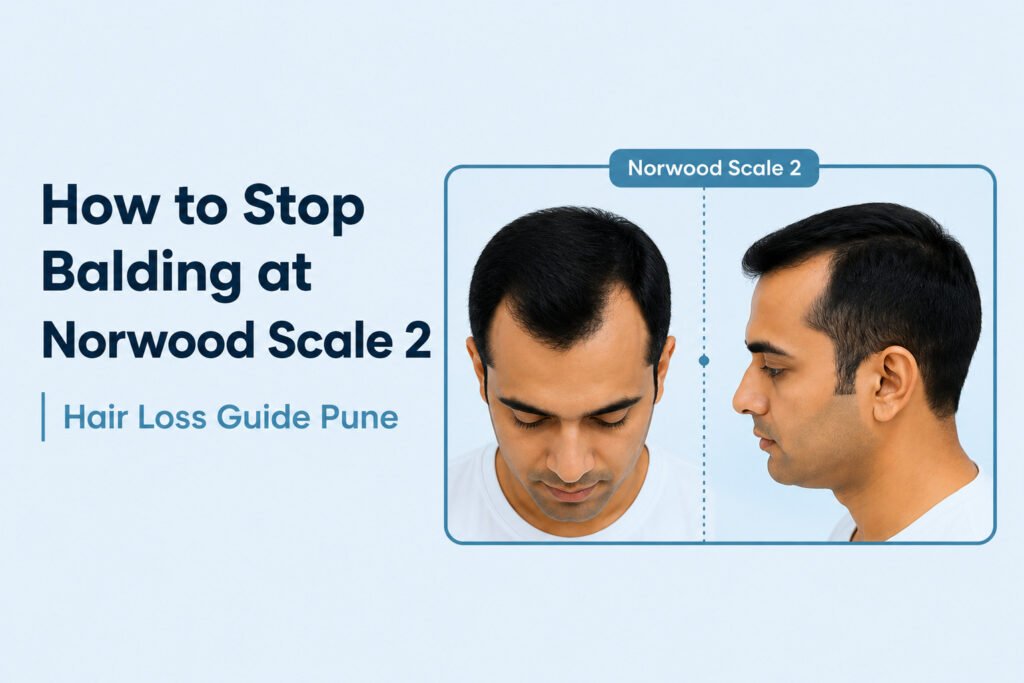
How to Stop Balding at Norwood Scale 2 – Early Hair Loss Guide Pune Showing Receding Hairline
Hair Loss

How to Stop Balding at the Earliest Stage: A Complete Guide to Norwood Scale 2

How to Stop Balding at Norwood Scale 2 | Hair Loss Guide Pune Table of Contents Norwood Scale 2 hair loss treatment in Pune focuses on identifying early signs of male pattern baldness and providing personalized solutions to slow hair loss progression. Early diagnosis and timely treatment can help preserve existing hair and support healthier, long-term hair growth. Hair loss often starts subtly. A slightly receding hairline, thinning around the temples, or a change in your hair’s density may seem insignificant at first. However, these early signs can indicate the beginning of male pattern baldness. If you’ve noticed these changes, understanding Norwood Scale 2 is essential for taking action before hair loss progresses further. This hair loss guide Pune explains what Norwood Scale 2 means, how to recognize the signs, and the treatment options available to help preserve your hair and confidence. Is Hair Transplant Permanent, Hair transplant growth after surgery, Hair Transplant In Pune, dr. kiran chotaliya clinic, Is Hair Transplant Permanent, Hair transplant growth after surgery, Hair Transplant In Pune, dr. kiran chotaliya clinic,Is Hair Transplant Permanent, Hair transplant growth after surgery, Hair Transplant In Pune, dr. kiran chotaliya clinic What Is Norwood Scale 2? The Norwood Scale is the most widely used classification system for male pattern baldness. It measures the progression of hair loss from mild recession to advanced baldness. At Norwood Scale 2, the hairline begins to recede slightly around the temples, creating a subtle M-shaped appearance. While some men naturally develop a mature hairline as they age, noticeable temple recession may indicate the early stages of androgenetic alopecia, commonly known as male pattern baldness. According to this Hair Loss Guide Pune, Norwood Scale 2 is one of the best stages to begin treatment because hair follicles are still active and responsive to medical interventions. Signs You May Be at Norwood Scale 2 Recognizing hair loss early can make a significant difference in treatment outcomes. Common signs include: Mild recession at both temples A developing M-shaped hairline Increased hair shedding during washing or combing Thinner hair near the front of the scalp Family history of male pattern baldness Many men dismiss these signs as normal aging. However, this Hair Loss Guide Pune recommends consulting a hair restoration specialist if you notice progressive changes over several months. Why Early Treatment Matters Hair follicles gradually shrink during the balding process. Once a follicle becomes inactive, regrowing hair becomes much more difficult. Treating Norwood Scale 2 early offers several advantages: Slows the progression of hair loss Preserves existing hair density Improves long-term treatment success Reduces the likelihood of extensive hair restoration procedures later The earlier you seek professional advice, the better your chances of preserving your natural hairline. Norwood Scale 2 hair loss treatment in Pune focuses on early intervention, helping slow hair loss progression and maintain healthy hair growth with personalized treatment options. Talk To Our Hair Expert Causes of Hair Loss at Norwood Scale Several factors can contribute to early hairline recession: Genetics Hereditary factors are the most common cause of male pattern baldness. If close family members experienced hair loss, your risk may be higher. Hormonal Changes Dihydrotestosterone (DHT), a hormone derived from testosterone, can shrink susceptible hair follicles and shorten the hair growth cycle. Stress Chronic stress can accelerate hair shedding and worsen existing hair loss conditions. Lifestyle Factors Poor nutrition, smoking, inadequate sleep, and certain medical conditions may contribute to hair thinning. This Hair Loss Guide Pune emphasizes the importance of identifying the underlying cause before beginning treatment. Effective Treatments for Norwood Scale 2 Several treatment options can help stop balding at Norwood Scale 2, slowing hair loss progression and effectively managing hair thinning during the early stages. Medical Therapy Dermatologists may recommend clinically proven medications that help reduce hair loss and support hair growth. These treatments are often most effective when started early. PRP Therapy Platelet-Rich Plasma (PRP) therapy uses growth factors from your own blood to stimulate hair follicles and improve hair density. Growth Factor Concentrate (GFC) Therapy GFC treatment is an advanced regenerative procedure that delivers concentrated growth factors directly to the scalp to support healthier hair growth. Lifestyle Modifications Improving nutrition, managing stress, and maintaining a healthy lifestyle can support overall scalp and hair health. According to this hair loss guide Pune, combining medical treatments with healthy lifestyle habits often produces the best results. Can a Hair Transplant Help at Norwood Scale 2? Most patients at Norwood Scale 2 do not immediately require a hair transplant. Since hair loss is still in its early stages, doctors typically focus on preserving existing hair through medical and regenerative treatments. However, individuals with significant temple recession or specific cosmetic concerns may be evaluated for hair restoration procedures after a thorough consultation. A personalized assessment is essential to determine the most suitable Norwood Scale 2 hair loss treatment in Pune, ensuring a customized approach based on your hair loss pattern and long-term restoration goals. When Should You Consult a Hair Specialist? You should consider seeking professional advice if: Your hairline continues to recede over time Hair shedding has noticeably increased You have a family history of baldness Over-the-counter products have not produced results You want to prevent further progression This Hair Loss Guide Pune recommends consulting an experienced hair restoration specialist as soon as you notice early signs of hairline recession. Seeking Norwood Scale 2 hair loss treatment in Pune at an early stage can help slow hair loss progression and preserve your natural hairline. Conclusion Norwood Scale 2 represents one of the earliest stages of male pattern baldness, making it the ideal time to take preventive action. Early diagnosis and treatment can help preserve existing hair, slow progression, and improve long-term outcomes. Norwood Scale 2 hair loss treatment in Pune focuses on early intervention to slow hair loss progression and preserve your existing hair. With timely diagnosis and a personalized treatment plan, many individuals can maintain a natural hairline and reduce the need for more extensive procedures in the future. If

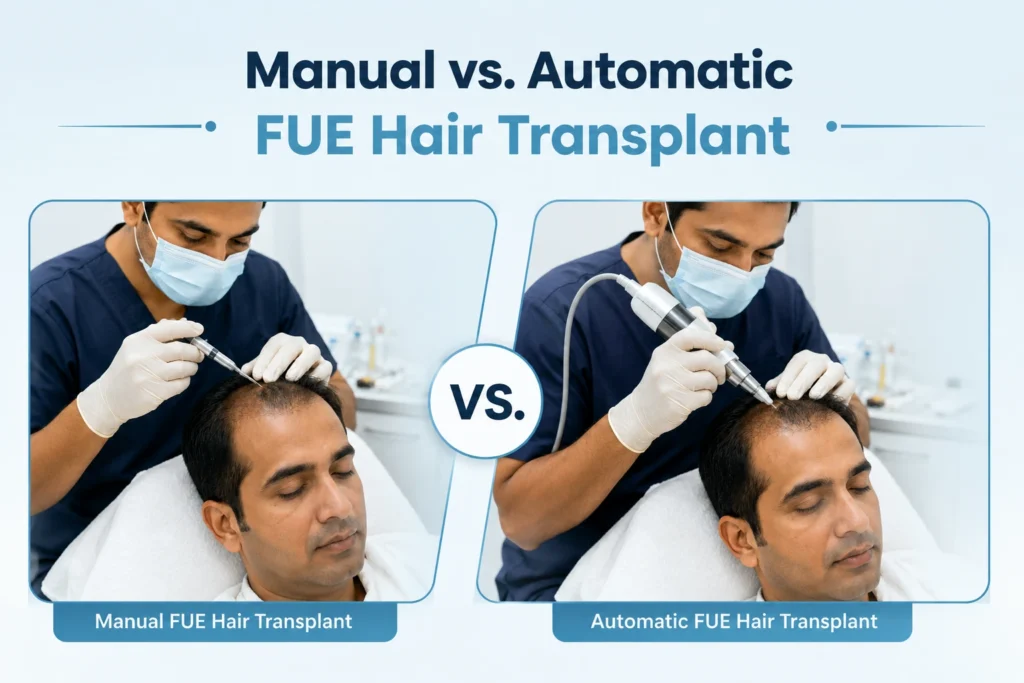
Manual vs. Automatic FUE Hair Transplant in Pune
Hair Transplant

Manual vs. Automatic FUE Hair Transplant: Which Method is Best for You?

Manual vs. Automatic FUE Hair Transplant Pune: Which Method is Best for You? Table of Contents FUE Hair Transplant Pune has become one of the most preferred hair restoration solutions for individuals seeking natural-looking, permanent results with minimal downtime. Using advanced techniques and precise graft extraction, FUE offers an effective solution for treating hair loss while preserving the appearance of the donor area. The journey to tackle hair loss is a deeply personal one, and deciding on a hair restoration method is a significant step. Today, the most widely accepted and popular technique is Follicular Unit Extraction (FUE). FUE involves meticulously extracting individual hair follicles from a dense donor area and transplanting them into the thinning or balding recipient areas. This approach has set a high standard in modern hair restoration due to its ability to deliver natural-looking results and minimal scarring. However, not all FUE procedures are identical. The fundamental difference lies in the mechanism used to harvest the grafts: whether it is performed manually by the surgeon or with the aid of automated technology. Understanding the core differences between Manual FUE and Automatic FUE is crucial for making an informed choice. Is Hair Transplant Permanent, Hair transplant growth after surgery, Hair Transplant In Pune, dr. kiran chotaliya clinic, Is Hair Transplant Permanent, Hair transplant growth after surgery, Hair Transplant In Pune, dr. kiran chotaliya clinic,Is Hair Transplant Permanent, Hair transplant growth after surgery, Hair Transplant In Pune, dr. kiran chotaliya clinic Manual vs. Automatic FUE: The Core Difference FUE Hair Transplant Pune offers both manual and automatic techniques, with the primary difference being the method of graft extraction while both aim to deliver natural-looking, long-lasting hair restoration results. Manual FUE: The Art of Precision In the Manual FUE hair transplant in Pune, the surgeon utilizes a small, handheld punch tool, typically measuring between 0.6 mm and 1.0 mm in diameter, to manually extract each follicular unit one by one. This highly skilled procedure demands exceptional precision, patience, and expertise, helping achieve natural-looking results while preserving the donor area. Automatic FUE: Technology Meets Efficiency Automatic FUE hair transplant in Pune utilizes a motorized or robotic device to assist the extraction process. While the surgeon maintains full control and guides the device, the tool automates the rotational movement of the punch. This advanced approach is designed to increase efficiency, enabling faster harvesting of a large number of grafts while reducing the overall procedure time and improving patient comfort. The Precision of Manual FUE: A Surgeon’s Artistry Many experts regard manual FUE as the most artful approach to hair restoration. The defining element of this technique’s success is the surgeon’s personal touch. A key advantage of Manual FUE is the complete control the surgeon has over the angle, depth, and direction of every single extraction. This level of microscopic control is particularly beneficial when handling delicate or naturally curved hair follicles. The advantages of choosing Manual FUE include: Maximum Graft Quality: The ability to adjust the angle of the punch for each individual graft helps ensure a lower rate of transection (damage to the follicle during extraction). Targeted Graft Selection: A skilled surgeon can carefully select the healthiest multi-hair grafts, which significantly contribute to achieving a denser, more natural appearance in the recipient area. Reduced Over-harvesting: Because the pace is slower, the surgeon can more carefully monitor the donor area. This ensures uniform density is maintained across the back of the head, thereby avoiding visible thinning. Manual FUE is often preferred for those who require a smaller number of grafts for highly precise procedures, such as specific hairline reconstruction or eyebrow restoration, or for patients with challenging hair characteristics, like curly hair. Talk To Our Hair Expert The Speed and Efficiency of Automatic FUE Hair Transplant in Pune Automatic FUE systems were primarily developed to overcome the physical limitations and duration associated with the manual technique. The motorized punch dramatically accelerates the speed of the extraction process. The advantages of automatic FUE are: Suitable for Large-Scale Cases: The efficiency of the automatic method makes it highly suitable for “mega sessions,” where patients with extensive hair loss require a large number of grafts (often 3,000 or more) to be transplanted in one session. Faster Procedure Time: The quick harvesting of grafts translates to a reduced overall procedure length and less time spent under anesthesia. Reduced Surgeon Fatigue: Automating the repetitive task of extraction helps the surgeon maintain consistent performance throughout a potentially long procedure. Evidence suggests that motorized FUE can reduce operative time by up to 30% compared to the manual method without negatively impacting graft quality. However, it is crucial to remember that even with automation, the device still requires a highly skilled operator. The surgeon’s expertise in controlling the automatic tool is essential to prevent potential graft damage. Making the Right Choice: Factors to Consider The decision between manual and automatic FUE is a personal one that must be made after a detailed consultation with a qualified hair transplant surgeon. Here are the key factors that should be discussed to determine the best technique for you: Feature Manual FUE Automatic FUE Graft Harvest Handheld punch, controlled solely by the surgeon Motorized or robotic device Speed Slower and more labor-intensive Faster and more efficient Best For Smaller sessions, complex hair types, hairline precision Large sessions, extensive hair loss Specific Considerations Extent of Hair Loss: For patients with extensive baldness, an automatic FUE procedure might be a more efficient path to harvest the required large number of grafts. Conversely, for smaller, highly targeted areas, manual FUE often offers the necessary precision. Donor Hair Characteristics: If your hair is challenging—be it straight, wavy, or curly—a surgeon’s manual control may be more effective in handling the hair shaft angle and minimizing transection (damage). Surgeon’s Expertise: This is arguably the most crucial factor. A highly skilled and experienced surgeon can consistently produce excellent results with either the manual or the automatic technique. Always prioritize choosing a reputable establishment with a proven track record. High

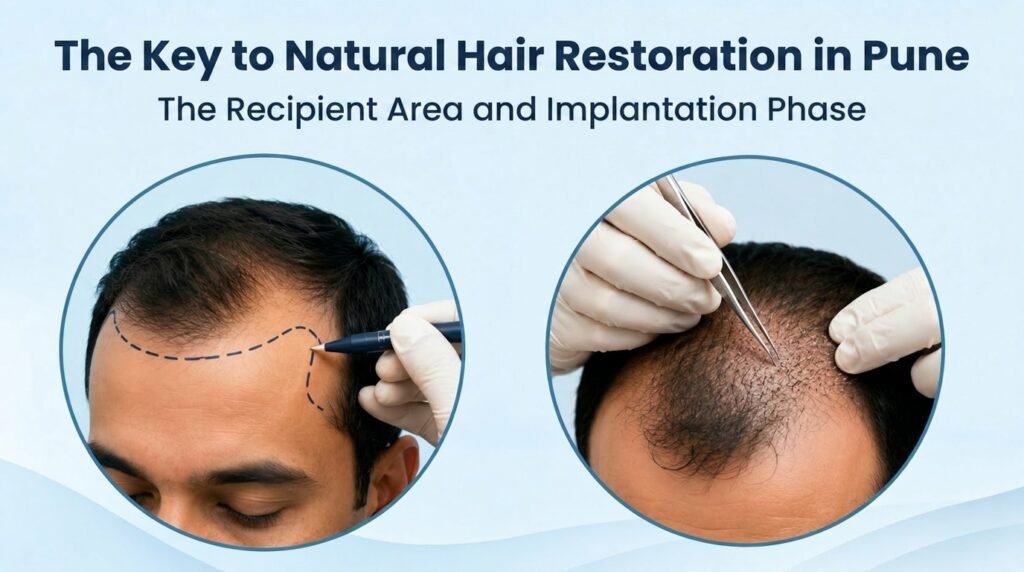
Hair graft implantation in Pune using advanced FUE technique for natural hair restoration
Hair Transplant

The Recipient Area and Implantation Phase: Mastering the Art of Natural Hair Restoration

The Recipient Area and Implantation Phase: The Key to Natural Hair Restoration in Pune Table of Contents Hair graft implantation in Pune is a critical step in modern hair restoration, ensuring that each transplanted follicle is placed with the correct angle, depth, and direction for natural growth. When performed by an experienced surgeon, this precise implantation process helps achieve dense, natural-looking, and long-lasting hair restoration results. Hair transplantation is more than simply moving hair from one area of the scalp to another. It is a highly specialized procedure that combines medical expertise, precision, and artistic planning to achieve natural-looking results. Among the various stages of a hair transplant, the recipient area preparation and implantation phase play a crucial role in determining the final outcome. If you are considering natural hair restoration in Pune, understanding these important phases can help you appreciate how modern hair transplant techniques create fuller, denser, and natural-looking hair. Is Hair Transplant Permanent, Hair transplant growth after surgery, Hair Transplant In Pune, dr. kiran chotaliya clinic, Is Hair Transplant Permanent, Hair transplant growth after surgery, Hair Transplant In Pune, dr. kiran chotaliya clinic,Is Hair Transplant Permanent, Hair transplant growth after surgery, Hair Transplant In Pune, dr. kiran chotaliya clinic What Is the Recipient Area? The recipient area is the section of the scalp where hair follicles are implanted during a hair transplant procedure. Hair graft implantation in Pune is carefully performed in this area, which may include a receding hairline, thinning crown, bald patches, or regions affected by pattern hair loss, to achieve natural-looking and long-lasting results. Before the procedure begins, the hair restoration specialist carefully evaluates: The extent of hair loss Existing hair density Scalp condition Hair characteristics Facial structure Future hair loss patterns This assessment helps create a personalized treatment plan that supports successful and long-lasting natural hair restoration in Pune. Why Recipient Area Planning Matters Many people focus on graft extraction, but the recipient area is where the true artistry of hair transplantation takes place. Proper planning ensures that transplanted hair grows naturally and blends seamlessly with existing hair. A well-planned recipient area helps achieve: A natural hairline Balanced hair density Proper hair direction and angulation Improved aesthetic appearance Long-term satisfaction Without careful recipient area design, even healthy grafts may fail to produce the desired cosmetic outcome. Designing a Natural Hairline The hairline is one of the most visible aspects of a hair transplant. Creating a natural-looking hairline requires careful consideration of the patient’s age, facial features, and future hair loss progression. Experienced specialists avoid creating an unnaturally straight or low hairline. Instead, they design subtle irregularities that mimic the way natural hair grows. For patients seeking natural hair restoration in Pune, hairline design is a critical step that significantly impacts the overall appearance of the transplant. Creating Recipient Sites Once the treatment plan is finalized, tiny recipient sites are created in the target area as part of the recipient area hair transplant process. These sites determine where each graft will be placed and how the transplanted hair will grow, ensuring natural-looking results. Several factors are considered during this stage: Hair Growth Direction Natural hair grows in specific directions across different regions of the scalp. The surgeon carefully recreates these patterns to ensure a realistic appearance. Hair Growth Angle The angle at which hair emerges from the scalp varies across the head. Proper angulation helps transplanted hair blend naturally with existing hair. Hair Density Recipient sites are strategically distributed to create the appearance of fuller hair while making efficient use of available donor grafts. Protection of Existing Hair In patients with partial hair loss, recipient sites are created carefully to preserve surrounding healthy hair follicles. 5. You Want a Permanent Hair Restoration Solution Temporary treatments often require ongoing maintenance and may not always produce lasting results. If you are seeking a long-term solution for hair loss, hair graft implantation in Pune through an advanced hair transplant procedure may be the right option for achieving natural-looking, permanent results. Modern hair transplant techniques can provide: Natural-looking hair growth Permanent results Minimal downtime Improved appearance and confidence A specialist can explain the available techniques and help you choose the most appropriate treatment based on your goals. Understanding the Implantation Phase After preparing the recipient area, the hair graft implantation in Pune process begins. During this stage, harvested hair follicles are carefully placed into the recipient sites with the correct angle, depth, and direction to achieve natural-looking, long-lasting results. Every graft is handled with precision to maximize survival and ensure natural growth after transplantation. The implantation process typically involves: Sorting grafts according to hair count Placing single-hair grafts along the hairline Using multi-hair grafts for increased density behind the hairline Maintaining consistent spacing and distribution This detailed approach is one of the reasons why modern natural hair restoration in Pune can deliver highly realistic and aesthetically pleasing results. The Importance of Proper Implantation The importance of proper implantation cannot be overstated, as the quality of implantation directly affects the final appearance, density, and natural look of the hair transplant. Natural Results Proper placement ensures transplanted hair follows natural growth patterns and blends seamlessly with existing hair. Higher Graft Survival Gentle handling during implantation reduces trauma to the follicles and increases graft survival rates. Better Density Strategic placement creates fuller coverage while maintaining a natural look. Long-Term Success Well-planned implantation helps ensure that the results remain attractive and balanced as the patient ages. Advanced Techniques For Natural Hair Restoration in Pune Modern clinics use advanced technologies to improve precision and patient outcomes. FUE Hair Transplant Follicular Unit Extraction (FUE) involves harvesting individual hair follicles and implanting them into recipient sites with minimal scarring and downtime. Direct Hair Implantation (DHI) DHI utilizes specialized implantation tools that provide greater control over graft placement and angulation. Sapphire Blade Technology Sapphire blades create precise recipient sites with minimal tissue trauma, supporting faster healing and improved graft placement. These advanced techniques have contributed significantly to the success of natural hair restoration in Pune

Best hair transplant doctor in Pune providing advanced hair restoration treatment
Hair Transplant

When to See a Doctor for Hair Transplant

When to See a Doctor for a Hair Transplant Pune Table of Contents Best hair transplant doctor in Pune can help identify the underlying cause of hair loss through a comprehensive scalp evaluation and personalized treatment plan. Early consultation with an experienced specialist improves the chances of preserving existing hair and achieving long-term, natural-looking results. Hair loss is a common concern that affects both men and women. While occasional shedding is normal, persistent hair thinning, a receding hairline, or visible bald patches may indicate a more serious issue that requires professional attention. Seeking timely guidance from an experienced hair transplant surgeon Pune can help you understand the cause of your hair loss and explore the most effective treatment options. If you’re wondering whether it’s the right time to consult a specialist, here are some signs to look for. Is Hair Transplant Permanent, Hair transplant growth after surgery, Hair Transplant In Pune, dr. kiran chotaliya clinic, Is Hair Transplant Permanent, Hair transplant growth after surgery, Hair Transplant In Pune, dr. kiran chotaliya clinic,Is Hair Transplant Permanent, Hair transplant growth after surgery, Hair Transplant In Pune, dr. kiran chotaliya clinic 1. Your Hair Loss Is Progressively Increasing One of the clearest signs that you should see a doctor is when your hair loss continues to worsen over time. If you notice your hairline steadily receding, thinning at the crown, or bald spots becoming more visible despite using hair care products, professional evaluation is recommended. An experienced hair transplant surgeon can assess your hair loss pattern, identify underlying causes, and recommend the most suitable treatment plan. Book a hair transplant consultation in Pune with an expert to receive a personalized diagnosis and start the right treatment before hair loss progresses further. 2. Hair Loss Treatments Are Not Delivering Results Many individuals initially try non-surgical treatments for hair transplant such as: Minoxidil PRP (Platelet-Rich Plasma) Therapy Nutritional supplements Hair growth serums While these treatments can be beneficial for some people, they may not always provide satisfactory results, especially in advanced stages of hair loss. If you’ve been following treatment consistently without noticeable improvement, it may be time to schedule a hair loss consultation in Pune and discuss hair transplant options with a specialist to determine the most effective long-term solution. 3. Hair Loss Is Affecting Your Confidence Hair plays a significant role in personal appearance and self-esteem. For many individuals, excessive hair loss can lead to: Reduced confidence Social discomfort Self-consciousness in professional settings Emotional stress If hair loss is negatively impacting your quality of life, consulting a hair restoration expert can help you explore solutions that restore both your hair and confidence. 4. Your Hair Loss Has Stabilized Hair transplant procedures typically provide the best outcomes when hair loss has reached a relatively stable stage. Stabilized hair loss allows the surgeon to: Accurately assess donor hair availability Design a natural-looking hairline Plan graft placement effectively Achieve long-term, balanced results A consultation with a Dr Kiran Chotaliya best hair transplant surgeon in Pune can determine whether your current stage of hair loss is suitable for transplantation. Talk To Our Hair Expert 5. You Want a Permanent Hair Restoration Solution Temporary treatments often require ongoing maintenance and may not always produce lasting results. If you are seeking a long-term solution for hair loss, a hair transplant may be the right option. Modern hair transplant techniques can provide: Natural-looking hair growth Permanent results Minimal downtime Improved appearance and confidence A best hair transplant doctor in Pune can explain the available techniques and help you choose the most appropriate treatment based on your goals. What Happens During a Hair Transplant Consultation? During your consultation, a hair transplant surgeon will typically: Examine your scalp and hair density Evaluate the cause and extent of hair loss Assess donor hair quality Review your medical history Discuss treatment expectations Create a personalized treatment plan This assessment helps determine whether a hair transplant is the most suitable option for you. Why Choose Dr. Kiran Chotaliya for Hair Transplant in Pune? Dr. Kiran Chotaliya M.D. Skin, V.D. Dermatologist & Hair Transplant Surgeon Dr. Kiran Chotaliya is a highly experienced best hair transplant doctor in Pune: Hair Transplant Surgery Dermatology Cosmetology Dermato-surgery With extensive expertise in advanced hair restoration procedures, Dr. Kiran Chotaliya focuses on delivering natural-looking results tailored to each patient’s facial features, hair pattern, and aesthetic goals. His patient-centered approach and commitment to modern treatment techniques have made him a trusted choice for individuals seeking treatment for hair transplant Pune. Final Thoughts Recognizing the right time to consult a hair transplant specialist can significantly improve your treatment outcomes. If your hair loss is progressing, affecting your confidence, or not responding to conventional treatments, professional guidance can help you explore effective and long-lasting solutions. For expert evaluation and personalized hair restoration treatment, consult Dr. Kiran Chotaliya best hair transplant surgeon in Pune, and take the first step toward restoring your hair and confidence. FAQ’s 1. When should I see best hair transplant doctor in Pune for hair transplant consultation? You should consider a consultation if you are experiencing progressive hair loss, visible bald patches, a receding hairline, or if non-surgical treatments have not produced satisfactory results. 2. What are the signs that I might need a hair transplant? Common signs include persistent hair thinning, advanced male or female pattern hair loss, bald spots, and inadequate response to medications or other hair restoration treatments. 3. Is it too early to consult a hair transplant specialist? No. Early consultation can help identify the cause of hair loss and provide treatment options before significant hair loss occurs. 4. Can a dermatologist help determine if I need a hair transplant? Yes. A qualified dermatologist and hair transplant surgeon can assess your hair loss condition and recommend whether medical treatment, PRP therapy, or a hair transplant is the best option. 5. What happens during a hair transplant consultation? The doctor evaluates your scalp, hair density, donor area, medical history, and treatment goals before recommending a personalized hair restoration plan.

Hair Transplant Treatment Cost in Pune, hair transplant clinic Pune, best hair transplant surgeon Pune, hair transplant cost India
Hair Transplant

Hair Transplant Cost in Pune: The Complete 2026 Price Guide

Hair Transplant Cost in Pune: In 2026 Table of Contents Hair transplant  treatment cost Pune varies depending on the number of grafts required, the technique used, and individual hair loss patterns. It is best determined after a detailed consultation with a qualified specialist for accurate evaluation and personalized treatment planning. One of the most common questions patients ask during consultation is: “Dr. Kiran, what is the cost of a hair transplant in Pune?” Many people expect a single number, but the reality is that hair transplant surgery is a medical procedure tailored to each patient. The final cost depends on multiple factors such as the number of grafts required, the technique used, surgeon involvement, and the clinic’s surgical standards. In this guide, Dr. Kiran Chotaliya, hair transplant surgeon at Hairfree & Hairgrow Clinic in Pune, explains how hair transplant pricing works in 2026 and what patients should realistically expect. Hair Transplant Cost in Pune, hair transplant clinic Pune, best hair transplant surgeon Pune, hair transplant cost India 1. Hair Transplant Cost Per Graft in Pune Most reputable hair transplant clinics in Pune use a per-graft pricing model. This ensures transparency because patients only pay for the number of follicles transplanted. Understanding Hair transplant  treatment cost Pune is important before planning your procedure, as it helps you estimate the overall treatment expenses. Typical pricing in Pune (2026): Technique Cost per graft Suitable for Basic / Classic FUE ₹15 – ₹25 Standard hair restoration Advanced FUE (Sapphire /High-Precision FUE) ₹25 – ₹35 Higher density, faster healing BIG FUE/ Stem cell FUE/ DHT/ DHI / branded methods ₹45 – ₹75 Often used for smaller targeted areas The per-graft model is considered the most transparent system, allowing patients to estimate their treatment cost based on the number of grafts required. Dr. Kiran’s Clinical Perspective While many clinics market premium techniques like DHI at significantly higher prices, the fundamental technology behind hair transplantation has not dramatically changed. In many cases, advanced FUE like BIG FUE, Stem cell FUE performed with high-precision instruments and surgeon control offers excellent density and natural results without unnecessary marketing premiums. Technique selection should depend on medical suitability, not branding alone.  Hair Transplant Treatment Cost Pune Based on Baldness Stage Hair transplant cost based on baldness stage varies depending on the extent of hair loss and treatment requirements. The Norwood Scale is commonly used to classify male pattern baldness. Each stage typically requires a different number of grafts. This directly influences the Hair transplant treatment cost Pune, as the total expense depends on the severity of hair loss and the number of grafts needed. Norwood Grade Hair Loss Pattern Typical Graft Requirement Grade 2 Mild temple recession 1,000 – 1,500 grafts Grade 3 Deeper temple recession 1,500 – 2,500 grafts Grade 4 Frontal + mid scalp loss 2,500 – 3,500 grafts Grade 5 Extensive frontal & crown loss 3,500 – 4,500 grafts Grade 6–7 Advanced baldness 4,500+ grafts (often 2 sessions) Estimated Hair Transplant Treatment Cost Pune Estimated hair transplant treatment cost Pune helps patients understand expected expenses, including graft count, technique, and clinic expertise for accurate budgeting. Based on typical graft requirements: per graft rate technique wise from ₹45 to ₹70  Norwood Grade 2 1,000 – 1,500 grafts Estimated investment: ₹45,000 – ₹70,000 Norwood Grade 3–4 2,000 – 3,000 grafts Estimated investment: ₹80,000 – ₹1,50,000 Norwood Grade 5–7 4,000+ grafts Estimated investment: ₹1,60,000 – ₹3,00,000 or more Advanced cases sometimes require two surgical sessions for optimal density. What Determines Hair Transplant Cost? Patients often notice significant price differences between clinics. This difference usually reflects surgical quality and expertise, not just marketing. Important cost factors include: Surgeon Involvement: One of the most critical aspects is who actually performs the surgery. In some low-cost clinics, technicians perform most of the procedure while the doctor supervises briefly. In specialist clinics, the surgeon performs key steps such as graft extraction, slit creation, and hairline design. Graft Survival Technology: Modern clinics use advanced preservation solutions like HypoThermosol and graft chillers to maintain follicle health during surgery. These technologies help improve graft survival rates and final hair density. Surgical Safety Standards: High-quality clinics follow strict OT sterilization protocols and infection control measures, which protect both the patient and the transplanted grafts. Budget Clinics vs Specialist Hair Transplant Clinics   What You Get The Budget/Discount Clinic The Specialist Clinic (Dr. Kiran’s Approach) Who Does the Work? Mostly junior staff and technicians—the surgeon barely touches you. The actual surgeon is heavily involved, doing the vital steps (making the slits, extracting the grafts). Graft Health/Survival Grafts sit in basic salt water (saline); they can dry out faster, meaning fewer hairs survive. We use special survival media (like HypoThermosol) and graft chillers to keep grafts happy and aim for 95%+ survival. Safety Just basic cleaning/sterilization. Higher infection risk in a less specialized room. Top-tier operating room standards, intense sterilization protocols, and maximum safety to avoid infections. How You’re Charged They often advertise a crazy low “all-inclusive” price that ends up having tons of hidden fees. Crystal clear pricing based on the number of grafts you need and your specific baldness (Norwood Scale). No surprises. Aftercare You’re basically on your own after the surgery. Very little to no follow-up. Full post-op support, dedicated care, and advice on growth-boosting treatments (like PRP). Choosing a clinic solely based on price can sometimes lead to unsatisfactory results requiring corrective surgery later. Talk To Our Hair Expert Additional Costs Patients Should Consider Apart from the surgical procedure, patients should plan for: Blood Tests Approximate cost: ₹2,000 – ₹4,000 Post-operative Medications Approximate cost: ₹3,000 – ₹5,000 Adjunct Treatments Some patients benefit from: PRP therapy Regenerative treatments These can support better graft growth and hair density. GST Most clinics quote prices excluding 5% GST, which is applicable to surgical services. Conclusion: Don’t Choose Hair Transplant Based Only on Price A hair transplant is a long-term medical investment in your appearance and confidence. Choosing the cheapest option may result in poor graft survival, unnatural hairlines, or the

Stem cell treatment for hair growth in Pune showing advanced hair regeneration therapy for hair loss patients
Hair Transplant

Folliboost stem cell treatment for hair growth in hair disorders

Folliboost stem cell treatment for hair growth in hair disorders Table of Contents Stem cell treatment for hair growth in Pune is an advanced regenerative solution that helps stimulate inactive hair follicles and promote natural hair regrowth. It is a promising option for individuals seeking non-surgical and effective hair restoration results. Hair loss and thinning hair are common concerns affecting both men and women. Factors such as genetics, hormonal imbalances, stress, nutritional deficiencies, and scalp disorders can contribute to hair loss. Fortunately, advancements in regenerative medicine have introduced innovative solutions like Folliboost Stem Cell Treatment for Hair Growth in Pune, offering a non-surgical approach to improving hair quality and density. For individuals experiencing early-stage hair loss or hair thinning, this treatment can be an effective option to support natural hair regeneration. Dr. Kiran Chotaliya hair transplant surgeon in Pune, provides personalized hair restoration solutions and advanced regenerative treatments to help patients achieve healthier, fuller-looking hair. Is Hair Transplant Permanent, Hair transplant growth after surgery, Hair Transplant In Pune, dr. kiran chotaliya clinic, Is Hair Transplant Permanent, Hair transplant growth after surgery, Hair Transplant In Pune, dr. kiran chotaliya clinic,Is Hair Transplant Permanent, Hair transplant growth after surgery, Hair Transplant In Pune, dr. kiran chotaliya clinic What is Folliboost Stem Cell Treatment? Folliboost Stem Cell Treatment is an advanced regenerative therapy designed to stimulate dormant hair follicles and improve scalp health. The treatment utilizes growth factors and stem cell-derived components that help nourish hair follicles and create an environment favorable for hair growth. Unlike traditional treatments that mainly focus on slowing hair loss, Folliboost aims to promote stronger, healthier, and thicker hair growth through biological stimulation. How Does Folliboost Stem Cell Treatment Work? The procedure works by delivering regenerative growth factors into the scalp. These bioactive components help: Stimulate inactive hair follicles Improve blood circulation to the scalp Strengthen existing hair roots Enhance hair density and thickness Support natural hair growth cycles The treatment is minimally invasive and generally performed as an outpatient procedure. Which Hair Disorders Can Benefit from Folliboost Treatment? 1. Androgenetic Alopecia Commonly known as male or female pattern baldness, this condition causes gradual hair thinning and hairline recession. 2. Diffuse Hair Thinning People experiencing overall reduction in hair density may benefit from regenerative scalp treatments. 3. Stress-Induced Hair Loss Excessive stress can trigger temporary hair shedding known as telogen effluvium. 4. Early-Stage Hair Loss Patients noticing the first signs of hair thinning often achieve better outcomes when treatment begins early. 5. Hair Weakness and Poor Hair Quality Folliboost may help improve hair texture, strength, and overall scalp health. Talk To Our Hair Expert What are the Benefits of Folliboost Stem Cell Treatment? Stem Cell Hair Treatment Pune offers a regenerative approach that helps reactivate dormant hair follicles, improve scalp health, and support natural hair density. It is a safe, non-surgical option that promotes stronger, thicker, and healthier hair growth over time.Some potential benefits include: Non-surgical procedure Minimal downtime Improved hair thickness Enhanced scalp health Natural-looking results Reduced hair shedding Supports long-term hair maintenance Is the Procedure Safe? When performed by a qualified medical professional, Stem Cell Hair Treatment Pune is generally considered safe and minimally invasive. As an advanced Non-surgical hair restoration Pune solution, Folliboost helps promote natural hair regeneration with minimal discomfort and little to no downtime. Most patients can resume their normal activities shortly after the procedure. For individuals seeking an effective hair growth treatment Pune, this regenerative therapy offers a safe and promising option to improve hair density and overall scalp health. Can Folliboost Be Combined with Other Hair Treatments? Yes. Folliboost therapy is often combined with: PRP Therapy Medical Hair Loss Treatments Hair Growth Medications Hair Transplant Procedures Combining treatments may help improve overall hair restoration outcomes based on individual needs. Why Choose Folliboost Stem Cell Treatment for Hair Growth in Pune? Stem Cell Treatment for Hair Growth in Pune is an advanced regenerative therapy that helps stimulate inactive hair follicles and improve overall hair density. It offers a safe and effective non-surgical option for individuals experiencing early to moderate hair loss. Pune has become a leading destination for Non-Surgical Hair Restoration in Pune due to experienced specialists and access to advanced regenerative technologies. Patients seeking effective, non-surgical hair growth solutions can benefit from personalized treatment plans designed to address specific hair disorders. Conclusion Stem Cell Treatment for Hair Growth in Pune is a modern regenerative therapy designed to reactivate weak hair follicles and support natural hair regrowth. It offers a non-surgical and effective solution for individuals looking to improve hair density and scalp health. Folliboost stem cell treatment for hair growth in Pune offers an innovative approach to managing hair disorders and improving hair density. By utilizing regenerative growth factors, the treatment helps support healthier follicles, stronger hair, and improved scalp conditions. If you are experiencing hair thinning or early-stage hair loss, consulting Dr. Kiran Chotaliya Hair Transplant Surgeon in Pune, can help you explore whether Folliboost treatment is the right solution for your hair restoration goals. FAQ’s 1. What is Folliboost Stem Cell Treatment? Folliboost is a regenerative Stem Cell Treatment for Hair Growth in Pune that uses stem cell-derived growth factors to stimulate hair follicles and promote healthier hair growth. 2. Is Folliboost effective for hair thinning? Yes, it may help improve hair density, thickness, and overall scalp health in individuals with hair thinning. This is why Stem Cell Hair Treatment Pune is often recommended as a supportive regenerative option for early to moderate hair loss cases. 3. Is the procedure painful? The treatment involves minimal discomfort and is generally well tolerated by most patients. 4. How soon can I see results? Results vary, but many patients begin noticing improvements in hair quality and reduced shedding within a few months. 5. Can Folliboost replace a hair transplant? Folliboost is most beneficial for early to moderate hair loss. Advanced baldness may still require a hair transplant for optimal coverage. 6. Where can I get Folliboost Stem Cell Treatment in Pune?

Hair Transplant in Pune

Dr. Kiran Chotaliya is a leading hair transplant surgeon in Pune, specializing in advanced techniques like FUE and FUT for natural, lasting results. His expertise and patient-centered care ensure successful hair restoration with exceptional outcomes.

Follow Us

GET IN TOUCH

© 2026 Developed & Handle By Dr. Kiran Chotaliya Clinic Team

Location

© 2026 Developed & Handle By Dr. Kiran Chotaliya Clinic Team

Scroll to Top