In India, just like globally, hair transplants are becoming increasingly popular. Many people suffering from hair loss dream of a natural-looking hairline and renewed confidence. However, it’s essential to understand that even with advancements, there are risks involved. One of the most significant and often irreversible complications is overharvesting of the donor area. This isn’t just a minor setback; it can permanently damage the very source of your new hair, leaving you in a worse situation than before.
If you are researching hair transplant overharvesting, understanding this risk is crucial before undergoing any procedure. This post will help you understand what overharvesting means, how to spot it, what causes it, and most importantly, how you can prevent it. Consulting an experienced specialist such as Dr. Kiran Chotaliya hair transplant surgeon in Pune, can help ensure your donor area is managed safely while achieving natural-looking results.
Is Hair Transplant Permanent, Hair transplant growth after surgery, Hair Transplant In Pune, dr. kiran chotaliya clinic, Is Hair Transplant Permanent, Hair transplant growth after surgery, Hair Transplant In Pune, dr. kiran chotaliya clinic,Is Hair Transplant Permanent, Hair transplant growth after surgery, Hair Transplant In Pune, dr. kiran chotaliya clinic
Donor area overharvesting in hair transplant occurs when excessive grafts are extracted from the donor region, leading to thinning and an unnatural appearance. Proper surgical planning is essential to maintain donor density and ensure balanced, natural-looking results.
Let’s start with the basics. When you get a hair transplant, the hair grafts or follicular units aren’t usually from another person. They are typically extracted from areas of your own body, known as donor areas. These areas are usually the back and sides of your head, which are resistant to balding, and sometimes even your beard.
Overharvesting, simply put, happens when too many hair follicles are extracted from the donor area. Imagine it like a garden: if you pull out too many plants from one section, that section will look sparse and never fully recover. Similarly, when too many follicles are taken, it leads to a permanent reduction in density in that donor area. Unlike temporary hair shedding (called shock loss), the follicles removed during overharvesting are “gone forever” and will not grow back. This can have “disastrous effects on the area itself”.
Recognizing the signs of hair transplant overharvesting is extremely important. If you notice any of these signs, it is a clear red flag.
Visible Thinning
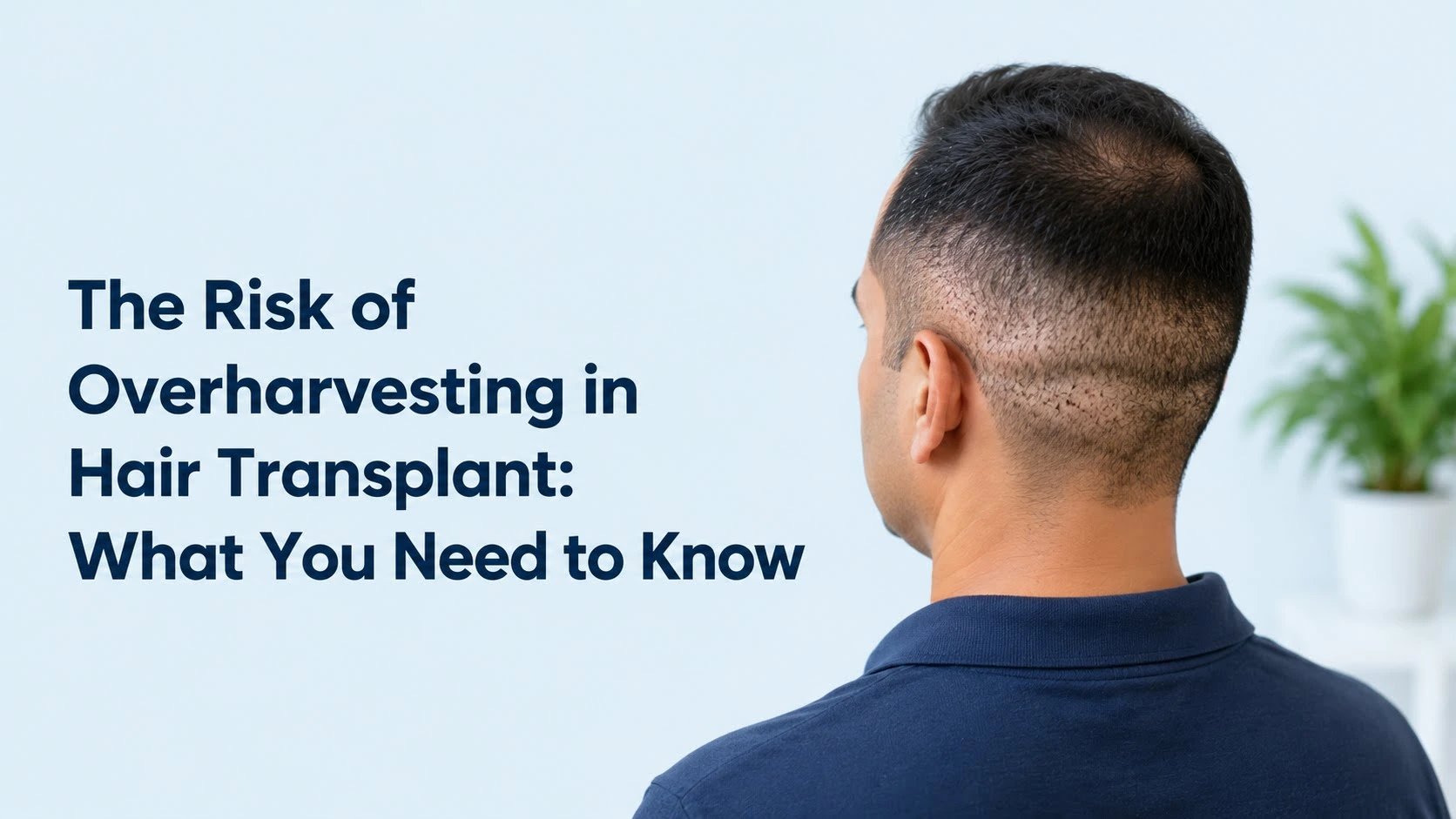
The most immediate and obvious sign is a noticeably thinner appearance in the donor area. It won’t look uniformly dense; instead, it can appear “patchy or ‘see-through’ under certain lighting”. This means the hair at the back or sides of your head, where grafts were taken, looks significantly sparser than before.
A Moth-Eaten Look
This is a very specific and unfortunate outcome. Instead of a natural, consistent density, the donor area might show small, circular bald spots where grafts were extracted too closely together. It resembles a fabric that has been eaten by moths, with uneven, noticeable gaps.
Scarring
While modern techniques like FUE (Follicular Unit Extraction) are known for being minimally invasive, excessive harvesting can lead to visible scarring. This scarring can manifest as a dotted or patterned appearance, making the donor area look unnatural even if you try to grow your hair longer to cover it.
The long-term consequence of an overharvested donor area is severe: it becomes practically useless for follow-up procedures and results in the inability to get future hair transplant procedures. This means if you need another transplant later, you might not have enough donor hair left, leaving you with no options to address further hair loss.
It’s crucial to understand that the sole blame for overharvesting falls on your hair transplant surgeon, whether it happened by accident or by design. This isn’t something the patient causes.
Overharvesting typically occurs when a surgeon overestimates the number of hair grafts needed for a successful hair transplant surgery. This leads them to make too many excisions and extracting too many follicular units (FUs), which, as we discussed, leaves the donor area thinning and patchy.
Here are the main reasons why this unfortunate situation can arise:
Inexperienced or Unqualified Surgeons
A surgeon who lacks the necessary surgical skill and awareness required to identify the risks associated with overharvesting is a major contributing factor. Choosing an expert is paramount.
Unrealistic Patient Expectations
Sometimes, surgeons might try to overcompensate to meet a patient’s unrealistic expectations. Patients might demand an incredibly dense result in a single session, pushing the surgeon to take too many grafts.
Curing in One Go Mentality
Some surgeons might try to cure the patient’s hair loss in one go, without considering the need for future transplants. This short-sighted approach can deplete the donor area prematurely.
Lack of Awareness of Previous Transplants
If you’ve had a hair transplant before, and your current surgeon isn’t aware of how many excisions your previous surgeon made in the same donor area, they might unknowingly overharvest the already depleted area. This highlights the need for a thorough medical history.
Prevention is truly the best (and only permanent) cure for overharvesting. Once the follicles are gone, they’re gone. Your choice of your surgeon is the most important decision you will make.
Here’s how you can protect yourself:
Choose a Skilled and Reputable Surgeon
This cannot be stressed enough. Do your due diligence and research thoroughly. Look for surgeons who are IAHRS (International Alliance of Hair Restoration Surgeons) and ISHRS (International Society of Hair Restoration Surgery)-certified. These certifications indicate a commitment to ethical practices and high standards.
Thorough Consultation and Assessment
A professional surgeon will always conduct a thorough assessment to determine your safe extraction limit. They will manage your expectations honestly and not promise unrealistic results. They understand that a hair transplant is a long-term investment.
Clinic Capabilities
Ensure the clinic you choose has the facilities to detect the excision density, total number of excisions, and hair follicle transection rate that occurred during your previous transplant session if applicable.
Understand Graft Limits
For most individuals, a typical Sapphire FUE or DHI (Direct Hair Implantation) session should not exceed 3,000 to 4,000 grafts to prevent overharvesting. While some clinics might boast about mega-sessions (e.g., 5000+ grafts), these are only safe for individuals with exceptionally dense donor areas. The key is whether the number is safe for your specific donor capacity.
Respecting Donor Area Capacity
An expert surgeon will respect the finite nature of your donor area. They understand it’s a limited resource. Their primary task is to find the perfect balance between your aesthetic goals and what your donor area can realistically provide.
Density Guidelines
The ideal density for a successful, natural-looking transplant ranges from 30 to 50 follicular units per square centimeter. Be aware that harvesting more than 20-30% of the total follicular units in a given area can lead to visible thinning.
Consider Staged Procedures
If you have considerable hair loss, some experts encourage undergoing two hair transplants. This allows the donor area to heal properly between procedures, significantly reducing the risk of overharvesting.
This is the difficult part. As mentioned, once hair follicles have been extracted from the donor area, they will not grow back. Overharvesting results in permanent damage. Safe donor area extraction is essential to preserve natural density and avoid visible thinning in the donor region.
While you can’t restore the lost follicles, there are limited options to improve the appearance:
Conservative Medical Treatments
Medications like Minoxidil and Finasteride might help existing hairs look thicker. However, it’s crucial to understand that they cannot replace the missing follicles. They can enhance the density of the remaining hair, but not bring back what’s gone.
Artificial Hair Transplants
If your donor area has been severely overharvested, you could opt for an artificial hair transplant like biofiber. This involves implanting synthetic hair fibers.
Hair Pigmentation
Techniques like micropigmentation (hair tattooing) can also be used to create the illusion of density in a thinning area.
Your journey to hair restoration should be one of confidence, not regret. Understanding the risk of overharvesting in hair transplant is a vital step in making an informed decision. For individuals considering a procedure and researching Hair Transplant Overharvesting, awareness of donor area safety is essential for achieving successful long-term results. Prioritize safety, expertise, and long-term outcomes over quick fixes or unbelievably low prices.
Always opt for a comprehensive consultation with a certified expert who prioritizes the health of your donor area as much as the density of your recipient area. Remember, your donor hair is a precious, limited resource. Choose wisely to ensure a beautiful, natural-looking result that lasts a lifetime.
For safe and effective hair restoration, consulting Dr. Kiran Chotaliya hair transplant surgeon in Pune, ensures careful evaluation of the donor area and a personalized surgical plan focused on preventing overharvesting. His expertise emphasizes natural density, donor area preservation, and long-term, balanced results for successful hair transplant outcomes.
Overharvesting occurs when too many hair follicles are extracted from the donor area, causing permanent thinning, patchiness, and reduced donor hair density.
Common signs include visible thinning, a patchy or moth-eaten appearance, and noticeable scarring at the back or sides of the scalp.
No. Once hair follicles are removed during a transplant, they do not grow back. The resulting loss of density is usually permanent.
Choose an experienced and qualified hair transplant surgeon who carefully assesses your donor area and follows safe graft extraction limits.
Options may include medications to improve existing hair density, scalp micropigmentation, beard hair transplantation, or artificial hair implantation in selected cases.

A free experts curated guide that clears all your doubts
about Costs, Results, Pain, Recovery and much more.
Dr. Kiran Chotaliya is a leading hair transplant surgeon in Pune, specializing in advanced techniques like FUE and FUT for natural, lasting results. His expertise and patient-centered care ensure successful hair restoration with exceptional outcomes.
© 2026 Developed & Handle By Dr. Kiran Chotaliya Clinic Team
© 2026 Developed & Handle By Dr. Kiran Chotaliya Clinic Team