Author name: Dr Kiran Chotaliya

Hair transplant myths explained by Dr. Kiran Chotaliya in Pune
Hair Transplant

Common Myths and Facts About Hair Transplants: Explained by Dr. Kiran Chotaliya

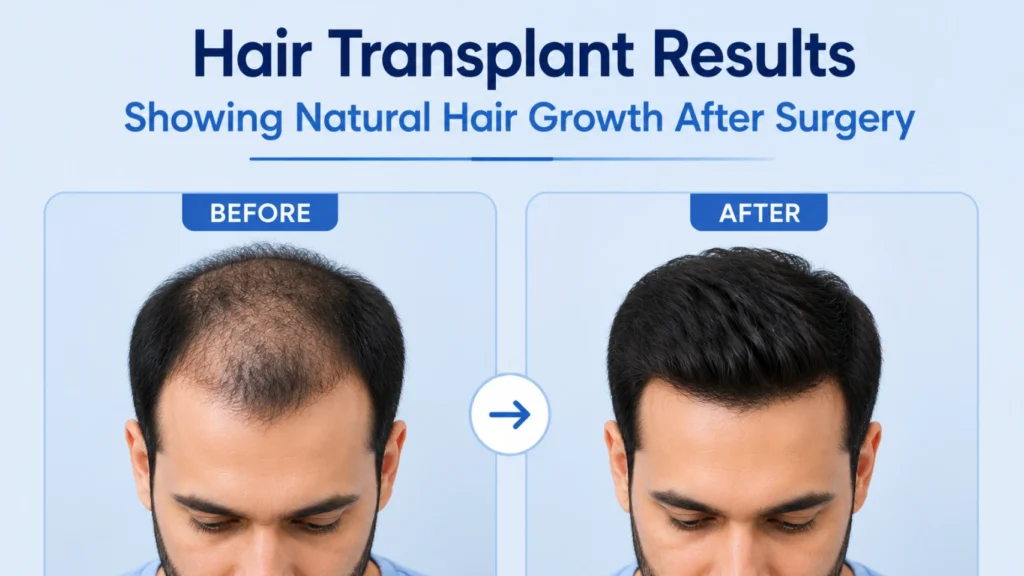
Common Myths and Facts About Hair Transplants Explained by Dr. Kiran Chotaliya Table of Contents Hair transplant myths often create unnecessary fear and confusion, causing many people to delay or avoid effective hair restoration treatments. Understanding the facts behind these misconceptions helps patients make confident, informed decisions about their hair transplant journey. Hair transplant myths often prevent people from exploring one of the most effective solutions for hair loss. Questions such as “Does hair transplant look natural?” are common, but modern FUE and FUT techniques can deliver highly natural-looking results when performed by an experienced surgeon. Understanding the common myths and facts about hair transplants in Pune helps patients make informed treatment decisions. Dr. Kiran Chotaliya hair transplant surgeon in Pune, explains the most common myths and facts to help patients understand what is true and what is not. Is Hair Transplant Permanent, Hair transplant growth after surgery, Hair Transplant In Pune, dr. kiran chotaliya clinic, Is Hair Transplant Permanent, Hair transplant growth after surgery, Hair Transplant In Pune, dr. kiran chotaliya clinic,Is Hair Transplant Permanent, Hair transplant growth after surgery, Hair Transplant In Pune, dr. kiran chotaliya clinic Myth 1: Hair Transplants Look Unnatural Fact: Modern hair transplants deliver completely natural results when performed by an experienced surgeon. Earlier techniques sometimes produced “plug-like” appearances, but advanced methods like FUE (Follicular Unit Extraction) ensure precise implantation of individual grafts. The hairline is designed according to facial structure, making results natural and undetectable. Myth 2: Hair Transplant is Painful Fact: The procedure is minimally painful due to local anesthesia. Many patients in Pune ask, “Is hair transplant painful?” However, most report only mild discomfort during and after the procedure. Modern techniques and advanced tools significantly reduce pain, and post-surgery soreness is usually manageable with prescribed medications. Myth 3: Results Are Immediate Fact: Hair growth after transplant takes time. While transplanted hair falls out initially (a normal phase called shock loss), new growth typically begins after 3–4 months. Full results are usually visible between 9 to 12 months. Patience is key for achieving natural density. Myth 4: Hair Transplants Don’t Last Long Fact: Transplanted hair is permanent in most cases. The donor hair, usually taken from the back of the scalp, is genetically resistant to balding. Once transplanted, these follicles continue to grow naturally for a lifetime when proper care is followed. Talk To Our Hair Expert Myth 5: Only Men Can Get Hair Transplants Fact: Women can also benefit from hair transplants. Hair loss affects both men and women in Pune due to stress, hormonal changes, genetics, and lifestyle factors. Women with pattern baldness or thinning hair can also achieve excellent results with modern techniques. Myth 6: Hair Transplant is Only for Older People Fact: Age is not the only factor; suitability depends on hair loss condition. Younger patients experiencing early-stage hair loss can also undergo treatment after proper evaluation. However, surgeons usually recommend stabilizing hair loss before proceeding Myth 7: The Procedure Leaves Visible Scars Fact: Advanced FUE technique leaves minimal or no visible scars. Unlike older FUT methods, FUE involves extracting individual follicles, resulting in tiny dot-like marks that are almost invisible once healed. Skilled surgeons ensure maximum aesthetic outcomes with minimal scarring. Importance of Choosing the Right Surgeon in Pune Choosing a qualified and experienced specialist is crucial for successful results. A skilled surgeon not only performs the procedure but also designs a natural hairline, ensures proper graft placement, and guides post-operative care. Understanding the truth behind Hair transplant myths is an important part of achieving the best possible outcome. Dr Kiran Chotaliya hair specialist in Pune emphasizes that patient education is just as important as the procedure itself. By helping patients separate Hair transplant myths from facts, Dr. Kiran Chotaliya enables them to set realistic expectations and achieve safe, natural-looking, and satisfying results. Conclusion Hair transplant procedures are safe, effective, and scientifically advanced when performed by experts. However, Hair transplant myths often create unnecessary fear and confusion. Understanding the Hair transplant facts helps patients in Pune make informed decisions about their hair restoration journey. If you are considering treatment, consulting an experienced specialist like Dr. Kiran Chotaliya can help you understand your suitability and expected results clearly while separating Hair transplant myths from proven Hair transplant facts. FAQs 1. Is a hair transplant in Pune safe? Yes, hair transplant procedures in Pune are safe when performed by an experienced surgeon using modern techniques like FUE under proper medical standards. 2. Are hair transplant results permanent? Yes, transplanted hair is generally permanent because it is taken from genetically resistant donor areas that do not fall out. 3. Does hair transplant look natural? Yes, modern hair transplants create natural-looking results when the hairline is designed and implanted carefully by a skilled surgeon. 4. How long does it take to see full results after a hair transplant? Visible growth starts in 3–4 months, and full results are usually achieved within 9–12 months after the procedure. 5. Is there any downtime after a hair transplant? Most patients can resume normal activities within a few days, but complete healing and recovery may take a couple of weeks. 6. Is a hair transplant only for men? Hair transplant myths claim that only men can undergo the procedure. In reality, women with suitable hair loss conditions may also benefit from a hair transplant. Yes, hair transplant procedures in Pune are safe when performed by an experienced surgeon using modern techniques like FUE under proper medical standards. Yes, transplanted hair is generally permanent because it is taken from genetically resistant donor areas that do not fall out. Yes, modern hair transplants create natural-looking results when the hairline is designed and implanted carefully by a skilled surgeon. Visible growth starts in 3–4 months, and full results are usually achieved within 9–12 months after the procedure. Most patients can resume normal activities within a few days, but complete healing and recovery may take a couple of weeks. Hair transplant myths claim that only men can undergo
How long do hair transplant results last with natural and permanent hair growth
Hair Transplant

How Durable Are Hair Transplant Results?

How Durable Are Hair Transplant Results? Table of Contents Many people considering the procedure often ask, “How long do hair transplant results last?” The answer depends on factors such as the surgical technique, the expertise of the surgeon, post-operative care, and your overall hair health, but with proper care, the results can last for many years and often remain permanent. Hair transplantation has become one of the most trusted solutions for treating hair loss in both men and women. With advanced techniques like FUE (Follicular Unit Extraction) and FUT (Follicular Unit Transplantation), patients in Pune are achieving natural-looking and long-lasting results.  However, one of the most common questions patients ask is: “How durable are hair transplant results in Pune, and what is their long-term effectiveness?”  Hair transplant results durability in Pune is an important factor patients consider before undergoing the procedure. Understanding the longevity of a hair transplant helps set realistic expectations and ensures better satisfaction with the outcome. Consulting an experienced specialist like Dr Kiran Chotaliya hair transplant surgeon in Pune can further help patients achieve safe, natural, and durable results. Is Hair Transplant Permanent, Hair transplant growth after surgery, Hair Transplant In Pune, dr. kiran chotaliya clinic, Is Hair Transplant Permanent, Hair transplant growth after surgery, Hair Transplant In Pune, dr. kiran chotaliya clinic,Is Hair Transplant Permanent, Hair transplant growth after surgery, Hair Transplant In Pune, dr. kiran chotaliya clinic Are Hair Transplant Results Permanent? Yes, hair transplant results are generally considered permanent. In most cases, the transplanted hair follicles are taken from the back or sides of the scalp, which are genetically resistant to balding. Once these follicles are implanted into thinning or bald areas, they continue to grow naturally for a lifetime. This is why hair transplant is often referred to as a long-term or permanent hair restoration solution in Pune. How Long Do Hair Transplant Results Last? Typically, transplanted hair starts growing naturally within 3 to 4 months after the procedure. Full results become visible after 9 to 12 months. Once fully grown, the results can last decades or even a lifetime if proper care is taken. However, longevity depends on several important factors. Factors Affecting Hair Transplant Durability 1. Surgeon’s Expertise The skill and experience of the surgeon play a major role in the success and durability of the transplant. A well-executed procedure ensures proper graft placement and survival. 2. Technique Used Advanced methods like FUE are known for higher precision and minimal scarring, contributing to better long-term outcomes. 3. Patient’s Hair Quality The thickness, density, and health of donor hair significantly impact how natural and durable the results will be. 4. Post-Procedure Care Proper aftercare is essential. Following instructions such as avoiding harsh shampoos, protecting the scalp, and attending follow-ups helps improve graft survival. 5. Lifestyle Factors Smoking, stress, poor diet, and hormonal imbalances can negatively affect hair health and overall results. Talk To Our Hair Expert Do Transplanted Hair Fall Again? Transplanted hair is generally resistant to the hormone (DHT) that causes pattern baldness. This means it usually does not fall out like natural thinning hair. However, surrounding non-transplanted hair may continue to thin over time. This is why some patients may require additional sessions in the future to maintain uniform density. Hair Transplant Success Rate in Pune With modern technology and experienced specialists in Pune, hair transplant success rates are very high, often exceeding 90–95%. Clinics focusing on advanced techniques and personalized treatment plans tend to deliver more durable and natural outcomes. Tips to Maintain Long-Lasting Results Follow all post-surgery instructions carefully Maintain a healthy diet rich in vitamins and proteins Avoid smoking and excessive alcohol consumption Use recommended hair care products Attend regular follow-up sessions with your surgeon Hair Transplant Durability in Pune – Conclusion Hair transplant results are highly durable and often permanent when performed by an experienced surgeon using advanced techniques. In Pune, patients can expect natural-looking results that last for many years, provided they follow proper aftercare and maintain a healthy lifestyle. If you are considering a procedure, consulting an experienced hair transplant specialist in Pune can help you understand your suitability and expected long-term results. FAQs on Hair Transplant Durability in Pune 1. How long do hair transplant results last in Pune? Hair transplant results in Pune are generally permanent because transplanted hair is resistant to balding and continues to grow for a lifetime with proper care. 2. Are hair transplant results permanent or temporary? Hair transplant results are considered permanent since healthy hair follicles from the donor area continue to grow naturally in the transplanted area. 3. What affects hair transplant durability in Pune? Durability depends on surgeon expertise, technique used (FUE/FUT), post-operative care, and the patient’s overall hair and scalp health. 4. Can transplanted hair fall out again? Transplanted hair usually does not fall out permanently, but natural hair around it may thin over time due to genetics or lifestyle factors. 5. How can I make hair transplant results last longer? Following proper hair transplant aftercare, maintaining a healthy diet, avoiding smoking, and attending regular follow-ups can help ensure long-lasting results. Hair transplant results in Pune are generally permanent because transplanted hair is resistant to balding and continues to grow for a lifetime with proper care. Hair transplant results are considered permanent since healthy hair follicles from the donor area continue to grow naturally in the transplanted area. Durability depends on surgeon expertise, technique used (FUE/FUT), post-operative care, and the patient’s overall hair and scalp health. Transplanted hair usually does not fall out permanently, but natural hair around it may thin over time due to genetics or lifestyle factors. Following proper hair transplant aftercare, maintaining a healthy diet, avoiding smoking, and attending regular follow-ups can help ensure long-lasting results. Dr. Kiran Chotaliya MD (Skin & VD) Dr. Kiran Chotaliya is a highly experienced hair transplant specialist. He provides expert guidance and care throughout the entire recovery process to ensure the best possible results. With a focus on the Hair Transplant Recovery Timeline, Dr.

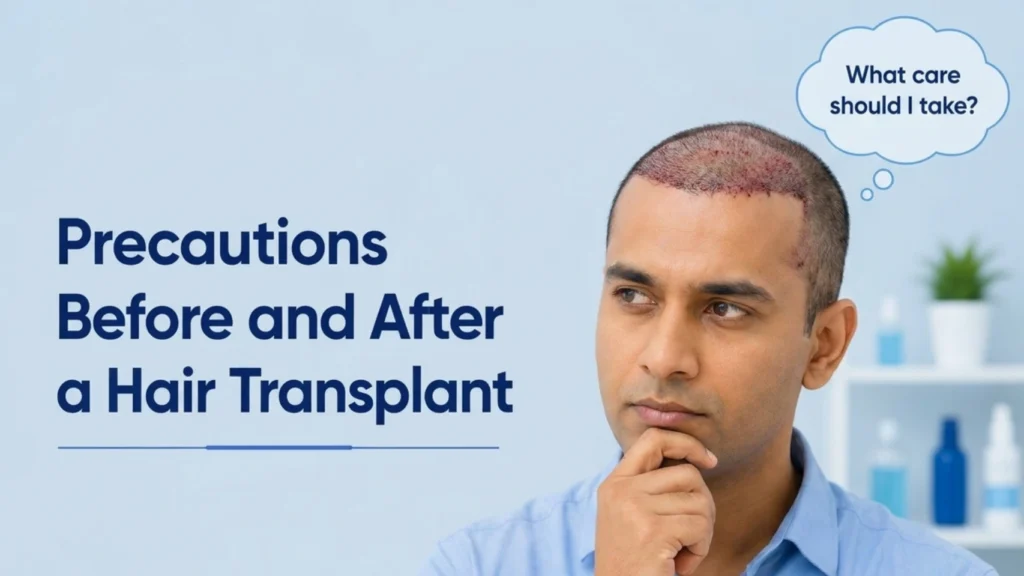
Hair transplant precautions before and after surgery for faster healing and successful results
Hair Transplant

What Precautions Need to Be Taken Before and After a Hair Transplant?

What Precautions Need to Be Taken Before and After a Hair Transplant? Table of Contents Hair Transplant Precautions play a crucial role in ensuring the success of your hair restoration journey. Following the right guidelines before and after the procedure helps protect the transplanted grafts, promotes faster healing, and improves the chances of achieving natural, long-lasting results. Hair transplantation has become one of the most effective and reliable solutions for treating hair loss. While advanced techniques such as FUE and FUT provide natural-looking results, the success of the procedure depends not only on the surgery itself but also on proper preparation and post-operative care. Understanding the essential Precautions Before and After a Hair Transplant in Pune can help maximize graft survival, promote faster healing, and ensure long-lasting results. Consulting Dr. Kiran Chotaliya, a hair transplant surgeon in Pune, can help patients receive expert guidance on every stage of the hair restoration journey, from pre-operative preparation to post-transplant recovery and long-term hair growth. Is Hair Transplant Permanent, Hair transplant growth after surgery, Hair Transplant In Pune, dr. kiran chotaliya clinic, Is Hair Transplant Permanent, Hair transplant growth after surgery, Hair Transplant In Pune, dr. kiran chotaliya clinic,Is Hair Transplant Permanent, Hair transplant growth after surgery, Hair Transplant In Pune, dr. kiran chotaliya clinic What to do before a hair transplant? Following proper hair transplant precautions before the procedure helps create the ideal conditions for a successful transplant. 1. Consult an Experienced Hair Transplant Surgeon A detailed consultation is the first and most important step. During the consultation, the surgeon evaluates your scalp condition, donor area, medical history, and hair restoration goals. Choosing an experienced Best hair transplant doctor in Pune ensures that you receive a personalized treatment plan and realistic expectations. 2. Avoid Smoking and Alcohol Smoking reduces blood circulation to the scalp, which can affect graft survival and healing. Alcohol may increase bleeding during the procedure. Most surgeons recommend avoiding both for at least one week before surgery. 3. Inform Your Doctor About Medications Certain medications, including blood thinners, anti-inflammatory drugs, and supplements, can increase bleeding risk. Always inform your surgeon about any medications or health conditions before the procedure. 4. Maintain a Healthy Diet A balanced diet rich in vitamins, minerals, and protein supports healthy hair growth and promotes faster recovery after the transplant. 5. Wash Your Hair as Instructed Your surgeon may recommend washing your scalp thoroughly before the procedure to reduce the risk of infection and ensure a clean surgical environment. 6. Get Adequate Rest A good night’s sleep before surgery helps reduce stress and prepares your body for the procedure. Talk To Our Hair Expert What not to do after a hair transplant? Following proper hair transplant precautions after the procedure is critical for protecting newly transplanted grafts and achieving the best possible outcome. 1. Avoid Touching the Transplanted Area The newly implanted grafts are delicate during the first few days. Avoid scratching, rubbing, or touching the treated area unnecessarily. 2. Follow Washing Instructions Carefully Your surgeon will provide specific instructions regarding when and how to wash your hair after the procedure. Gentle cleansing helps prevent infection while protecting the grafts. 3. Sleep with Your Head Elevated Keeping your head elevated for the first few nights helps reduce swelling around the forehead and scalp. 4. Avoid Strenuous Activities Heavy exercise, gym workouts, running, and sports should be avoided for at least one to two weeks, as excessive sweating and increased blood flow may affect healing. 5. Protect Your Scalp from Sun Exposure Direct sunlight can irritate the healing scalp and damage newly transplanted grafts. Wear a loose-fitting cap if advised by your surgeon. 6. Avoid Smoking and Alcohol During Recovery Continuing to avoid smoking and alcohol after surgery helps improve blood circulation and supports healthy graft growth. 7. Take Prescribed Medications Use all prescribed medications, including antibiotics and anti-inflammatory drugs, exactly as directed to minimize discomfort and reduce the risk of complications. 8. Be Patient with the Results Many patients experience temporary shedding of transplanted hairs within the first few weeks, known as shock loss. This is a normal part of the healing process. New hair growth typically begins within three to four months, with final results becoming visible over the following months. Why Following Hair transplant precautions Matters ? Hair transplant precautions are essential for achieving the best possible results from your procedure. A hair transplant is an investment in your appearance and confidence, and proper pre-operative preparation and diligent post-operative care significantly improve graft survival, reduce complications, and enhance overall results. Patients who carefully follow hair transplant precautions and their surgeon’s instructions often experience a smoother recovery and more natural-looking outcomes. Conclusion Understanding the essential Precautions Before and After a Hair Transplant in Pune can make a significant difference in the success of your procedure. From avoiding smoking and certain medications before surgery to protecting grafts and following aftercare instructions during recovery, every step plays a crucial role in achieving optimal results. For personalized guidance and advanced hair restoration solutions, consult Dr. Kiran Chotaliya, Best hair transplant doctor in Pune, who can help you achieve natural-looking, long-lasting hair restoration results. FAQ’s – Hair transplant precautions 1. What should I avoid before a hair transplant? Avoid smoking, alcohol, and blood-thinning medicines for at least a week before surgery unless advised otherwise by your surgeon. 2. Can I wash my hair before the procedure? Yes, you should wash your hair thoroughly on the day of surgery or as instructed by your hair transplant surgeon in Pune to keep the scalp clean. 3. When can I wash my hair after a hair transplant? Usually, gentle washing can begin after 2–3 days, but you must strictly follow the post-operative instructions given by your surgeon. 4. How long does recovery take after a hair transplant? Initial healing takes about 7–10 days, but full hair growth results appear gradually over 6–12 months. 5. Is it normal to lose transplanted hair after surgery? Yes, temporary shedding (shock loss) is normal. New

Hair transplant scars after FUE and FUT surgery with proper healing and scar prevention
Hair Transplant

Will There Be Scars After a Hair Transplant?

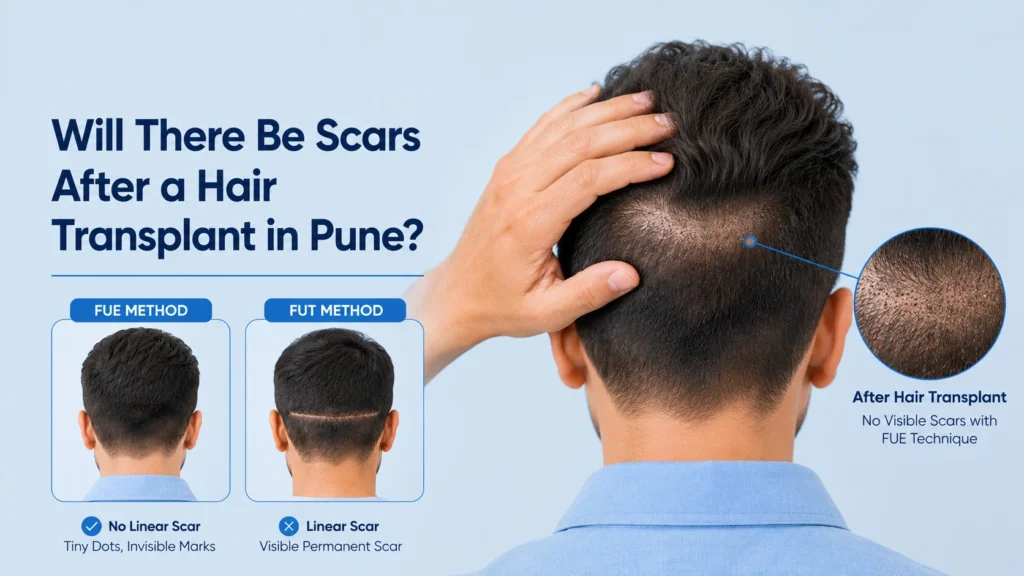
Will There Be Scars After a Hair Transplant? Table of Contents Hair transplant scars are a common concern for people planning to undergo a hair restoration procedure. Understanding the causes, visibility, and ways to minimize hair transplant scars can help you make an informed decision and feel more confident about the treatment. Hair transplantation is one of the most effective solutions for restoring lost hair and improving confidence. However, many people considering the procedure have one common concern: “Will There Be Scars After a Hair Transplant?” Understanding the different techniques and how scars develop can help you make an informed decision before undergoing treatment. If you are considering a procedure with Dr Kiran Chotaliya, a trusted hair transplant surgeon in Pune, it is important to know what to expect regarding scarring, healing, and recovery. With advanced hair restoration techniques and personalized treatment planning, Dr Kiran Chotaliya focuses on achieving natural-looking results while minimizing visible scarring. Is Hair Transplant Permanent, Hair transplant growth after surgery, Hair Transplant In Pune, dr. kiran chotaliya clinic, Is Hair Transplant Permanent, Hair transplant growth after surgery, Hair Transplant In Pune, dr. kiran chotaliya clinic,Is Hair Transplant Permanent, Hair transplant growth after surgery, Hair Transplant In Pune, dr. kiran chotaliya clinic Do Hair Transplants Leave Scars? Follicular Unit Extraction (FUE) is one of the most popular hair restoration techniques today. During this procedure, individual hair follicles are extracted directly from the donor area and implanted into thinning or bald areas. What Kind of Scars Does FUE Leave? FUE creates tiny circular scars where the follicles are removed. These scars are: Very small in size Scattered across the donor area Usually difficult to notice once healed Easily hidden by short or medium-length hair For most patients, FUE scars become barely visible after complete healing, making this technique a preferred option for those concerned about scarring. Scarring in FUT Hair Transplants Follicular Unit Transplantation (FUT), also known as the strip method, involves removing a strip of scalp from the donor area before dissecting it into individual grafts. What Kind of Scars Does FUT Leave? Unlike FUE, FUT typically leaves: A linear scar at the back of the scalp A more noticeable scar if hair is worn very short A scar that can usually be concealed by longer hair Although FUT may leave a larger scar than FUE, advanced closure techniques can significantly reduce its visibility. Talk To Our Hair Expert How Long Do Hair Transplant Scars Take to Heal? Healing times vary from person to person, but generally: Initial redness and tiny scabs disappear within 7–14 days. Most visible signs of surgery fade within a few weeks. Scar maturation continues for several months. Final scar appearance is usually seen after 6–12 months. Following your surgeon’s aftercare instructions can help promote faster healing and minimize scar formation. Can Hair Transplant Scars Be Reduced? Yes. Modern techniques and proper post-operative care can significantly reduce the visibility of hair transplant scars. Some ways to improve scar healing include: Following all post-surgery instructions Avoiding scratching or picking at scabs Protecting the scalp from excessive sun exposure Maintaining proper scalp hygiene Attending scheduled follow-up appointments In some cases, additional treatments such as scalp micropigmentation or corrective procedures may help improve the appearance of existing scars. Factors That Influence Scar Visibility Several factors affect how noticeable hair transplant scars become: Skin Type Some individuals naturally heal with less visible scarring than others. Surgical Technique Advanced extraction and implantation methods help reduce tissue trauma and improve healing. Graft Handling Proper graft harvesting and placement play an important role in minimizing donor area scarring. Surgeon Experience Choosing an experienced hair transplant surgeon in Pune can significantly improve both aesthetic outcomes and scar management. Choosing the Right Hair Transplant Specialist The success of a hair transplant depends not only on hair growth results but also on achieving minimal scarring. An experienced surgeon carefully plans donor extraction, graft placement, and post-operative care to ensure the most natural appearance possible. If you are concerned about hair transplant scars, consulting Dr Kiran Chotaliya, hair transplant surgeon in Pune, can help you understand the best treatment option based on your hair loss pattern, scalp condition, and expectations. Conclusion When asking, “Will There Be Scars After a Hair Transplant?“, the answer is that some degree of scarring is unavoidable. However, modern techniques such as FUE have made scars extremely small and often virtually undetectable. With proper surgical expertise and aftercare, most patients achieve natural-looking results with minimal visible evidence of the procedure. Consulting a qualified hair transplant surgeon in Pune can help you choose the right approach and achieve long-lasting hair restoration with confidence. FAQ’s 1. Are hair transplant scars permanent? Yes, hair transplant scars are technically permanent, but they usually become much less noticeable over time and can often be hidden by surrounding hair. 2. Does FUE leave scars? Yes, FUE leaves tiny dot-like scars in the donor area, but they are generally difficult to detect after healing. 3. Which hair transplant method leaves fewer scars? FUE typically leaves less noticeable scars compared to FUT because it does not require the removal of a scalp strip. 4. Can hair grow through hair transplant scars? Hair can sometimes grow around scar tissue, but growth directly through a scar depends on the extent of tissue healing. 5. How can I minimize hair transplant scars? Choosing an experienced surgeon, following aftercare instructions, and maintaining scalp health can help minimize visible scarring. Yes, hair transplant scars are technically permanent, but they usually become much less noticeable over time and can often be hidden by surrounding hair. Yes, FUE leaves tiny dot-like scars in the donor area, but they are generally difficult to detect after healing. FUE typically leaves less noticeable scars compared to FUT because it does not require the removal of a scalp strip. Hair can sometimes grow around scar tissue, but growth directly through a scar depends on the extent of tissue healing. Choosing an experienced surgeon, following aftercare instructions, and maintaining

FUE hair transplant for men in Pune showing natural hair restoration and fuller scalp coverage
Hair Transplant

Big FUE for Men: Achieving Fuller Coverage in One Session

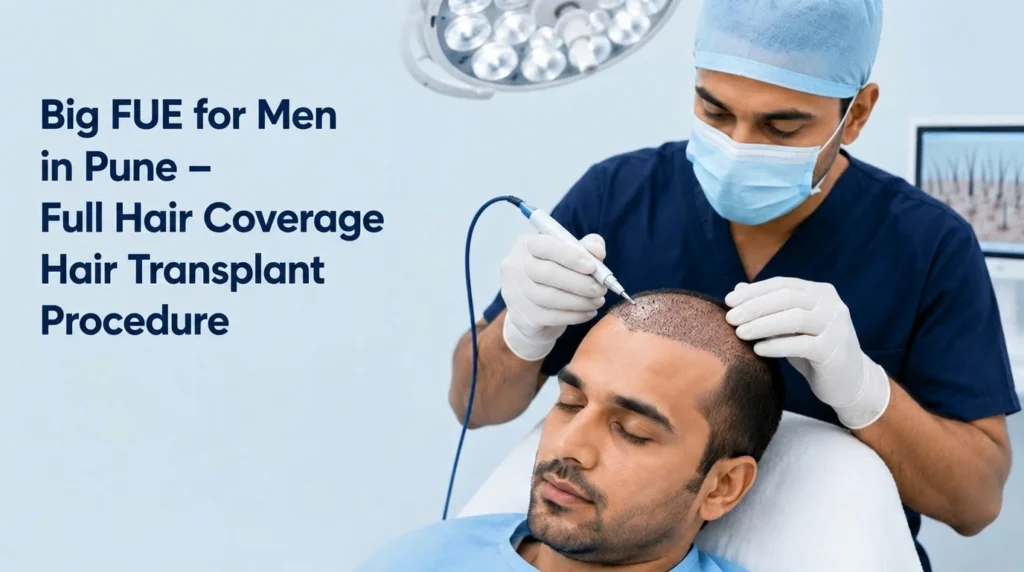
Big FUE for Men: Achieving Fuller Coverage in One Session Table of Contents Big FUE hair transplant for men is an advanced approach to FUE hair transplant for men in Pune, designed to provide natural-looking results with minimal downtime. It allows eligible candidates with moderate to extensive hair loss to achieve fuller scalp coverage in a single session using advanced FUE techniques. Hair loss can significantly affect a man’s confidence and appearance. For individuals experiencing advanced hair loss, restoring a larger area of the scalp often requires a substantial number of grafts. Fortunately, modern hair restoration techniques have made it possible to achieve extensive coverage in a single procedure. FUE hair transplant for men in Pune is becoming an increasingly popular solution for those seeking natural-looking, dense hair restoration without undergoing multiple surgeries. Under the expert guidance of Dr Kiran Chotaliya Hair Transplant Surgeon in Pune, patients can benefit from advanced Big FUE procedures designed to provide maximum scalp coverage, natural-looking density, and long-lasting results in a single session. Is Hair Transplant Permanent, Hair transplant growth after surgery, Hair Transplant In Pune, dr. kiran chotaliya clinic, Is Hair Transplant Permanent, Hair transplant growth after surgery, Hair Transplant In Pune, dr. kiran chotaliya clinic,Is Hair Transplant Permanent, Hair transplant growth after surgery, Hair Transplant In Pune, dr. kiran chotaliya clinic What Is Big FUE? Big FUE (Follicular Unit Extraction) refers to a large-session hair transplant procedure where a high number of grafts are extracted and implanted during a single treatment session. Unlike traditional procedures that may require multiple sittings, Big FUE allows qualified candidates to restore significant hair loss areas in one operation. The procedure involves extracting individual follicular units from the donor area, usually the back and sides of the scalp, and transplanting them into thinning or bald regions. Advanced techniques and specialized equipment enable surgeons to safely perform high-graft procedures while maintaining natural results. Benefits of Big FUE hair transplant for men 1. Maximum Coverage in One Procedure One of the biggest advantages of Big FUE for Men in Pune is the ability to cover larger bald areas during a single session. This reduces the need for multiple surgeries and minimizes overall treatment time. 2. Natural-Looking Results Modern FUE techniques allow surgeons to carefully design the hairline and strategically place grafts, creating a natural appearance that blends seamlessly with existing hair. 3. Minimal Scarring Unlike traditional strip harvesting methods, FUE leaves tiny extraction points that heal quickly and are virtually unnoticeable once recovered. 4. Faster Return to Daily Activities Most patients can resume routine activities within a few days, making Big FUE a convenient option for busy professionals. 5. Long-Term Hair Restoration Since transplanted hair follicles are typically resistant to hair loss, the results can be long-lasting when combined with appropriate post-procedure care. Talk To Our Hair Expert What Is the Big FUE Procedure? The process begins with a thorough scalp assessment and treatment planning. During the procedure: The donor area is prepared and trimmed. Individual follicular units are extracted using specialized FUE instruments. Recipient sites are carefully created based on the planned hairline and density. Extracted grafts are implanted into the target areas. Post-procedure instructions are provided to support healing and graft survival. Depending on the number of grafts required, the procedure may take several hours to complete. What Is the Recovery Time and Expected Results After a Big FUE Hair Transplant? Recovery after a Big FUE procedure is generally straightforward. Mild redness, swelling, and scabbing are common during the initial healing phase. Most patients can return to work within a few days. The transplanted hairs typically shed within the first few weeks, which is a normal part of the growth cycle. New hair growth generally begins within three to four months, with noticeable improvement developing over the following months. Full results are usually visible within 12 to 18 months. Why Choose an Experienced Surgeon? Large-session FUE procedures require advanced planning, precision, and expertise. An experienced surgeon understands how to maximize donor hair utilization while maintaining donor area health and achieving natural density. Choosing a qualified Hair Transplant Surgeon in Pune ensures that the procedure is performed safely, graft survival rates remain high, and results look natural and balanced. FUE hair transplant for men in Pune requires a personalized treatment approach based on the extent of hair loss, donor hair availability, and the patient’s long-term goals. Dr. Kiran Chotaliya, hair transplant surgeon in Pune, specializes in advanced FUE techniques, including large-session procedures, to deliver natural-looking hairlines, optimal graft survival, and fuller scalp coverage with long-lasting results. Conclusion Big FUE hair transplant for men in Pune is an advanced hair transplant for advanced baldness, offering an effective solution for individuals seeking extensive hair restoration with maximum coverage in a single session. FUE hair transplant for men in Pune combines advanced FUE technology with expert surgical planning to deliver natural-looking, long-lasting results while minimizing downtime. If you are experiencing significant hair loss and are considering a Big FUE hair transplant for men, consulting an experienced hair transplant specialist can help determine whether this advanced procedure is the right choice for achieving fuller hair coverage and lasting results. FAQ’s 1. How many grafts can be transplanted in a Big FUE session? The number varies depending on donor availability and individual requirements, but large sessions often involve several thousand grafts. 2. Is Big FUE painful? The procedure is performed under local anesthesia, making it comfortable for most patients. 3. How long does recovery take? Most patients recover within a few days, although complete healing of the scalp may take several weeks. 4. Are the results permanent? Transplanted follicles are generally resistant to hair loss and can provide long-lasting results. 5. How do I know if I am suitable for Big FUE? A consultation with a hair transplant surgeon is the best way to assess your donor area, hair loss pattern, and treatment goals. The number varies depending on donor availability and individual requirements, but large sessions often involve several thousand grafts. The

Non-Surgical Hair Loss Solutions for Men in Pune
Hair Loss

Beyond Transplant: Non-Surgical Hair Loss Solutions for Men in Pune

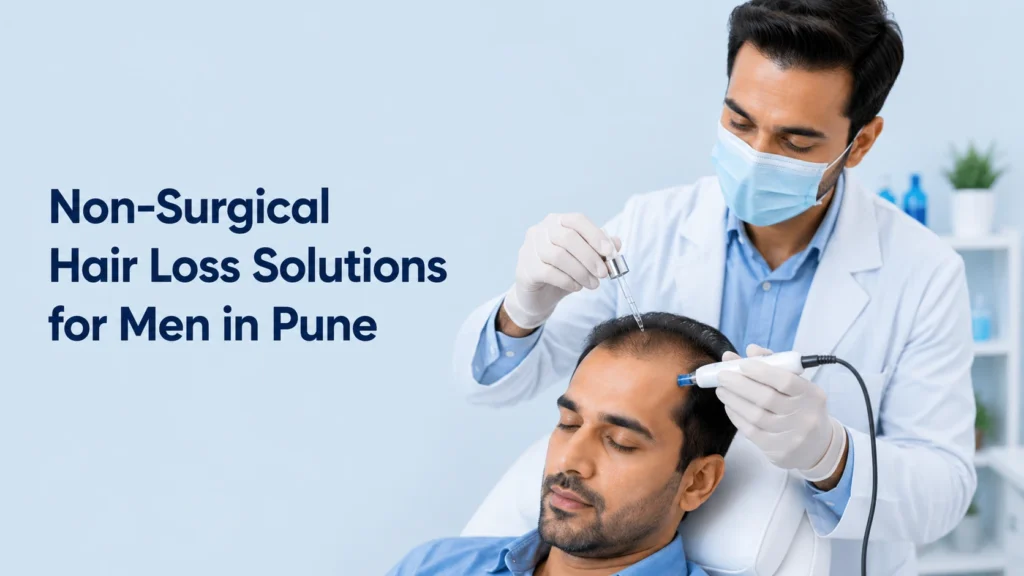
Beyond Transplant: Non-Surgical Hair Loss Solutions for Men in Pune Table of Contents   Non-Surgical Hair Loss Solutions for Men in Pune offer effective options for managing hair thinning and early-stage hair loss without the need for surgery. Advanced treatments such as PRP, GFC, and other regenerative therapies help strengthen hair follicles, reduce hair fall, and promote healthy, natural hair growth. Hair loss is one of the most common concerns affecting men today. Whether it begins with a receding hairline, thinning crown, or excessive shedding, hair loss can impact confidence and overall appearance. While hair transplantation is a popular and effective solution for advanced hair loss, not every individual requires surgery. Fortunately, several Non-Surgical Hair Loss Solutions for Men in Pune can help slow hair loss, improve hair density, and promote healthier hair growth. Understanding these treatment options can help men take early action and preserve their natural hair before significant loss occurs. Consulting Dr Kiran Chotaliya hair transplant specialist in Pune can help you identify the underlying cause of hair loss and choose the most effective non-surgical treatment plan tailored to your needs. Is Hair Transplant Permanent, Hair transplant growth after surgery, Hair Transplant In Pune, dr. kiran chotaliya clinic, Is Hair Transplant Permanent, Hair transplant growth after surgery, Hair Transplant In Pune, dr. kiran chotaliya clinic,Is Hair Transplant Permanent, Hair transplant growth after surgery, Hair Transplant In Pune, dr. kiran chotaliya clinic Why Consider Non-Surgical Hair Loss Treatments? Non-Surgical Hair Loss Solutions for Men in Pune is most effective when started at the early stages of hair loss. Hair loss progresses differently for every individual, and men experiencing early-stage thinning or moderate hair loss often benefit from non-surgical therapies that strengthen existing hair follicles, stimulate healthy hair growth, and help slow the progression of hair loss. Benefits of non-surgical hair restoration include: No surgical procedure required Minimal downtime Reduced discomfort Natural-looking results Suitable for early and moderate hair loss Can be combined with hair transplant procedures for enhanced outcomes A consultation with a qualified hair restoration specialist can help determine the most effective treatment plan based on the cause and severity of hair loss. Hair loss treatment for men in Pune is most effective when started at the early stages of hair loss. Hair loss progresses differently for every individual, and men experiencing early-stage thinning or moderate hair loss often benefit from non-surgical therapies that strengthen existing hair follicles, stimulate healthy hair growth, and help slow the progression of hair loss. Talk To Our Hair Expert Popular Non-Surgical Hair Loss Solutions for Men in Pune 1. Platelet-Rich Plasma (PRP) Therapy PRP hair treatment for men in Pune is among the most widely recommended solutions for male pattern hair loss. The procedure involves drawing a small sample of the patient’s blood, processing it to concentrate growth factors, and injecting the platelet-rich plasma into the scalp. This treatment helps stimulate hair follicles, reduce hair fall, and promote healthier, stronger hair growth. Benefits of PRP treatment include: Stimulates dormant hair follicles Improves scalp circulation Enhances hair thickness and density Reduces hair shedding Supports natural hair growth Many men choose PRP hair treatment Pune as a preventive approach before considering surgical intervention. 2. Growth Factor Concentrate (GFC) Therapy GFC hair treatment for men in Pune is an advanced regenerative solution for treating hair loss and thinning hair. The therapy uses concentrated growth factors derived from the patient’s blood, which are carefully separated and injected into targeted areas of the scalp to stimulate hair follicles, improve hair density, and promote healthy, natural hair growth. Advantages of GFC Hair Therapy include: Higher concentration of growth factors Reduced inflammation Improved follicle health Enhanced hair growth stimulation Minimal discomfort during treatment GFC therapy is increasingly becoming a preferred option for men seeking effective hair restoration solutions Pune. 3. Medical Management for Hair Loss Prescription medications remain an important component of many hair restoration programs. Depending on individual suitability, specialists may recommend treatments designed to reduce hair loss progression and support regrowth. Medical management can help: Slow hair thinning Preserve existing hair Improve follicle function Complement PRP or GFC therapies These treatments should always be used under professional supervision to ensure safety and effectiveness. 4. Low-Level Laser Therapy (LLLT) Low-Level Laser Therapy uses specialized laser devices to stimulate hair follicles and improve blood circulation within the scalp. Potential benefits include: Increased follicular activity Improved hair density Enhanced scalp health Non-invasive treatment experience LLLT is often recommended as part of a comprehensive Non-Surgical Hair Loss Solutions for Men in Pune plan. 5. Scalp Health and Nutritional Support Hair growth is closely linked to overall health. Nutritional deficiencies, stress, poor sleep, and lifestyle factors can contribute to excessive hair shedding. A personalized treatment plan may include: Nutritional assessment Vitamin supplementation Stress management strategies Scalp care recommendations Lifestyle modifications Addressing underlying causes can significantly improve treatment outcomes and support long-term hair health. Choosing the Right Hair Loss Solution Selecting the appropriate treatment depends on several factors, including age, hair loss pattern, medical history, and treatment goals. A thorough scalp evaluation helps determine whether PRP, GFC therapy, medical management, or a combination approach is most suitable. Working with an experienced hair restoration specialist ensures a customized treatment plan designed to achieve the best possible results. For personalized and effective hair restoration, consult Dr. Kiran Chotaliya, hair transplant specialist in Pune, who offers comprehensive scalp evaluations and customized treatment plans based on your individual hair loss condition. Whether you require PRP, GFC therapy, medical management, or a combination of treatments, Dr. Kiran Chotaliya focuses on delivering safe, evidence-based solutions to promote healthy hair growth and long-lasting results. Conclusion Hair transplantation is not the only option for managing hair loss. Modern Non-Surgical Hair Loss Solutions for Men in Pune offer effective ways to slow hair loss, strengthen existing hair, and improve overall hair density without surgery. From PRP and GFC therapies to medical treatments and lifestyle optimization, men now have access to a wide range of advanced hair restoration options. If you are

Hair Loss After Hair Transplant Pune Recovery Timeline
Hair Loss

Understanding Hair Loss After Hair Transplant: What’s Normal and What to Expect

Understanding Hair Loss After Hair Transplant: What’s Normal and What to Expect Table of Contents A hair transplant is a life-changing solution for individuals struggling with hair loss. While the procedure offers long-term and natural-looking results, many patients become concerned when they notice hair shedding after the transplant. If you are experiencing hair loss after hair transplant Pune, understanding the recovery process can help you stay confident and avoid unnecessary stress.  The truth is that some degree of hair loss after a hair transplant is completely normal and often expected. Knowing what happens during each stage of recovery can help you set realistic expectations and appreciate the journey toward fuller hair growth. Consulting Dr Kiran Chotaliya hair transplant surgeon in Pune can provide expert guidance throughout your recovery and help ensure the best possible outcome from your hair restoration procedure. Is Hair Transplant Permanent, Hair transplant growth after surgery, Hair Transplant In Pune, dr. kiran chotaliya clinic, Is Hair Transplant Permanent, Hair transplant growth after surgery, Hair Transplant In Pune, dr. kiran chotaliya clinic,Is Hair Transplant Permanent, Hair transplant growth after surgery, Hair Transplant In Pune, dr. kiran chotaliya clinic Why Does Hair Loss Occur After a Hair Transplant? One of the most common concerns among patients is the shedding of newly transplanted hair within the first few weeks after surgery. This process is known as “shock loss.” During a hair transplant procedure, hair follicles are carefully extracted from the donor area and implanted into thinning or balding regions. While the follicles remain healthy and intact, the transplanted hair shafts often fall out as the follicles adjust to their new environment. This temporary shedding is a natural part of the healing process and should not be mistaken for transplant failure. Understanding the Hair Growth Timeline A Hair Growth Timeline explains the stages of hair regrowth after treatment, from initial shedding to visible improvement and full, natural-looking results over several months. First 2 Weeks: Healing Phase Immediately after the procedure, small scabs form around the transplanted grafts. Mild redness, swelling, and tenderness are common. Most patients can resume routine activities within a few days. Weeks 2–8: Shock Loss Phase This is when many patients notice shedding of transplanted hairs. Although it can seem alarming, the follicles remain alive beneath the scalp. The shedding simply makes room for new growth. Months 3–4: Early Growth Stage Tiny new hairs begin emerging from the transplanted follicles. Growth may appear uneven initially, but this is perfectly normal. Months 6–9: Noticeable Improvement Hair becomes thicker, denser, and more visible. Most patients begin seeing significant cosmetic improvements during this stage. Months 12–18: Final Results The full outcome of the procedure becomes evident. Hair continues to mature in texture, density, and appearance, delivering natural-looking and long-lasting results. Is Shock Loss Permanent? In most cases, shock loss is temporary. The transplanted follicles remain healthy and continue producing new hair growth after a resting phase. Some patients may also experience temporary shedding of existing hair near the transplant area. This usually regrows within a few months. Choosing an experienced hair transplant surgeon helps minimize the risk of excessive shock loss and ensures proper graft placement. Talk To Our Hair Expert Tips to Support Hair Transplant Recovery Following your surgeon’s post-operative instructions is essential for optimal results. Key recommendations include: Avoid scratching or rubbing the scalp. Follow prescribed washing guidelines. Stay away from strenuous exercise during the initial recovery period. Avoid smoking and excessive alcohol consumption. Maintain a balanced diet rich in vitamins and protein. Attend all scheduled follow-up appointments. Proper hair transplant aftercare plays a significant role in supporting healthy hair growth and protecting newly transplanted follicles. When Should You Be Concerned? While shedding is normal, you should contact your hair transplant specialist if you experience: Persistent severe pain Excessive swelling or redness Signs of infection Continuous bleeding No signs of hair growth after several months Regular monitoring by your surgeon helps ensure your recovery is progressing as expected. Choosing the Right Hair Transplant Expert in Pune A successful hair transplant depends not only on the procedure itself but also on the expertise of the surgeon performing it. An experienced specialist can guide you through every stage of recovery, explain what to expect during Hair Loss After Hair Transplant Pune, and provide personalized aftercare recommendations. If you are considering hair restoration treatment, consulting Dr Kiran Chotaliya hair transplant surgeon in Pune can help you understand your options and achieve natural-looking, long-lasting results while ensuring proper recovery and optimal hair growth. Conclusion Experiencing Hair Loss After Hair Transplant Pune is usually a normal part of the recovery journey. Temporary shedding, known as shock loss, occurs as transplanted follicles adapt and prepare for new growth. While patience is required, most patients begin seeing noticeable improvements within a few months and achieve full results within 12 to 18 months. Understanding the recovery timeline and following proper aftercare guidelines can help you enjoy a smoother healing process and successful hair restoration outcome. FAQ’s 1. Is hair shedding normal after a hair transplant? Yes. Temporary shedding, known as shock loss, is a normal part of the healing process. 2. How long does shock loss last after a hair transplant? Shock loss typically occurs within 2–8 weeks after the procedure and is followed by new hair growth. 3. When will I start seeing new hair growth? Most patients notice initial hair growth around 3–4 months after surgery. 4. How long does it take to see final hair transplant results? Final results usually appear between 12 and 18 months after the procedure. 5. Can transplanted hair fall out permanently? No. The transplanted hair shafts may shed temporarily, but the follicles remain intact and produce new hair growth. Yes. Temporary shedding, known as shock loss, is a normal part of the healing process. Shock loss typically occurs within 2–8 weeks after the procedure and is followed by new hair growth. Most patients notice initial hair growth around 3–4 months after surgery. Final results usually appear between 12

Hair Loss Solutions Pune showcasing hair transplant, PRP therapy, and advanced hair restoration treatments for natural hair regrowth
Hair Loss

A Complete Guide for Hair Loss Solutions

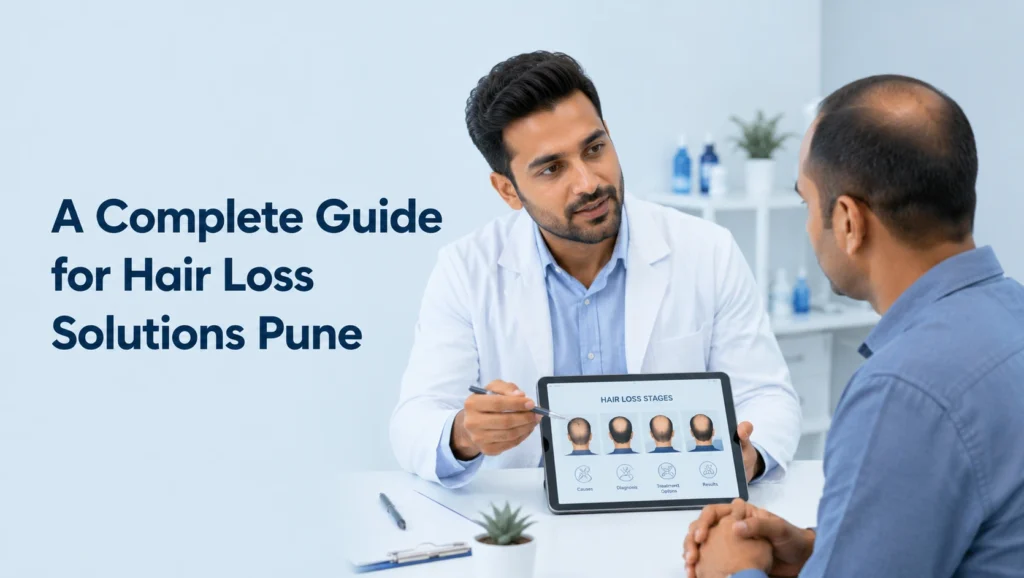
A Complete Guide for Hair Loss Solutions Pune Table of Contents   Hair loss solutions Pune offers advanced, personalized treatments to help manage hair fall and restore healthy hair growth. From non-surgical therapies to advanced hair transplant procedures, the right solution depends on the cause and stage of your hair loss. Hair loss is a common concern affecting both men and women across different age groups. Whether it’s gradual thinning, a receding hairline, or excessive shedding, hair loss can significantly impact confidence and self-esteem. Fortunately, modern advancements in hair restoration have made it possible to effectively manage and treat hair loss. If you are searching for reliable hair loss solutions Pune, consulting an experienced specialist is the first step toward achieving healthier, fuller hair. Dr. Kiran Chotaliya, hair specialist in Pune, offers advanced hair restoration treatments tailored to each patient’s unique needs. From non-surgical therapies to cutting-edge hair transplant procedures, this guide will help you understand the available treatment options and choose the most suitable solution for long-lasting, natural-looking results. Is Hair Transplant Permanent, Hair transplant growth after surgery, Hair Transplant In Pune, dr. kiran chotaliya clinic, Is Hair Transplant Permanent, Hair transplant growth after surgery, Hair Transplant In Pune, dr. kiran chotaliya clinic,Is Hair Transplant Permanent, Hair transplant growth after surgery, Hair Transplant In Pune, dr. kiran chotaliya clinic Understanding the Causes of Hair Loss Before selecting a treatment, it is important to identify the underlying cause of hair loss. Common reasons include: Genetic hair loss (male and female pattern baldness) Hormonal imbalances Stress and lifestyle factors Nutritional deficiencies Medical conditions such as thyroid disorders Certain medications Scalp infections and inflammation A proper diagnosis from an experienced hair specialist can help determine the most effective treatment plan. Non-Surgical Hair Loss Solutions Pune For individuals in the early stages of hair loss, non-surgical treatments can often slow down hair thinning and improve hair density. 1. PRP Therapy (Platelet-Rich Plasma) PRP therapy involves using the patient’s own blood to extract growth-factor-rich plasma, which is then injected into the scalp. This treatment helps stimulate dormant hair follicles and promote healthier hair growth. Benefits: Minimally invasive No significant downtime Supports natural hair growth Suitable for early hair thinning 2. Medical Treatments FDA-approved medications can help control hair loss and encourage hair regrowth. Common options include: Minoxidil topical solution Finasteride tablets (for suitable male candidates) These medications are often recommended as part of a comprehensive hair loss treatment Pune plan. 3. Low-Level Laser Therapy (LLLT) Low level laser therapy uses low-energy light to stimulate hair follicles and improve blood circulation in the scalp. It can be used alongside other treatments to enhance results. Talk To Our Hair Expert Surgical Hair Loss Solutions Pune When hair loss becomes more advanced, surgical hair restoration may provide the most effective and permanent solution. Hair Transplant Surgery A hair transplant involves moving healthy hair follicles from the donor area (typically the back or sides of the scalp) to areas affected by hair loss. Modern techniques include: FUE (Follicular Unit Extraction) FUE is one of the most popular hair restoration procedures today. Individual follicles are extracted and transplanted with precision. Advantages: Minimal scarring Faster recovery Natural-looking results Long-lasting outcome Advanced Hair Restoration Techniques Experienced surgeons use advanced implantation methods and customized hairline designs to achieve highly natural results. Choosing a qualified specialist is crucial for successful outcomes. Choosing the Right Hair Loss Solution The best treatment depends on several factors: Age and extent of hair loss Donor hair availability Medical history Hair type and density Personal goals and expectations A professional consultation for hair loss solutions Pune helps determine whether non-surgical therapies, a hair transplant, or a combination approach is the most appropriate treatment for achieving effective and long-lasting hair restoration results. Why Seek Professional Hair Restoration in Pune? Pune has become a preferred destination for advanced hair restoration treatments due to: Access to experienced hair transplant surgeons Modern technology and techniques Personalized treatment plans Cost-effective procedures compared to larger metropolitan cities Patients can benefit from comprehensive evaluations and customized treatment strategies designed to deliver natural and long-lasting results. Tips for Maintaining Healthy Hair Alongside professional treatment, maintaining healthy hair habits is important: Follow a balanced, protein-rich diet Manage stress levels Avoid excessive heat styling Use gentle hair care products Follow your doctor’s treatment recommendations Consistent care can help improve overall scalp health and support treatment outcomes. Conclusion Finding the right hair loss solutions Pune offers begins with understanding the cause of your hair loss and exploring the available treatment options. From PRP therapy and medications to advanced hair transplant procedures, modern hair restoration techniques provide effective solutions for various stages of hair loss. If you are experiencing hair thinning or baldness, consulting an experienced hair restoration specialist can help you identify the most suitable treatment and achieve natural, long-lasting results. With the right approach, restoring your hair and confidence is more achievable than ever. FAQ’s 1. What is the most effective Hair Loss Solution Pune offers? The most effective solution depends on the cause and severity of hair loss. Hair transplants are generally considered the most permanent option for advanced hair loss, while PRP therapy and medications work well for early stages. 2. Is PRP therapy effective for hair loss? Yes, PRP therapy can help stimulate hair follicles and improve hair density, particularly in patients experiencing early to moderate hair thinning. 3. How long does it take to see results from hair loss treatments? Most non-surgical treatments show visible improvement within 3 to 6 months, while hair transplant results typically become noticeable after 6 to 12 months. 4. Are hair transplant results permanent? Transplanted hair follicles are generally resistant to hair loss and can provide long-lasting, natural-looking results. 5. How do I know which hair loss treatment is right for me? A detailed consultation with a qualified hair restoration specialist can assess your condition and recommend the most suitable treatment plan based on your goals and hair loss pattern The most effective solution depends on the cause

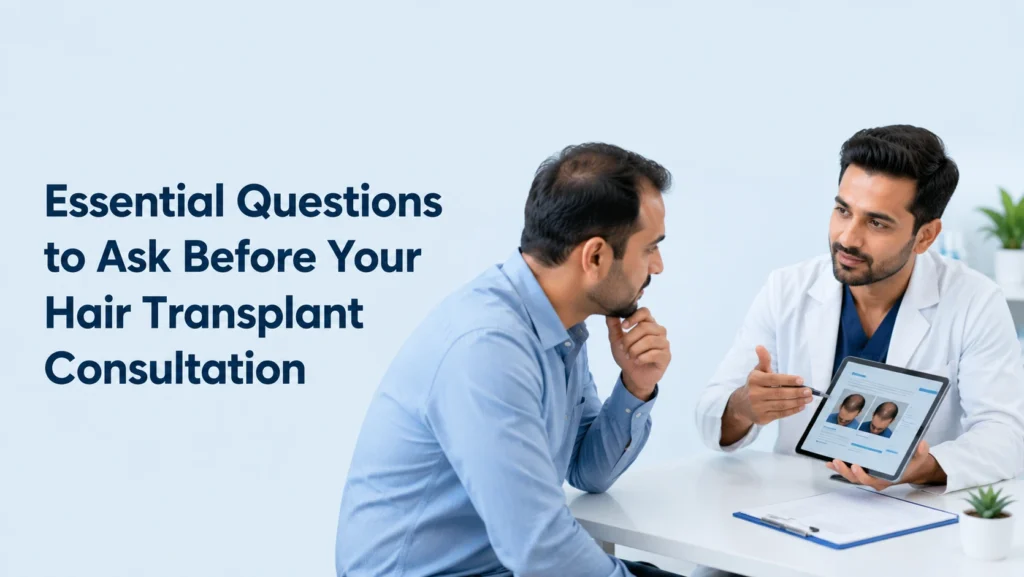
Checklist of questions to ask before hair transplant consultation with doctor explaining procedure and hair analysis
Hair Transplant

Essential Questions to Ask Before Your Hair Transplant Consultation

Essential Questions to Ask Before Your Hair Transplant Consultation Table of Contents Questions to ask before hair transplant consultation help you understand the procedure, expected results, and suitability for treatment in a better way. Asking the right questions ensures clarity about graft requirements, recovery process, and overall success of the hair transplant procedure. Hair Transplant Consultation in Pune is the first and most important step in your hair restoration journey. Hair loss can affect your confidence and self-image, leading many individuals to explore hair restoration solutions. A detailed consultation helps evaluate your suitability for treatment and provides a clear understanding of the results you can realistically expect. Before committing to a hair transplant, it’s important to ask the right questions. A consultation provides an opportunity to assess the surgeon’s expertise, understand the procedure, and make an informed decision. You can schedule a consultation with Dr. Kiran Chotaliya, hair transplant surgeon in Pune, to discuss your hair loss concerns, treatment options, expected outcomes, and long-term hair restoration goals. Here are the essential questions you should ask during your consultation. Is Hair Transplant Permanent, Hair transplant growth after surgery, Hair Transplant In Pune, dr. kiran chotaliya clinic, Is Hair Transplant Permanent, Hair transplant growth after surgery, Hair Transplant In Pune, dr. kiran chotaliya clinic,Is Hair Transplant Permanent, Hair transplant growth after surgery, Hair Transplant In Pune, dr. kiran chotaliya clinic 1. Am I a Suitable Candidate for a Hair Transplant? Not everyone experiencing hair loss is an ideal candidate for surgery. Ask your surgeon to evaluate: Your pattern of hair loss Donor hair availability Age and future hair loss progression Overall scalp health An experienced Hair Transplant Surgeon in Pune will perform a detailed assessment before recommending treatment. 2. Which Hair Transplant Technique Is Best for Me? Different techniques are available, including: FUE (Follicular Unit Extraction) FUT (Follicular Unit Transplantation) Direct Hair Implantation (DHI) Ask why a specific method is recommended for your condition. Understanding the benefits and limitations of each option can help you make the right choice. 3. How Many Grafts Will I Need? The number of grafts required depends on the extent of hair loss and your desired density. Ask: How many grafts are recommended? What coverage can I realistically expect? Will I need additional sessions in the future? A transparent consultation should provide a clear estimate based on your hair restoration goals. 4. Who Will Perform the Procedure? This is one of the most important questions. Ask: Will the surgeon personally perform the extraction and implantation? What role does the medical team play? How experienced is the surgeon? Choosing an experienced Hair Transplant Surgeon in Pune can significantly impact the quality and natural appearance of your results. 5. What Results Can I Realistically Expect? Understanding realistic expectations is essential. Request: Before-and-after photographs of previous patients Expected hair density Timeline for visible growth Long-term outcome projections A reputable clinic will focus on achievable, natural-looking results rather than making unrealistic promises. Talk To Our Hair Expert 6. What Are the Risks and Possible Complications? Every medical procedure carries some risks. Discuss: Temporary swelling Shock loss Infection risks Scarring possibilities Graft survival rates A professional Hair Transplant Consultation in Pune should include a detailed discussion about safety and risk management. 7. What Is the Recovery Process Like? Knowing what to expect after surgery helps you plan accordingly. Ask: How many days off work are required? When can I resume exercise? What post-operative care is necessary? How long does healing take? Understanding recovery timelines ensures a smoother treatment journey. 8. What Is Included in the Treatment Cost? Hair transplant pricing varies depending on graft count, technique, and clinic expertise. Ask for a complete breakdown of: Procedure charges Consultation fees Medications Follow-up appointments Additional treatments if needed Transparent pricing helps avoid unexpected expenses later. 9. Will I Need Additional Hair Loss Treatments? A hair transplant restores lost hair but does not stop future hair loss. Ask whether you may benefit from: PRP Therapy Hair growth medications Laser therapy Preventive treatments Combining treatments often helps maintain long-term results. 10. How Do You Design a Natural Hairline? A natural hairline is one of the key factors that determines the success of a transplant. Discuss: Hairline design strategy Facial proportions Age-appropriate placement Future hair loss considerations An experienced surgeon will create a personalized plan that complements your facial features. Why Detailed Hair Transplant Consultation Matters A thorough Hair Transplant Consultation in Pune helps you: Understand your treatment options Set realistic expectations Evaluate the surgeon’s expertise Learn about costs and recovery Make a confident and informed decision The consultation stage is not just about booking a procedure—it’s about ensuring the treatment is right for you. Conclusion Choosing to undergo a hair transplant is a significant decision. Asking the right questions during your hair transplant consultation in Pune can help you understand the procedure, assess the surgeon’s qualifications, and achieve the best possible results. Whether you’re considering FUE or another hair restoration method, a comprehensive consultation is the foundation of a successful hair transplant journey. If you’re planning a hair transplant in Pune, schedule a consultation with an experienced hair restoration specialist who can provide personalized guidance based on your unique hair loss pattern and goals, including helping you determine which hair transplant technique is best for your specific needs. FAQ’s 1. What happens during a Hair Transplant Consultation in Pune? During the consultation, the surgeon evaluates your hair loss pattern, donor area, medical history, and treatment goals to determine the best hair restoration plan. 2. How long does a hair transplant consultation take? Most consultations last between 30 to 60 minutes, depending on the complexity of your case and the questions you have. 3. Can I know the exact number of grafts needed during the consultation? Yes. After examining your scalp and hair loss pattern, the surgeon can provide an estimate of the grafts required. 4. Is a consultation necessary before a hair transplant? Yes. A consultation helps determine candidacy, assess donor hair quality, discuss expectations,

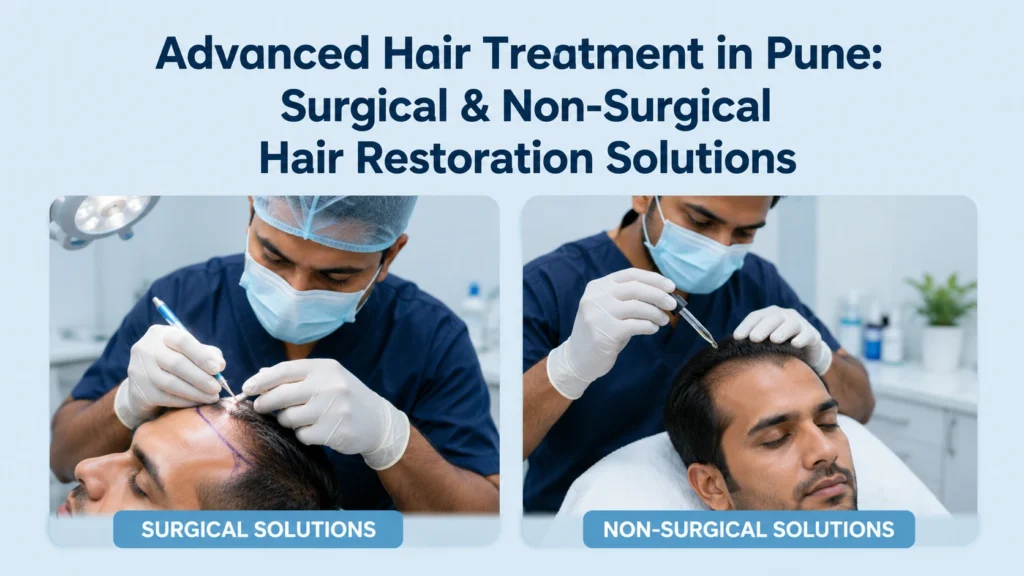
Advanced Hair Treatment in Pune including FUE hair transplant, PRP therapy, and non-surgical hair restoration by Dr Kiran Chotaliya hair transplant surgeon in Pune
Hair Transplant

Advanced Hair Treatment in Pune: Surgical & Non-Surgical Solutions

Advanced Hair Treatment in Pune: Surgical & Non-Surgical Solutions Table of Contents Hair loss is a common concern affecting both men and women across different age groups. Whether caused by genetics, hormonal changes, stress, medical conditions, or lifestyle factors, hair thinning can significantly impact confidence and self-esteem. Fortunately, modern advancements in hair restoration have made it possible to address hair loss effectively. If you are searching for Advanced Hair Treatment in Pune, understanding the available surgical and non-surgical options can help you make an informed decision. Consulting Dr Kiran Chotaliya hair transplant surgeon in Pune can help you receive a personalized diagnosis and treatment plan tailored to your specific hair loss concerns, ensuring safe, effective, and natural-looking results. Non-surgical hair treatment Pune offers effective solutions for individuals experiencing early-stage hair loss or those who are not ready for surgical procedures. Treatments such as PRP therapy, GFC therapy, and medical management help strengthen hair follicles, improve scalp health, and promote natural hair regrowth with minimal downtime and no surgery required. Is Hair Transplant Permanent, Hair transplant growth after surgery, Hair Transplant In Pune, dr. kiran chotaliya clinic, Is Hair Transplant Permanent, Hair transplant growth after surgery, Hair Transplant In Pune, dr. kiran chotaliya clinic,Is Hair Transplant Permanent, Hair transplant growth after surgery, Hair Transplant In Pune, dr. kiran chotaliya clinic Understanding Hair Loss Before choosing a treatment, it is essential to identify the root cause of hair loss. Common reasons include: Genetic baldness (Androgenetic Alopecia) Hormonal imbalances Stress and lifestyle factors Nutritional deficiencies Medical conditions and medications Scalp infections A thorough consultation with an experienced hair restoration specialist in Pune can determine the most suitable treatment plan for your condition. Surgical Hair Restoration Solutions 1. FUE Hair Transplant Follicular Unit Extraction (FUE) is one of the most advanced and widely preferred surgical hair restoration techniques. In this procedure, healthy hair follicles are extracted individually from the donor area and implanted into thinning or bald regions. Benefits of FUE Hair Transplant: Minimally invasive procedure No linear scar Faster recovery time Natural-looking results Permanent hair restoration Patients looking for long-term and natural hair regrowth often consider FUE as a leading option under Advanced Hair Treatment in Pune. 2. Beard and Eyebrow Transplant Advanced hair transplantation techniques can also restore facial hair and eyebrows. These procedures use precise implantation methods to create natural density and shape, enhancing overall facial aesthetics. Talk To Our Hair Expert Non-Surgical Hair Restoration Solutions Not every individual experiencing hair loss requires surgery. Several non-surgical treatments can effectively improve hair density and slow down hair loss progression. Non-surgical hair treatment in Pune is becoming an increasingly preferred option for individuals seeking safe, effective, and minimally invasive solutions. 1. PRP Therapy (Platelet-Rich Plasma) PRP therapy involves extracting growth-factor-rich platelets from the patient’s blood and injecting them into the scalp. These growth factors stimulate dormant hair follicles and encourage healthier hair growth. Advantages of PRP: Minimally invasive Safe and natural Improves hair thickness Reduces hair fall Quick procedure with minimal downtime 2. GFC Therapy (Growth Factor Concentrate) GFC therapy is an advanced version of regenerative hair treatment that utilizes highly concentrated growth factors to promote follicle rejuvenation and hair regrowth. Benefits of GFC: Enhanced follicular stimulation Reduced hair shedding Improved scalp health Suitable for early-stage hair loss 3. Mesotherapy Mesotherapy delivers vitamins, minerals, amino acids, and nutrients directly into the scalp through microinjections. This treatment nourishes hair follicles and improves overall scalp health. 4. Medical Hair Loss Management Certain medications and topical treatments can help slow hair loss progression and support hair growth when prescribed under professional supervision. These treatments are often combined with PRP or GFC for better outcomes. Choosing the Right Hair Treatment The ideal treatment depends on factors such as: Severity of hair loss Age and gender Donor hair availability Hair loss pattern Overall health condition Desired results A personalized assessment by an experienced hair transplant surgeon can help determine whether a surgical or non-surgical approach is most suitable. Why Choose Advanced Hair Treatment in Pune? Pune has become a preferred destination for hair restoration due to its access to advanced technologies, experienced specialists, and modern treatment facilities. Patients can benefit from customized treatment plans designed to deliver natural-looking and long-lasting results. At clinics led by experienced experts such as Dr. Kiran Chotaliya, patients receive comprehensive evaluations and personalized hair restoration solutions tailored to their unique needs. Conclusion Hair loss no longer has to be a permanent concern. With the availability of Advanced Hair Treatment in Pune, individuals can choose from a range of effective surgical hair treatment in Pune and non-surgical hair treatment in Pune options based on their hair restoration goals. Whether you require an FUE hair transplant, PRP therapy, GFC treatment, or a combination approach, seeking expert guidance is the first step toward effective hair regrowth treatment in Pune, regaining healthy, natural-looking hair, and renewed confidence. FAQ’s 1. What is the most effective advanced hair treatment in Pune? The most effective treatment depends on the stage of hair loss. FUE hair transplant is considered a permanent solution, while PRP and GFC therapies are effective for early to moderate hair loss. 2. Is PRP therapy better than a hair transplant? PRP therapy helps strengthen existing hair and stimulate growth, whereas a hair transplant restores hair in bald areas. The right choice depends on your hair loss condition. 3. How long does it take to see results from hair treatments? Non-surgical treatments like PRP and GFC typically show results within 3–6 months. Hair transplant results become visible gradually, with significant growth observed between 8–12 months. 4. Are advanced hair treatments safe? Yes, when performed by qualified and experienced specialists, both surgical and non-surgical hair treatments are generally safe and effective. 5. Who is a suitable candidate for advanced hair treatment in Pune? Anyone experiencing hair thinning, receding hairline, patchy hair loss, or baldness can benefit from a professional consultation to determine the most suitable treatment option. The most effective treatment depends on the stage of hair loss.

Hair Transplant in Pune

Dr. Kiran Chotaliya is a leading hair transplant surgeon in Pune, specializing in advanced techniques like FUE and FUT for natural, lasting results. His expertise and patient-centered care ensure successful hair restoration with exceptional outcomes.

Follow Us

GET IN TOUCH

© 2026 Developed & Handle By Dr. Kiran Chotaliya Clinic Team

Location

© 2026 Developed & Handle By Dr. Kiran Chotaliya Clinic Team

Scroll to Top