Author name: Dr Kiran Chotaliya

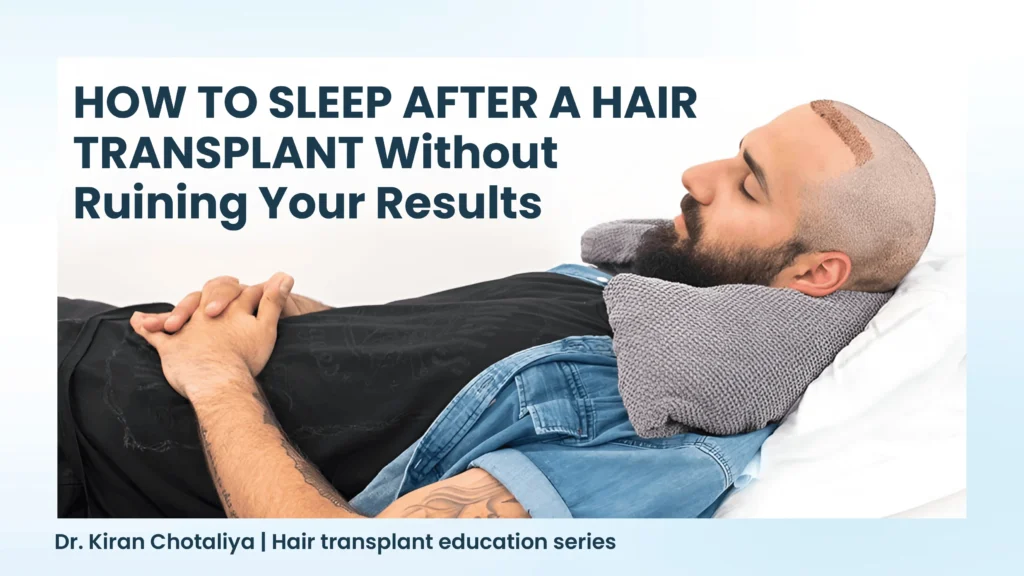
Sleep after hair transplant in Pune with proper head elevation for faster healing
Hair Transplant

How to Sleep After Hair Transplant: Best Positions for Faster Healing

How to Sleep After Hair Transplant: Best Sleeping Position After Hair Transplant for Faster Healing. Table of Contents Sleeping position after hair transplant is one of the most important yet often overlooked aspects of recovery, as the right sleeping posture helps protect newly transplanted grafts and supports faster healing.. Many patients ask: “How to sleep after a hair transplant?” “Can I sleep normally after surgery?” Your sleeping position during the first few days directly affects: Graft survival Swelling control Healing speed In this guide, Dr. Kiran Chotaliya, a hair transplant surgeon in Pune, This guide explains the safest Sleeping Position After Hair Transplant and essential recovery tips to protect newly transplanted grafts, minimize swelling, and support faster healing. Why Sleeping Position Matters After Hair Transplant After a hair transplant: Grafts are delicate They are not fully secure in the scalp Pressure or friction can dislodge them Improper sleeping position may lead to: Graft damage Uneven results Increased swelling Best Sleeping Position After Hair Transplant The recommended sleeping position after hair transplant is: Sleeping on your back with your head elevated. This position helps to: Avoid pressure on grafts Reduce swelling Improve blood circulation Sleeping Position After Hair Transplant: How to Elevate Your Head Properly Patients should keep their head at a 30–45 degree angle. Ways to do this: Use 2–3 soft pillows Use a travel neck pillow Sleep in a recliner chair A neck pillow is especially useful because it prevents head movement and avoids contact with the transplanted area. How Long Should You Sleep in This Position? The critical period is the first 7–10 days after surgery. During this time: Grafts are still settling Scabs are forming After 10 days, patients can gradually return to normal sleeping positions. Talk To Our Hair Expert Hair Transplant Recovery Tips for Sleeping Following the right aftercare for hair transplant recovery while sleeping is essential to protect newly transplanted grafts, reduce swelling, and support faster healing. Sleeping in the correct position during hair transplant recovery helps ensure the best possible results and a smooth recovery process. Use a neck pillow This helps prevent accidental turning and protects grafts. Avoid side sleeping Sleeping on the side can create friction and damage grafts. Keep pillow clean Use clean and soft pillow covers to reduce the risk of infection. Avoid sudden movements Maintain a stable position during sleep. How to Reduce Swelling While Sleeping Swelling is common after a hair transplant, especially around the forehead. To reduce swelling: Keep your head elevated Avoid bending forward Follow prescribed medications Swelling usually subsides within 3–5 days. Common Sleeping Mistakes to Avoid Avoid the following mistakes: Sleeping flat Using hard pillows Touching grafts during sleep Sleeping without proper support What If You Accidentally Touch the Grafts? In most cases: Light contact does not cause damage Strong rubbing or friction can be harmful If you are concerned, consult your doctor. Expert Advice According to Dr. Kiran Chotaliya, hair transplant surgeon in Pune: The first few nights after a hair transplant are crucial. Proper sleeping position after hair transplant helps protect grafts and improves overall results. Conclusion Knowing Sleeping position after hair transplant is essential for: Protecting grafts Reducing swelling Achieving natural results Following proper sleeping guidelines during the first few days helps ensure faster healing and long-term success. FAQ’s 1. How many days should I sleep upright after a hair transplant? You should sleep in an elevated position for 7–10 days. 2. Can I Sleep on One Side After Hair Transplant? Side sleeping should be avoided for at least 7–10 days. After this period, once grafts are secure, side sleeping can be resumed gradually. 3. Can I Sleep on Stomach? Sleeping on the stomach is not recommended during early recovery. It can: Damage grafts Cause direct pressure on the implanted area 4. Can I sleep normally after 10 days? Yes, once grafts are stable, normal sleeping habits can be resumed. 5. Is a neck pillow necessary?  It is highly recommended for better support and protection. You should sleep in an elevated position for 7–10 days. Side sleeping should be avoided for at least 7–10 days. After this period, once grafts are secure, side sleeping can be resumed gradually. Sleeping on the stomach is not recommended during early recovery. It can: Damage grafts Cause direct pressure on the implanted area Yes, once grafts are stable, normal sleeping habits can be resumed.  It is highly recommended for better support and protection. Dr. Kiran Chotaliya MD (Skin & VD) Dr. Kiran Chotaliya is a highly experienced hair transplant specialist. He provides expert guidance and care throughout the entire recovery process to ensure the best possible results. With a focus on the Hair Transplant Recovery Timeline, Dr. Kiran helps his patients achieve a smooth and successful recovery. Book Consultation Our Latest Video Hair Transplant Hair Loss Treatment Our Services Male Hair Transplant Female Hair Transplant Hairline Reconstruction Eyebrow Hair Transplant Moustache Hair Transplant Body Hair Transplant Failed Hair Transplant View More Results Latest Hair Transplant Results Thinking about Hair Transplant? Read this First. A free experts curated guide that clears all your doubtsabout Costs, Results, Pain, Recovery and much more.


Dr. Kiran Chotaliya presenting a complete blueprint for achieving the best hair transplant results in Pune with natural-looking outcomes
Hair Transplant

10-Point Checklist to Get the Best Hair Transplant Results in Pune

10-Point Checklist to Get the Best Hair Transplant Results in Pune Table of Contents Getting the best hair transplant results in Pune isn’t just about undergoing a procedure—it’s about making the right decisions before, during, and after surgery. But “how to get the best hair transplant results?” The answer lies in proper planning, choosing an experienced surgeon, and following the recommended aftercare guidelines. Many people believe that once the surgery is done, the job is finished. In reality, hair transplant success depends on proper planning, surgical expertise, and post-treatment care. If you’re considering a procedure, this practical checklist will guide you toward natural, long-lasting, and satisfying results. 1. Choose an Experienced Hair Transplant Surgeon in Pune The single most important factor behind best hair transplant results in Pune is the surgeon you choose. An experienced hair transplant specialist in Pune like Dr. Kiran Chotaliya ensures: Natural-looking hairline Proper graft extraction and placement High graft survival rate Choosing a qualified Pune hair transplant surgeon can make a significant difference in your final outcome. 2. Proper Hairline Design Matters More Than You Think A well-designed hairline defines how natural your results will look. It should be: Age-appropriate Balanced with your facial structure Naturally dense—not artificially low Poor hairline design is one of the most common reasons patients feel unhappy—even after technically successful procedures. 3. Evaluate Your Donor Area Carefully Your donor area (usually the back of the scalp) is limited—and extremely valuable. A good surgeon will ensure: Even extraction No visible thinning Long-term donor preservation This is crucial for maintaining long-term hair transplant results. 4. Understand Your Stage of Hair Loss Hair loss is progressive. Treating only your current bald area without future planning can lead to unnatural results later. A proper plan considers: Current baldness stage Future hair loss pattern Possibility of additional sessions Talk To Our Hair Expert 5. Focus on Graft Survival, Not Just Numbers Many clinics promote high graft counts—but that’s not the real success metric. What truly matters: Gentle graft handling Proper storage and implantation Skilled placement Higher survival = better density and more natural results. 6. Choose the Right Technique (FUE, DHI, BIG FUE) There’s no one-size-fits-all hair transplant technique. Whether it’s FUE, DHI, or BIG FUE, the right approach depends on your hair loss pattern, graft requirement, and desired results, so an experienced surgeon will recommend the most suitable option for you. The best approach depends on: Hair loss pattern Donor area condition Desired density An expert Pune hair transplant surgeon will recommend the most suitable method for you—not just the most popular one. 7. Follow Pre-Surgery Instructions Seriously Preparation directly impacts your results. Before surgery: Avoid smoking Avoid alcohol Stop certain medications (as advised) These steps improve: Blood circulation Healing speed Graft survival 8. Post-Operative Care Is Crucial Aftercare can make or break your results. Follow instructions like: Gentle washing techniques Avoid touching or scratching grafts Attend follow-up appointments Patients who follow aftercare properly see significantly better hair transplant success rates. 9. Be Patient With the Results Hair transplant results don’t appear overnight. Typical timeline: Shedding phase: First few weeks Initial growth: 3–4 months Visible improvement: 6 months Full results: 10–12 months 10. Maintain Your Existing Hair A hair transplant restores lost hair—but it doesn’t stop future hair loss. Maintenance treatments may include: Minoxidil Finasteride PRP therapy Expert Advice from Dr Kiran Chotaliya “A successful hair transplant is not just about surgery—it’s about precise planning, proper technique, and patient commitment to aftercare.” This holistic approach is what delivers natural, dense, and long-lasting hair transplant results. Conclusion Achieving the best hair transplant results in Pune requires more than just surgery. By following this 10-point checklist, you can improve: Hair density Natural appearance Long-term sustainability Small, informed decisions lead to big, visible results. FAQ’s 1. What is the most common mistake before a hair transplant? Choosing a clinic based only on low cost without checking the surgeon’s qualifications and experience is one of the most common mistakes. 2. Why is understanding my hair loss pattern important before surgery? Hair loss is progressive, and understanding the pattern helps create a long-term treatment plan that delivers natural-looking results. 3. Should I compare different hair transplant clinics in Pune? Yes. For best hair transplant results in Pune comparing the surgeon’s experience, technology, patient reviews, and treatment approach can help to make an informed decision. 4. Can smoking affect hair transplant results? Yes. Smoking can reduce blood flow to the scalp, slow healing, and negatively impact graft survival and overall results. 5. Is a hair transplant a permanent solution for hair loss? Transplanted hair is generally permanent, but existing non-transplanted hair may continue to thin over time, making follow-up treatments important. Choosing a clinic based only on low cost without checking the surgeon’s qualifications and experience is one of the most common mistakes. Hair loss is progressive, and understanding the pattern helps create a long-term treatment plan that delivers natural-looking results. Yes. For best hair transplant results in Pune comparing the surgeon’s experience, technology, patient reviews, and treatment approach can help to make an informed decision. Yes. Smoking can reduce blood flow to the scalp, slow healing, and negatively impact graft survival and overall results. Transplanted hair is generally permanent, but existing non-transplanted hair may continue to thin over time, making follow-up treatments important. Dr. Kiran Chotaliya MD (Skin & VD) Dr. Kiran Chotaliya is a highly experienced hair transplant specialist. He provides expert guidance and care throughout the entire recovery process to ensure the best possible results. With a focus on the Hair Transplant Recovery Timeline, Dr. Kiran helps his patients achieve a smooth and successful recovery. Book Consultation Our Latest Video Hair Transplant Hair Loss Treatment Our Services Male Hair Transplant Female Hair Transplant Hairline Reconstruction Eyebrow Hair Transplant Moustache Hair Transplant Body Hair Transplant Failed Hair Transplant View More Results Latest Hair Transplant Results Thinking about Hair Transplant? Read this First. A free experts curated guide that clears all your doubtsabout Costs, Results, Pain, Recovery and

Hair Transplant Mistakes in Pune explained by Dr. Kiran Chotaliya with patient guidance for successful hair transplant results
Hair Transplant

Hair Transplant Mistakes Avoid These Before Surgery

Hair Transplant Mistakes: Avoid These Before Surgery Table of Contents Hair transplant mistakes can affect the success of your procedure, making it essential to choose the right clinic and follow proper care. Hair transplant can be a life-changing procedure—restoring confidence, improving appearance, and delivering long-term results. However, many patients make critical hair transplant mistakes  before the procedure that can affect: Graft survival Final density Natural look of results If you are planning a procedure, understanding before hair transplant tips can significantly improve your outcome. In this guide, Dr. Kiran Chotaliya, expert hair transplant surgeon Pune at Hairfree & Hairgrow Clinic, explains what patients often get wrong — and how to avoid it. The Biggest Mistake: Choosing Clinic Based on Price One of the most common hair transplant mistakes is selecting a clinic purely based on cost. Low-cost procedures often involve: Limited doctor involvement Technician-driven surgeries Poor graft handling Not Understanding Hair Loss Pattern Hair loss is progressive. Without understanding your hair loss pattern, it becomes difficult to choose the right treatment approach and achieve long-term, natural-looking results. Results may look unnatural later Density may reduce over time A good plan considers: Current hair loss stage Future progression Donor area capacity Expecting Immediate Results Many patients misunderstand the hair transplant timeline: Hair sheds in early weeks Growth begins after 3–4 months Full results take 10–12 months Understanding this is a key part of before hair transplant tips. Ignoring Medical Treatment Hair transplant does not stop ongoing hair loss. Without treatment: Existing hair may thin further Overall density may decrease Doctors often recommend: Minoxidil Finasteride PRP therapy This supports better long-term hair transplant planning. Talk To Our Hair Expert Poor Donor Area Awareness The donor area is limited. Mismanagement can cause: Visible thinning Patchy appearance Proper hair transplant planning ensures: Balanced extraction Long-term donor preservation Not Following Pre-Surgery Instructions Ignoring before hair transplant tips like: Avoiding smoking Avoiding alcohol Stopping certain medications can impact: Healing Graft survival Unrealistic Hairline Design Requesting: Very low hairline Extremely dense front can look unnatural over time. A natural design should match: Age Face structure Future hair loss Not Checking Surgeon Experience Choosing the right hair transplant surgeon Pune is critical. Always check: Experience Real patient results Clinic setup At Hairfree & Hairgrow Clinic, procedures are planned and performed under expert supervision by Dr. Kiran Chotaliya. Not Planning Long-Term Hair transplant should consider future appearance. Proper hair transplant planning includes: 5–10 year outlook Donor management Possibility of future sessions Ignoring Aftercare Even perfect surgery can fail without proper care. Good hair transplant aftercare ensures: Better graft survival Faster healing Optimal results Expert Advice from Dr Kiran Chotaliya As an experienced hair transplant surgeon Pune, Dr. Kiran Chotaliya believes that achieving natural, long-lasting results starts with proper planning and expert guidance. Following the right before hair transplant tips can help you prepare for the procedure, while understanding how to avoid hair transplant mistakes ensures a smoother experience and better outcomes. Proper hair transplant aftercare is equally important for faster healing, healthy graft growth, and achieving the best possible results. According to Dr. Kiran Chotaliya: “Hair transplant success starts before the surgery with proper planning and avoiding common mistakes.” By choosing an experienced specialist and following expert advice before and after the procedure, you can significantly reduce the risk of hair transplant mistakes and enjoy natural, lasting hair restoration results. How to Avoid Hair Transplant Mistakes Follow these before hair transplant tips: Consult a qualified expert Understand your hair loss stage Follow medical advice Keep realistic expectations This helps you avoid hair transplant mistakes and achieve better outcomes. Conclusion Avoiding hair transplant mistakes in Pune is essential for achieving natural-looking results, ensuring long-term success, and restoring your confidence. By choosing an experienced hair transplant surgeon in Pune, following the right before hair transplant tips, understanding how to avoid hair transplant mistakes, and maintaining proper hair transplant aftercare, you can maximize the success of your procedure. A well-planned hair transplant performed by an expert delivers the best outcomes, providing natural, healthy, and long-lasting hair restoration. FAQ’s 1. What is the most common mistake before a hair transplant? Choosing a clinic based only on low cost without checking the surgeon’s qualifications and experience is one of the most common mistakes. 2. Why is understanding my hair loss pattern important before surgery? Hair loss is progressive, and understanding the pattern helps create a long-term treatment plan that delivers natural-looking results. 3. Should I compare different hair transplant clinics in Pune? Yes. Comparing the surgeon’s experience, technology, patient reviews, and treatment approach can help you make an informed decision. 4. Can smoking affect hair transplant results? Yes. Smoking can reduce blood flow to the scalp, slow healing, and negatively impact graft survival and overall results. 5. Is a hair transplant a permanent solution for hair loss? Transplanted hair is generally permanent, but existing non-transplanted hair may continue to thin over time, making follow-up treatments important. Choosing a clinic based only on low cost without checking the surgeon’s qualifications and experience is one of the most common mistakes. Hair loss is progressive, and understanding the pattern helps create a long-term treatment plan that delivers natural-looking results. Yes. Comparing the surgeon’s experience, technology, patient reviews, and treatment approach can help you make an informed decision. Yes. Smoking can reduce blood flow to the scalp, slow healing, and negatively impact graft survival and overall results. Transplanted hair is generally permanent, but existing non-transplanted hair may continue to thin over time, making follow-up treatments important. Dr. Kiran Chotaliya MD (Skin & VD) Dr. Kiran Chotaliya is a highly experienced hair transplant specialist. He provides expert guidance and care throughout the entire recovery process to ensure the best possible results. With a focus on the Hair Transplant Recovery Timeline, Dr. Kiran helps his patients achieve a smooth and successful recovery. Book Consultation Our Latest Video Hair Transplant Hair Loss Treatment Our Services Male Hair Transplant Female Hair Transplant Hairline Reconstruction Eyebrow Hair Transplant Moustache Hair Transplant Body Hair

Hair Transplant Recovery in Pune Showing Post-Procedure Healing and Hair Growth Timeline
Hair Transplant

Hair Transplant Recovery: Complete Aftercare Guide for the First 30 Days

Hair Transplant Recovery: Complete Aftercare Guide for the First 30 Days Table of Contents Hair Transplant Recovery begins immediately after your procedure and plays a crucial role in achieving successful, long-lasting results. Hair transplant surgery is only the first step in your hair restoration journey. Following the right aftercare and understanding the healing process can help ensure healthy graft growth and optimal outcomes. The real success of your results depends on proper hair transplant recovery and hair transplant aftercare in Pune during the first 30 days. One of the most common questions patients ask is: “What to do after a hair transplant to get the best results?” Following the correct recovery routine ensures: Better graft survival Faster healing Optimal hair growth In this guide, Dr. Kiran Chotaliya, leading hair transplant surgeon in Pune at Hairfree & Hairgrow Clinic, explains exactly what to do after hair transplant. What Happens After Hair Transplant Surgery? After the procedure: transplanted grafts settle into the scalp small scabs form around each graft the scalp begins the healing process The first 7–10 days are the most critical, as grafts are still delicate. Hair Transplant Recovery Timeline (First 30 Days) Understanding the hair transplant recovery timeline and each hair transplant recovery phase helps set realistic expectations and ensures proper healing. Here’s what you can expect during the first 30 days after your hair transplant procedure, from the initial recovery phase to the beginning of new hair growth. Day 1–3: Immediate Post-Surgery Phase During the first few days: mild swelling may occur redness in the recipient area slight tightness in the scalp What to Do avoid touching grafts keep scalp clean as advised sleep with head elevated What to Avoid sweating bending forward direct sun exposure Day 4–7: Scab Formation Phase Scabs begin forming around each graft. This is a normal healing response. What to Do start gentle washing as advised follow clinic instructions carefully Important Tip Do not scratch or forcibly remove scabs. They will naturally fall off. Talk To Our Hair Expert Day 7–10: Scab Removal Phase By this stage: most scabs start falling off grafts become more stable What to Do continue gentle washing gradually resume normal routine The transplanted area starts looking cleaner and more natural. Day 10–14: Healing Phase The scalp continues to heal. redness reduces itching may occur What to Do avoid scratching keep scalp moisturized if advised Most patients feel comfortable returning to regular daily activities Week 2–4: Shedding Phase (Shock Loss) Between 2 to 4 weeks: transplanted hairs may start shedding this is called shock loss Important: This does not mean graft failure. The follicles remain alive under the scalp and will regrow hair later. When Can You Wash Your Hair After Transplant? Hair washing usually starts 2–3 days after surgery, depending on your surgeon’s protocol. Washing Tips use mild shampoo avoid strong pressure gently pour water instead of direct shower force Proper washing helps remove scabs and prevent infection. When Can You Resume Normal Activities? Exercise Walking: 5–7 days Gym: 2–3 weeks Work Resume within 3–5 days Sun Exposure Avoid for 2 weeks Common Mistakes to Avoid After Hair Transplant Avoid these during hair transplant aftercare: Touching or scratching grafts Smoking Heavy sweating Wearing tight caps Tips for Faster Hair Transplant Recovery To improve hair transplant recovery: Follow instructions carefully Eat a healthy diet Stay hydrated Attend follow-ups Doctors may recommend: PRP therapy Minoxidil or finasteride Conclusion of hair transplant recovery Hair transplant recovery is a gradual process. The hair transplant first 30 days are crucial for: Graft survival Healing Long-term success Following proper hair transplant aftercare ensures the best results. FAQ’s 1. How long does it take to recover after a hair transplant? Most patients recover within 7–14 days, while complete healing of the scalp may take up to 30 days. 2. When can I wash my hair after a hair transplant? Hair washing usually begins 2–3 days after the procedure, following your surgeon’s specific instructions. 3. Is swelling normal after a hair transplant? Yes, mild swelling on the forehead and scalp is common and typically subsides within 3–5 days. 4. When do the scabs fall off after a hair transplant? Scabs generally start shedding within 7–10 days and are usually gone by the second week. 5. Can I exercise during the first 30 days after a hair transplant? Light activities can resume after a few days, but strenuous exercise should be avoided for at least 2–4 weeks. Most patients recover within 7–14 days, while complete healing of the scalp may take up to 30 days. Hair washing usually begins 2–3 days after the procedure, following your surgeon’s specific instructions. Yes, mild swelling on the forehead and scalp is common and typically subsides within 3–5 days. Scabs generally start shedding within 7–10 days and are usually gone by the second week. Light activities can resume after a few days, but strenuous exercise should be avoided for at least 2–4 weeks. Dr. Kiran Chotaliya MD (Skin & VD) Dr. Kiran Chotaliya is a highly experienced hair transplant specialist. He provides expert guidance and care throughout the entire recovery process to ensure the best possible results. With a focus on the Hair Transplant Recovery Timeline, Dr. Kiran helps his patients achieve a smooth and successful recovery. Book Consultation Our Latest Video Hair Transplant Hair Loss Treatment Our Services Male Hair Transplant Female Hair Transplant Hairline Reconstruction Eyebrow Hair Transplant Moustache Hair Transplant Body Hair Transplant Failed Hair Transplant View More Results Latest Hair Transplant Results Thinking about Hair Transplant? Read this First. A free experts curated guide that clears all your doubtsabout Costs, Results, Pain, Recovery and much more.
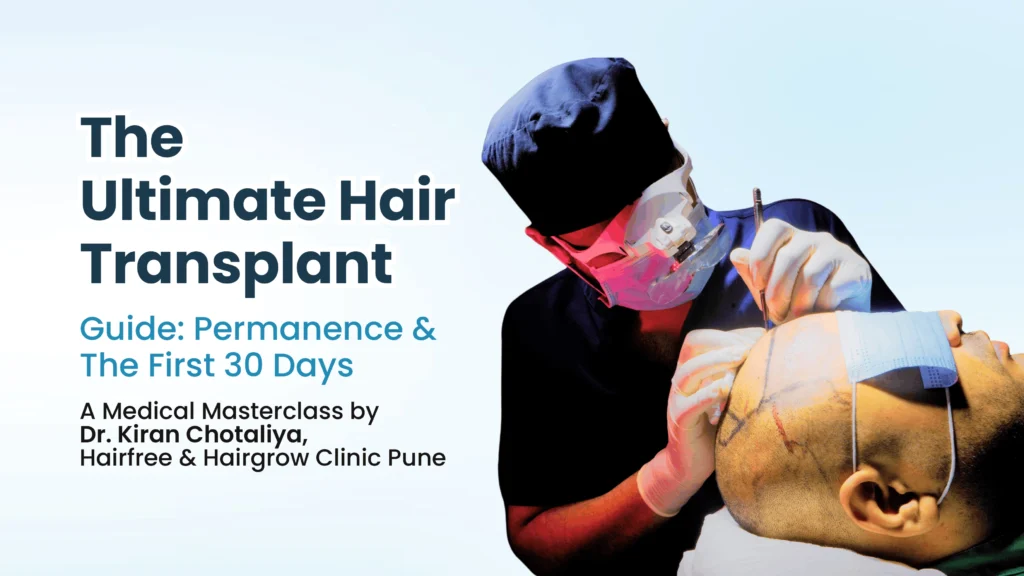
Is Hair Transplant Painful – Understanding Pain Levels During the Procedure
Hair Transplant

Is Hair Transplant Painful? A Detailed Guide to Understanding the Procedure

Is Hair Transplant Painful? A Detailed Guide to Understanding the Procedure Table of Contents “Is Hair Transplant Painful?” This is one of the most common concerns patients have before considering hair transplant surgery. Many people worry about the level of discomfort during and after the procedure, but understanding how modern hair transplant techniques work can help ease these concerns and prepare you for a comfortable treatment experience. The idea of surgery on the scalp can understandably create anxiety. However, modern hair transplant procedures are designed to be comfortable and minimally invasive. With advances in surgical techniques and anesthesia, most patients experience very little pain during the procedure. In this article, Dr. Kiran Chotaliya, hair transplant surgeon at Hairfree & Hairgrow Clinic in Pune, explains what patients actually experience before, during, and after hair transplant surgery. Does Hair Transplant Surgery Hurt? Hair transplant procedures are performed under local anesthesia, which numbs the scalp. This means that during the procedure: the patient remains awake the scalp area becomes numb pain sensation is greatly reduced Most patients report feeling pressure or mild pulling sensations, but not significant pain. The Only Slight Discomfort: Local Anesthesia The only stage where mild discomfort may occur is during the injection of local anesthesia. These injections are used to numb the donor and recipient areas. The sensation is usually described as: mild stinging brief pinching sensation However, this discomfort typically lasts only a few seconds. Once anesthesia takes effect, the scalp remains numb for the rest of the procedure. What Happen During Hair Transplant Surgery? Hair transplant surgery involves two main stages: Donor Area Extraction Hair follicles are extracted from the donor area, usually the back of the scalp. Patients usually feel: gentle pressure slight vibration from instruments There is typically no sharp pain. Graft Implantation The extracted follicles are then implanted into the balding area. During this stage: small recipient sites are created grafts are carefully placed Because the scalp is numb, patients usually feel minimal discomfort. Many patients even watch movies or listen to music during the procedure. Talk To Our Hair Expert How Long Does the Procedure Take? Hair transplant surgery in Pune typically lasts between 6 to 8 hours, depending on the number of grafts being transplanted. Large procedures may require additional time. During surgery, patients can: take short breaks eat light meals relax comfortably Is There Pain After Hair Transplant Surgery? After the anesthesia wears off, patients may experience mild soreness or tightness in the scalp. Common sensations include: slight tenderness mild swelling minor itching during healing These symptoms are usually manageable with prescribed medications and proper aftercare. Most patients return to routine activities within a few days. When Does Discomfort Completely Go Away? The healing process typically follows this timeline: Day 1–3 Mild soreness or swelling Day 7–10 Scabs fall off and scalp heals Week 2 Most discomfort disappears After this period, patients generally feel completely normal. Tips to Reduce Discomfort After Hair Transplant Patients can improve comfort during recovery by following simple recommendations. Follow Washing Instructions Proper scalp washing helps remove scabs and prevent irritation. Avoid Touching the Grafts Touching or scratching the scalp can disturb healing grafts. Sleep with Head Elevated Sleeping with the head slightly elevated can reduce swelling. Take Prescribed Medications Doctors often prescribe medications to reduce pain and inflammation. Expert Advice from Dr Kiran Chotaliya According to Dr. Kiran Chotaliya, an experienced hair transplant surgeon in Pune, the answer to “Is Hair Transplant Painful?” is reassuring: “Most patients are surprised at how comfortable the procedure actually is. Modern hair transplant surgery is designed to minimize pain and maximize patient comfort.” Proper surgical technique, advanced anesthesia management, and expert care play an important role in ensuring a smooth and comfortable experience. If you’re wondering, “Is Hair Transplant Painful?”, choosing an experienced surgeon and following the recommended aftercare can make the procedure virtually pain-free for most patients. FAQ’s 1. Is hair transplant painful during the procedure? No, a hair transplant is generally not painful during the procedure. Local anesthesia is used to numb the scalp, so you may only feel slight pressure but no sharp pain. 2. What does a hair transplant painful Pune experience feel like? In Pune clinics, modern techniques like FUE and DHI make the procedure comfortable. Most patients report minimal discomfort, especially when performed by an experienced surgeon like Dr Kiran Chotaliya hair transplant surgeon in Pune. 3. Does it hurt after a hair transplant? After the procedure, mild soreness, tightness, or itching may occur for a few days. This discomfort is temporary and can be managed with prescribed medications. 4. How long does post hair transplant pain last? Any discomfort usually lasts for 2–5 days. Swelling or mild sensitivity may continue for up to a week but gradually improves with proper aftercare. 5. Which is less painful: FUE or FUT hair transplant? FUE (Follicular Unit Extraction) is generally less painful than FUT because it is minimally invasive and does not involve stitches or a long linear scar. 6. Is Hair Transplant Recovery Painful? Hair transplant recovery is generally not very painful. Most patients experience mild soreness, tenderness, or tightness in the donor and recipient areas for a few days. These symptoms are temporary and can usually be managed with prescribed medications and proper aftercare. Most people return to their normal routine within a week. 7. Which Hair Transplant Method Is Less Painful: FUE or FUT? FUE (Follicular Unit Extraction) is generally considered less painful than FUT (Follicular Unit Transplantation). Since FUE does not require a linear incision or stitches, patients usually experience less discomfort, faster healing, and a quicker recovery compared to FUT.      8.What Happen During Hair Transplant Surgery? What happen during hair transplant surgery involves extracting healthy hair follicles from the donor area and implanting them into bald or thinning areas under local anesthesia. The procedure is minimally invasive and designed to provide natural-looking, permanent results. 9. Is There Pain After Hair Transplant Surgery? Most patients experience only mild pain

Is Hair Transplant Permanent
Hair Transplant

Is Hair Transplant Permanent? The Truth About Long-Term Results

Is Hair Transplant Permanent? The Truth About Long-Term Results Table of Contents “Is hair transplant permanent?” One of the most common questions patients ask before undergoing surgery . Hair transplant surgery has helped millions of people regain natural hair growth and confidence. However, many patients worry about whether the results will last permanently or if the transplanted hair will fall again. The short answer is yes — in most cases, hair transplant results are permanent. However, understanding why the results are permanent and what factors influence long-term success is essential for realistic expectations. In this guide, Dr. Kiran Chotaliya, best hair transplant surgeon in Pune at Hairfree & Hairgrow Clinic in Pune, explains the science behind permanent hair restoration. Is Hair Transplant Permanent, Hair transplant growth after surgery, Hair Transplant In Pune, dr. kiran chotaliya clinic, Is Hair Transplant Permanent, Hair transplant growth after surgery, Hair Transplant In Pune, dr. kiran chotaliya clinic,Is Hair Transplant Permanent, Hair transplant growth after surgery, Hair Transplant In Pune, dr. kiran chotaliya clinic Why Hair Transplant Results Are Permanent Hair transplant surgery works because it uses genetically resistant hair follicles. The donor area at the back of the scalp contains hair follicles that are resistant to the hormone DHT (dihydrotestosterone). DHT is the hormone responsible for male pattern baldness. When these resistant follicles are transplanted to bald areas, they retain their genetic resistance, allowing them to continue growing hair even in regions affected by hair loss. This principle is known as donor dominance What Is Donor Dominance? Donor dominance is a key scientific concept in hair transplantation. It means that transplanted hair follicles maintain the characteristics of the area from which they were taken, regardless of where they are implanted. For example: Hair from the back of the scalp that is resistant to hair loss will continue growing permanently, even after being moved to the front hairline or crown. Because of this property, transplanted hair usually behaves like natural hair from the donor area. Do Transplanted Hairs Ever Fall Out? Immediately after surgery, patients often notice temporary shedding of transplanted hair. This stage is called shock loss. During this phase: transplanted hair shafts fall out follicles remain healthy under the scalp After a few months, the follicles begin producing new hair growth. This is a normal part of the hair growth cycle and does not mean the transplant has failed. Talk To Our Hair Expert When Do Permanent Results Appear? Hair transplant growth occurs gradually. Typical timeline: Month 1 Healing phase Month 2–3 Temporary shedding phase Month 4–6 Early hair growth Month 7–9 Visible improvement in density Month 10–12 Final hair transplant results Full cosmetic results are usually visible within 10–12 months after surgery. Can Hair Loss Continue After Hair Transplant? Yes. Hair transplant surgery restores transplanted hair, but it does not stop the natural progression of hair loss in non-transplanted areas. For example: If a patient continues losing existing hair, the transplanted region may remain dense while surrounding hair thins. This is why doctors often recommend medical treatments in Pune to protect existing hair. Treatments That Help Maintain Results Doctors may recommend medications or supportive treatments to maintain overall hair density. Common options include: Minoxidil A topical treatment that stimulates hair growth and improves follicle activity. Finasteride An oral medication that reduces DHT levels and slows hair loss progression. PRP Therapy Platelet-rich plasma treatment may support follicle health and hair growth. These treatments help preserve existing hair and maintain a natural appearance after transplantation. What Factors Affect Long-Term Hair Transplant Success? Although transplanted hair is permanent, the hair transplant success rate and final outcome depend on several important factors. Surgeon Expertise Proper graft extraction, placement, and hairline design are crucial for achieving natural results. Donor Area Quality A strong donor area ensures sufficient healthy follicles for transplantation. Surgical Planning Long-term planning ensures the transplant looks natural even if future hair loss occurs. Post-Operative Care Following the surgeon’s instructions helps protect grafts during the healing phase. Conclusion Hair transplant surgery is considered a permanent solution for restoring hair in balding areas. Because transplanted follicles come from DHT-resistant regions of the scalp, they typically continue growing hair for many years. However, maintaining overall hair density may require medical treatments and proper long-term planning. FAQ’s 1. How long does hair transplant last? In most cases, transplanted hair lasts a lifetime because donor hair is resistant to hair loss. 2. Can transplanted hair turn grey? Yes. Transplanted hair behaves like natural hair and can turn grey with age. 3. Will I need another hair transplant? Some patients may require additional sessions in the future if hair loss progresses in untreated areas. In most cases, transplanted hair lasts a lifetime because donor hair is resistant to hair loss. Yes. Transplanted hair behaves like natural hair and can turn grey with age. Some patients may require additional sessions in the future if hair loss progresses in untreated areas. Dr. Kiran Chotaliya MD (Skin & VD) Dr. Kiran Chotaliya is a highly experienced hair transplant specialist. He provides expert guidance and care throughout the entire recovery process to ensure the best possible results. With a focus on the Hair Transplant Recovery Timeline, Dr. Kiran helps his patients achieve a smooth and successful recovery. Book Consultation Our Latest Video Hair Transplant Hair Loss Treatment Our Services Male Hair Transplant Female Hair Transplant Hairline Reconstruction Eyebrow Hair Transplant Moustache Hair Transplant Body Hair Transplant Failed Hair Transplant View More Results Latest Hair Transplant Results Thinking about Hair Transplant? Read this First. A free experts curated guide that clears all your doubtsabout Costs, Results, Pain, Recovery and much more.
How Many Grafts Are Needed for Hair Transplant
Hair Transplant

How Many Grafts Are Needed for Hair Transplant? Complete Guide by Baldness Stage

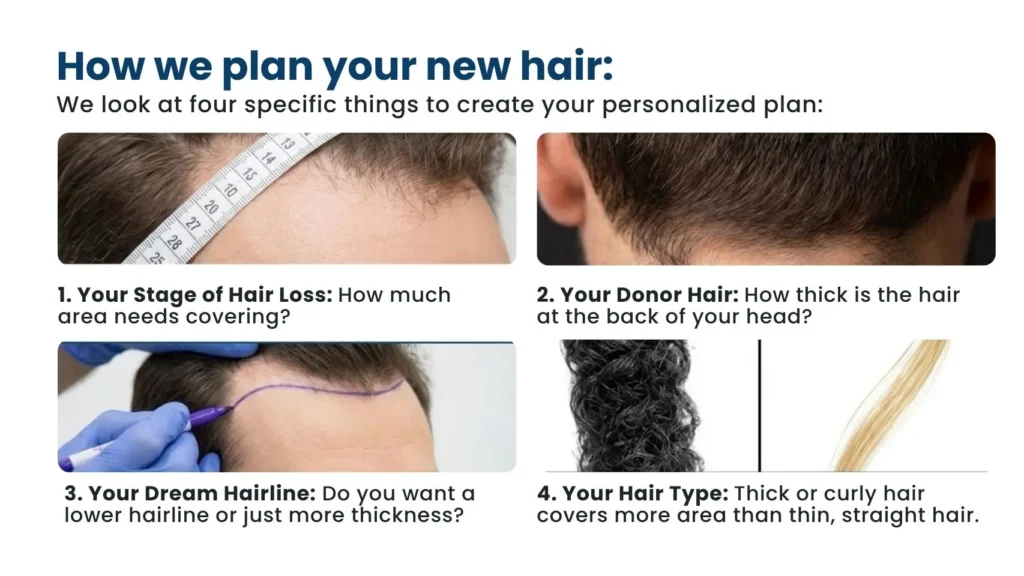
How Many Grafts Are Needed for Hair Transplant? Complete Guide by Baldness Stage Table of Contents One of the most common questions patients ask during a consultation is, “How many grafts are needed for hair transplant?” The answer depends on several factors, including your stage of hair loss, donor hair density, scalp characteristics, and the desired hairline design. Understanding hair transplant graft requirements helps patients estimate both the extent of surgery and the hair transplant cost in Pune. Every patient has unique hair restoration goals, so graft planning should always be personalized. In this guide, Dr. Kiran Chotaliya, an experienced hair transplant surgeon in Pune, explains how surgeons calculate hair transplant grafts and determine the ideal number needed for natural-looking, long-lasting results. How Many Grafts Are Needed for Hair Transplant, Hair transplant growth after surgery, Hair Transplant In Pune, dr. kiran chotaliya clinic, How Many Grafts Are Needed for Hair Transplant, Hair transplant growth after surgery, Hair Transplant In Pune, dr. kiran chotaliya clinic What Is a Hair Graft? A hair graft is a small group of hair follicles transplanted from the donor area to the balding region. Each graft usually contains: 1 hair follicle 2 hair follicles sometimes 3–4 follicles On average: 1 graft = 2 hairs This means that a transplant involving 3000 grafts may produce around 6000 hairs. Factors That Determine the Number of Grafts Needed There is no fixed hair transplant graft calculator that works for everyone. Surgeons evaluate several important factors before estimating the required number of grafts. 1. Hair Loss Stage The Norwood Scale is commonly used to classify male pattern baldness. Patients with advanced stages generally require more hair transplant grafts to achieve good coverage. 2. Donor Hair Density The donor area at the back and sides of the scalp must contain enough healthy follicles for transplantation. Patients with dense donor hair often achieve excellent coverage using fewer grafts while preserving the donor area for the future. 3. Desired Hairline Design A lower hairline or higher-density design naturally requires more grafts. An experienced hair transplant surgeon in Pune carefully designs the hairline to create natural results without overharvesting the donor area. 4. Hair Characteristics Hair thickness, curl, and color contrast significantly affect visual density. For example: Thick hair provides better coverage. Curly hair creates the appearance of greater volume. Dark hair on a light scalp may require more grafts than lighter hair. Talk To Our Hair Expert Hair Transplant Grafts by Baldness Stage (Norwood Scale) The following hair transplant graft chart provides general estimates. The exact hair transplant graft requirement varies from patient to patient. Norwood 2 (Early Hairline Recession) Typical graft requirement: 1,000–1,500 grafts This stage mainly involves restoring the temples and strengthening the hairline. Norwood 3 (Moderate Hairline Recession) Typical graft requirement: 1,500–2,500 grafts Hairline reconstruction is the primary focus. Norwood 4 (Frontal and Mid-Scalp Hair Loss) Typical graft requirement: 2,500–3,500 grafts Both the frontal region and mid-scalp require restoration. Norwood 5 (Advanced Hair Loss) Typical graft requirement: 3,500–4,500 grafts Patients often need coverage for both the frontal area and crown. Norwood 6–7 (Extensive Baldness) Typical graft requirement: 4,500+ grafts Advanced cases may require staged hair transplant procedures performed over two sessions to achieve optimal density. Can You Transplant Unlimited Grafts? No. Although many patients ask how many grafts are needed for hair transplant, the donor area has natural limitations. Hair transplant surgery must preserve the safe donor area, where follicles are genetically resistant to hair loss. Overharvesting may lead to: Visible thinning in the donor area Patchy appearance Poor long-term hair transplant results Proper hair transplant planning focuses on achieving the best cosmetic outcome while preserving future treatment options. How Surgeons Calculate Graft Numbers During consultation, surgeons examine: hair loss pattern donor hair density scalp flexibility long-term hair loss progression This evaluation helps create a personalized treatment plan that balances coverage with donor preservation. What Is the Maximum Number of Hair Transplant Grafts in One Session? Modern FUE hair transplant in Pune procedure typically allow: 2,500–4,000 grafts in a single session Large procedures are sometimes called mega sessions. The maximum number of grafts depends on: Donor hair density Scalp flexibility Surgical duration Patient comfort Overall treatment goals Can Additional Sessions Be Done Later? Yes. Many patients undergo second sessions after 1–2 years to increase density or restore additional areas. Staged procedures are common in patients with progressive hair loss. Conclusion Understanding how many grafts are needed for hair transplant is an important step in planning successful hair restoration. Most patients require 1,500 to 4,000 hair transplant grafts, while advanced baldness may require larger or staged procedures. The right hair transplant graft requirement depends on your hair loss stage, donor hair quality, and desired density. A personalized consultation ensures natural-looking results while protecting the donor area for the future. If you are considering a hair transplant in Pune, consult Dr. Kiran Chotaliya, an experienced hair transplant surgeon in Pune, to receive an accurate hair transplant graft estimate and a customized treatment plan. FAQ’s 1. How many grafts are needed for a hair transplant? The number of grafts required depends on the extent of hair loss, the size of the treatment area, and the desired hair density. Most patients need between 1,500 and 4,000 grafts. 2. How many hairs are there in one graft? A single hair graft typically contains 1 to 4 hair follicles, with an average of 2 hairs per graft. 3. Can 2,000 grafts cover the entire scalp? No. Around 2,000 grafts are usually suitable for restoring the hairline and frontal scalp. Extensive hair loss may require more grafts. 4. Does a higher graft count guarantee better results? Not necessarily. Natural-looking results depend on proper graft placement, donor hair quality, and surgical expertise, not just the number of grafts. 5. How does a surgeon determine the required graft count? The surgeon evaluates the pattern of hair loss, donor area density, scalp characteristics, and treatment goals to calculate the ideal number of grafts. 6. Is it possible to undergo

Alt Tag: Hair Transplant Results Timeline in Pune showing month-by-month hair growth after surgery
Hair Transplant

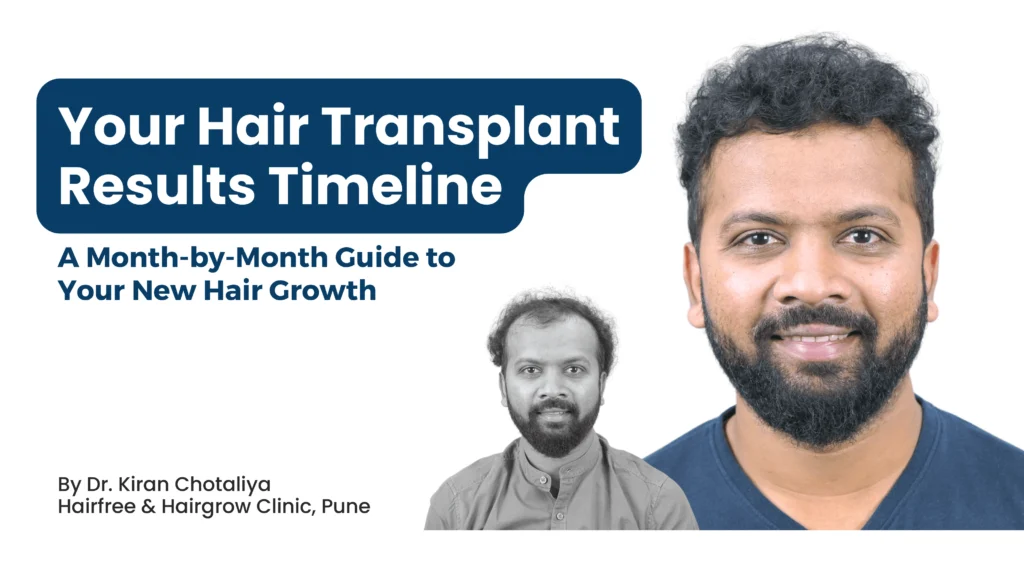
Hair Transplant Results Timeline: Month-by-Month Growth After Surgery

Hair Transplant Results Timeline: Month-by-Month Growth After Surgery Table of Contents One of the most common questions patients ask after surgery is: “When will my hair transplant start growing?” Understanding the Hair Transplant Results Timeline helps patients set realistic expectations after surgery. Hair transplant results do not appear immediately. The transplanted follicles go through a natural biological cycle before new hair growth becomes visible. Knowing this timeline helps patients stay realistic, patient, and confident throughout the recovery and hair growth journey. In this guide, Dr. Kiran Chotaliya in Pune, hair transplant surgeon at Hairfree & Hairgrow Clinic in Pune, explains what happens after surgery and how hair growth progresses month by month. Is Hair Transplant Permanent, Hair transplant growth after surgery, Hair Transplant In Pune, dr. kiran chotaliya clinic, Is Hair Transplant Permanent, Hair transplant growth after surgery, Hair Transplant In Pune, dr. kiran chotaliya clinic,Is Hair Transplant Permanent, Hair transplant growth after surgery, Hair Transplant In Pune, dr. kiran chotaliya clinic What Happens Immediately After Hair Transplant Surgery? Hair transplant surgery involves relocating hair follicles from the donor area to the balding region. Although the grafts are implanted immediately, the visible results take time because hair follicles must recover, rest, and then start producing new hair shafts. This process follows the natural hair regrowth after transplant. Hair Transplant Growth Timeline Below is the typical recovery and growth pattern after a hair transplant. Week 1: Healing Phase During the first week after surgery: Small scabs form around the transplanted grafts Mild redness or swelling may occur The grafts settle into the scalp Patients are usually advised to: avoid touching the grafts follow washing instructions carefully avoid strenuous physical activity Most scabs fall off within 7–10 days. Week 2–4: Shedding Phase (Shock Loss) Between the second and fourth week, many patients notice shedding of transplanted hairs. This stage is called shock loss. Although the hair shafts fall out, the follicles remain healthy under the scalp. This phase is completely normal and temporary. Month 2–3: Resting Phase After shedding occurs, the follicles enter a resting phase (telogen phase). During this period: very little visible change occurs hair growth appears minimal Many patients worry during this stage, but this is a natural part of the growth cycle. Talk To Our Hair Expert Month 3–4: Early Hair Growth Around the third or fourth month, new hair strands begin to emerge from the transplanted follicles. The initial hairs are usually: thin soft slightly irregular This is the first sign that the follicles have successfully entered the growth phase. Month 5–6: Noticeable Improvement By the sixth month, most patients begin to see visible improvement. Hair growth becomes: thicker more consistent easier to style At this stage, approximately 40–50% of the final results may be visible. Month 7–9: Significant Hair Density Between months seven and nine, hair growth accelerates significantly. Changes typically include: increased hair density improved hair texture more natural blending with existing hair Patients often start receiving noticeable compliments during this phase. Month 10–12: Final Results Full hair transplant results usually appear between 10–12 months after surgery. At this stage: hair thickness improves density becomes stable the hairline appears natural Some patients may continue to see gradual improvement up to 14 months. Factors That Affect Hair Transplant Growth The speed and quality of hair growth can vary depending on several factors. Donor Hair Quality Thicker donor hair often produces better visual density. Surgical Technique Proper graft extraction and implantation improve follicle survival rates. Post-operative Care Following the surgeon’s instructions carefully helps protect the grafts during healing. Medical Treatments Doctors may recommend treatments such as: minoxidil finasteride PRP therapy to support hair growth after surgery. Expert Advice from Dr Kiran Chotaliya According to Dr. Kiran Chotaliya, experienced hair transplant surgeon in Pune: “Hair transplant surgery requires patience. While grafts are implanted in one day, natural hair growth follows a biological cycle that takes several months.” Patients should avoid comparing results too early and instead focus on long-term improvement over the first year. Tips to Improve Hair Transplant Results Patients can maximize results by following a few simple recommendations: follow post-operative instructions carefully avoid smoking during healing maintain a healthy diet attend follow-up visits with the surgeon These measures help support healthy follicle growth and better hair density. Conclusion Hair transplant surgery provides a long-term solution for hair loss, but visible results require patience. Understanding the Hair Transplant Results Timeline in Pune can help patients set realistic expectations throughout the recovery journey. The transplanted follicles must go through natural healing, shedding, and growth cycles before producing new hair. Most patients begin to see noticeable improvement around 4–6 months after surgery, while full hair transplant results typically become visible within 10–12 months. FAQ’s 1. When does hair start growing after a hair transplant? Most patients begin to notice new hair growth around 3–4 months after the procedure. 2. Is hair shedding after a hair transplant normal? Yes. Temporary shedding, known as shock loss, is a normal part of the healing process and usually occurs within the first month. 3. When will I see full hair transplant results? Final results are typically visible between 10–12 months after surgery, although some patients continue to see improvement beyond one year. 4. Can I speed up hair growth after a hair transplant? Following post-operative instructions, maintaining a healthy lifestyle, and using doctor-recommended treatments can help support healthy hair growth. 5. Are hair transplant results permanent? Yes. Transplanted hair follicles are generally resistant to hair loss and can provide long-lasting, natural-looking results. Most patients begin to notice new hair growth around 3–4 months after the procedure. Yes. Temporary shedding, known as shock loss, is a normal part of the healing process and usually occurs within the first month. Final results are typically visible between 10–12 months after surgery, although some patients continue to see improvement beyond one year. Following post-operative instructions, maintaining a healthy lifestyle, and using doctor-recommended treatments can help support healthy hair growth. Yes. Transplanted hair follicles are generally resistant to

Best hair transplant technique in Pune comparing FUE, BIG FUE, and DHI procedures
Hair Transplant

FUE vs BIG FUE vs DHI: Which Hair Transplant Technique Is Best In Pune?

FUE vs BIG FUE vs DHI: Which Hair Transplant Technique Is Best In Pune? Table of Contents Best Hair Transplant Technique in Pune depends on your hair loss pattern, donor hair quality, and desired results rather than a one-size-fits-all approach. Understanding the differences between FUE, BIG FUE, and DHI can help you choose the most suitable treatment for natural, long-lasting hair restoration. Which Hair Transplant Technique Is Best In Pune, Hair transplant surgery has evolved significantly over the past two decades. Today, patients have multiple techniques available, including FUE, BIG FUE, and DHI hair transplant. Naturally, many patients ask: “Which hair transplant technique is the best for me?” The answer depends on factors such as hair loss stage, donor hair density, scalp characteristics, and surgical planning. In this guide, Dr. Kiran Chotaliya, hair transplant surgeon in Pune at Hairfree & Hairgrow Clinic in Pune, explains the key differences between these techniques and how to choose the most suitable option. Hair Transplant Technique Is Best In Pune, FUE vs BIG FUE vs DHI, dr. kiran chotaliya clinic, Hair Transplant In Pune What Is Hair Transplant Surgery? Hair transplant surgery involves relocating hair follicles from the donor area (usually the back of the scalp) to areas affected by hair loss. These follicles are genetically resistant to DHT (dihydrotestosterone), the hormone responsible for male pattern baldness. Once transplanted, they continue to grow naturally. Modern hair transplant techniques mainly differ in how follicles are extracted and implanted. FUE Hair Transplant in Pune FUE (Follicular Unit Extraction) is currently the most widely used hair transplant technique worldwide. In this method, individual follicular units are extracted from the donor area using a micro punch tool and transplanted into the balding area. Advantages of FUE No linear scar Faster healing Natural-looking results Minimal discomfort Because of these benefits, FUE hair transplant is considered the gold standard technique in many modern clinics. BIG FUE Hair Transplant in Pune BIG FUE (often described as Advanced High-Density FUE) is a refined approach to the traditional FUE technique. The core principle remains the same, but improvements focus on: precise graft extraction careful graft preservation high-density implantation optimized hairline design In BIG FUE procedures, special attention is given to graft survival and natural hair growth patterns. Advantages of BIG FUE Higher density results Natural hairline design improved graft survival advanced implantation planning This technique is especially useful for patients seeking maximum cosmetic density in frontal hair restoration. Advanced cases sometimes require two surgical sessions for optimal density. Talk To Our Hair Expert DHI Hair Transplant in Pune DHI (Direct Hair Implantation) is a variation of the FUE method. In DHI, extracted grafts are implanted directly using a special implantation pen (often called a Choi implanter pen). Unlike traditional FUE where recipient sites are created first, DHI allows implantation simultaneously. Advantages of DHI controlled implantation angle precise graft placement useful for smaller areas However, DHI procedures often take longer surgical time, and graft numbers per session may be lower. FUE vs BIG FUE vs DHI: Key Differences Technique Extraction Method Implantation Method Best For FUE Micro punch extraction Slits created first, grafts placed Standard hair restoration BIG FUE High precision extraction Optimized high-density placement Maximum density and natural design DHI Similar to FUE Direct implantation pen Small areas and refinement   Which Technique Gives the Best Hair Transplant Results? Many patients believe that one technique is universally superior. However, experienced surgeons understand that the best technique depends on the individual patient. Important factors include: Hair Loss Stage Patients with advanced baldness may require larger graft sessions, which may be easier with FUE-based approaches. Donor Hair Density The donor area must be carefully managed to avoid overharvesting. Hair Characteristics Hair thickness, curl, and color contrast influence cosmetic results. Surgical Expertise Perhaps the most important factor is the experience and planning of the surgeon performing the procedure. Expert Insight from Dr Kiran Chotaliya According to Dr. Kiran Chotaliya, hair transplant surgeon in Pune: “Patients often focus on the technique name, but in reality the outcome depends on surgical planning, donor management, and artistic hairline design.” Modern techniques like advanced FUE and BIG FUE allow surgeons to achieve high-density, natural results with minimal downtime. Is DHI Always Better Than FUE? Not necessarily. While DHI is heavily marketed as a premium technique, in many cases advanced FUE techniques like BIG FUE, Stem cell FUE provide comparable or better results when performed correctly. Technique selection should always be based on: patient hair characteristics graft requirement surgical planning rather than marketing claims. How to Choose the Best Hair Transplant Technique in Pune The best way to determine the most suitable technique is through a personal consultation with an experienced hair transplant surgeon. During consultation, the surgeon evaluates: Norwood scale stage donor hair density scalp flexibility long-term hair loss progression Based on these factors, the most appropriate treatment plan can be designed. Conclusion Modern hair transplant surgery offers several techniques, including FUE, BIG FUE, and DHI. Each method has advantages, but the success of a hair transplant depends far more on surgical expertise and proper planning than the technique name itself. Choosing an experienced surgeon ensures natural hairline design, optimal graft survival, and long-lasting results. FAQ’s 1. Which hair transplant is best in Pune? The best hair transplant in Pune depends on your hair loss and goals. FUE, BIG FUE, and DHI all offer effective results when done by an expert. 2. What is the cost of hair transplant in Pune? Hair transplant cost in Pune varies based on grafts and technique. FUE is usually more affordable than DHI or high-density BIG FUE. 3. Is BIG FUE available in Pune? Yes, BIG FUE hair transplant is available in advanced clinics in Pune, including Dr. Kiran Chotaliya’s clinic, for high-density and natural-looking results. 4. Which is better: FUE or DHI? Both FUE and DHI are effective techniques. The better option depends on your hair condition and surgeon’s recommendation. 5. How to choose the best hair transplant clinic in Pune? Choose

Hair restoration in Pune with advanced hair transplant treatment by Dr. Kiran Chotaliya
Hair Transplant

MS Dhoni’s Hair Transplant Journey Explained by Dr. Kiran Chotaliya

MS Dhoni’s Hair Transplant Journey Explained by Dr. Kiran Chotaliya Table of Contents Quick Summary Hair restoration in Pune has become increasingly popular due to advancements in hair transplant technology and growing awareness about permanent hair loss solutions. The noticeable hair transformation of cricket legend MS Dhoni has sparked interest in modern hair restoration techniques. While the details of his treatment remain private, his transformation highlights how advanced procedures such as FUE hair transplant can deliver natural-looking and long-lasting results when performed by an experienced specialist. Hair Restoration in Pune: What We Can Learn from MS Dhoni’s Hair Transformation Is Hair Transplant Permanent, Hair transplant growth after surgery, Hair Transplant In Pune, dr. kiran chotaliya clinic, Is Hair Transplant Permanent, Hair transplant growth after surgery, Hair Transplant In Pune, dr. kiran chotaliya clinic,Is Hair Transplant Permanent, Hair transplant growth after surgery, Hair  Hair loss affects millions of men and women, often impacting self-confidence and appearance. Today, Hair Restoration in Pune offers advanced, evidence-based treatments that help restore hair naturally. Among the many inspiring transformations discussed online, the MS Dhoni Hair Transplant Journey has become a popular topic, encouraging many people to explore modern hair restoration options. Although there is no official confirmation regarding any treatment undergone by MS Dhoni, his visible hair transformation demonstrates how today’s advanced techniques can create fuller, natural-looking hairlines with minimal downtime. Whether you are experiencing a receding hairline, thinning hair, or pattern baldness, consulting an experienced hair transplant specialist can help determine the most suitable treatment based on your individual condition. What Is Hair Restoration in Pune? Hair Restoration in Pune refers to a range of medical and surgical treatments designed to treat hair loss and promote natural hair growth. Depending on the severity of hair loss, treatment options may include medications, PRP therapy, GFC therapy, Exosome therapy, and advanced hair transplant procedures. The goal is to restore hair density while maintaining a natural appearance. Common Hair Restoration Treatments FUE Hair Transplant DHI Hair Transplant PRP Therapy GFC Therapy Exosome Hair Therapy Medical Hair Loss Management MS Dhoni Hair Transplant Journey: What We Can Learn The MS Dhoni Hair Transplant Journey has inspired countless people to consider hair restoration. While the exact details of any procedure remain private, his remarkable hair transformation highlights the effectiveness of modern hair restoration techniques. Today’s advanced procedures focus on: Natural hairline design Maximum graft survival Minimal scarring Faster recovery Long-lasting results The biggest takeaway is that successful hair restoration depends on proper planning, donor hair quality, and the expertise of the treating surgeon. Best Hair Restoration Treatment in Pune Choosing the Best Hair Restoration Treatment in Pune depends on several factors, including your age, hair loss pattern, donor hair availability, and overall scalp health. A personalized consultation helps determine the most appropriate treatment for achieving natural and permanent results. Treatment may include: Hair transplant surgery Non-surgical hair restoration Combination therapies Preventive medical treatments Talk To Our Hair Expert FUE Hair Transplant in Pune One of the most preferred procedures for FUE Hair Transplant in Pune is Follicular Unit Extraction (FUE). This advanced technique involves extracting individual hair follicles from the donor area and implanting them into thinning or bald regions. Benefits of FUE No linear scar Natural-looking results Minimal discomfort Faster healing Permanent hair growth FUE is suitable for patients seeking a minimally invasive solution with a quicker recovery. Advanced Hair Transplant Techniques in Pune Modern Advanced Hair Transplant Techniques in Pune have significantly improved patient outcomes. Digital planning, precise graft placement, and microscopic follicle extraction help achieve higher graft survival and a more natural appearance. Advanced techniques focus on: Accurate hairline design Dense implantation Minimal trauma to follicles Better cosmetic outcomes Celebrity Hair Transplant in Pune Interest in Celebrity Hair Transplant in Pune continues to grow as more people seek natural-looking hair restoration inspired by public figures. While celebrity procedures are often confidential, experienced specialists use advanced techniques to help patients achieve aesthetically pleasing and long-lasting results. The emphasis is always on creating a personalized treatment plan rather than copying someone else’s hairline. Hair Transplant Surgeon in Pune Selecting an experienced Hair Transplant Surgeon in Pune plays a crucial role in treatment success. When choosing a specialist, look for: Dermatology qualifications Experience in FUE and DHI Before-and-after patient results Customized treatment planning Modern surgical equipment An expert evaluation ensures realistic expectations and optimal outcomes. Why Choose Hair Restoration in Pune? Hair restoration has become more accessible due to advanced technology and skilled specialists. Benefits include: Permanent solution for hair loss Natural hairline appearance Increased confidence Minimal downtime Customized treatment plans Advanced surgical techniques Conclusion The Hair Restoration in Pune has evolved significantly with modern technology and evidence-based treatment options. Although the MS Dhoni Hair Transplant Journey remains a subject of public interest rather than confirmed medical information, it has encouraged many individuals to explore professional hair restoration solutions. Consulting an experienced specialist can help identify the most suitable treatment and achieve natural, long-lasting results tailored to your needs. FAQ’s 1. What is Hair Restoration in Pune? Hair restoration in Pune includes surgical and non-surgical treatments that help restore hair growth and improve hair density based on individual hair loss patterns. 2. Is FUE Hair Transplant in Pune permanent? Yes. FUE Hair Transplant in Pune provides permanent results because transplanted hair follicles are typically resistant to hair loss. 3. What is the Best Hair Restoration Treatment in Pune? The best treatment depends on your hair loss stage, donor hair availability, and scalp condition. A specialist consultation helps determine the right option. 4. What can we learn from the MS Dhoni Hair Transplant Journey? While the details are not publicly confirmed, the MS Dhoni Hair Transplant Journey highlights how modern hair restoration techniques can create natural-looking results. 5. Why are Advanced Hair Transplant Techniques in Pune popular? Advanced techniques offer minimal scarring, quicker recovery, improved graft survival, and more natural-looking hairlines compared to older methods. Hair restoration in Pune includes surgical and non-surgical treatments that help restore hair growth

Hair Transplant in Pune

Dr. Kiran Chotaliya is a leading hair transplant surgeon in Pune, specializing in advanced techniques like FUE and FUT for natural, lasting results. His expertise and patient-centered care ensure successful hair restoration with exceptional outcomes.

Follow Us

GET IN TOUCH

© 2026 Developed & Handle By Dr. Kiran Chotaliya Clinic Team

Location

© 2026 Developed & Handle By Dr. Kiran Chotaliya Clinic Team

Scroll to Top