

Alopecia Areata Treatment Case Study – 6-Month Hair Regrowth Journey with Kenacort Injection

Alopecia Areata Treatment Case Study – 6-Month Hair Regrowth Journey with Kenacort Injection

Written by: Dr. Kiran Chotaliya Editorial Team  ·  Reviewed by: Dr. Kiran Chotaliya, M.D. Dermatologist & Chief Hair transplant Surgeon  ·  Hairfree & Hairgrow Clinics, India  ·  Updated Oct 2026

This case study documents the 6-month treatment journey of a 51-year-old female patient diagnosed with alopecia areata. Before treatment, the patient presented with marked thinning across the frontal, central, and upper scalp, resulting in significant scalp visibility and reduced overall hair coverage.

According to the supplied patient information, there was no significant medical history, and the treatment plan consisted of Kenacort Injection for alopecia areata. Serial photographs document visible progress at approximately 1, 3, 5, and 6 months.

The case study below follows the same structure and level of detail as the supplied reference document, including patient profile, clinical assessment, treatment plan, month-wise progress, outcome, aftercare, disclaimer, and FAQs. Pasted markdown

Patient Consent Notice

This case study has been published with the patient’s informed consent for educational and informational purposes. Appropriate measures have been taken to maintain patient privacy while documenting the scalp condition, treatment process, and visible follow-up progress.

Individual outcomes with alopecia areata treatment can vary. Hair regrowth may depend on the extent and activity of the condition, duration of hair loss, individual biological response, recurrence, and response to prescribed treatment.

The result shown in this case should not be considered a guarantee of similar outcomes for every patient.

Patient Case Overview

Patient Details

Information

Age

51 years

Gender

Female

Diagnosis

Alopecia Areata

Medical History

No significant medical history reported

Initial Condition

Marked scalp thinning with significant scalp exposure

Affected Area

Frontal, central and upper scalp

Treatment Plan

Kenacort Injection

Treatment Type

Intralesional corticosteroid treatment

Documented Follow-Up

1, 3, 5 and 6 months

Latest Documented Progress

6 months


SUREKHA CHAVAN

Case Overview

Age, City

47 Years,
Pune, India

Hair Loss Duration

12–15 Years

Baldness Grade

Norwood
Grade 4–5

Areas Affected

Hairline,
Mid Scalp,
Crown Thinning

Techniques

Big FUE

Grafts

3220+

Patient’s Main Concern

The patient presented with significant reduction in scalp hair density, particularly across the frontal and upper scalp.

The baseline photographs showed a wide area of visible scalp with relatively sparse hair over the central region. The contrast between the more visible scalp and the remaining hair around the sides made the thinning particularly noticeable.

Her main concerns included:

  • Significant scalp visibility
  • Reduced frontal hair density
  • Thinning across the upper scalp
  • Widened visible central scalp area
  • Uneven overall hair coverage
  • Difficulty concealing the thinning areas
  • Cosmetic concern related to reduced hair density
  • Desire to improve scalp coverage

Initial Alopecia Areata Condition

Before beginning treatment, the clinical photographs showed marked thinning across a large portion of the frontal and upper scalp.

The pretreatment condition included:

  • Significant scalp exposure
  • Very low density over the frontal region
  • Reduced hair coverage across the upper scalp
  • Wide visible central scalp area
  • Fine and sparse remaining hairs
  • Comparatively better hair density toward the lateral scalp

The pretreatment photographs served as the baseline against which subsequent improvement was assessed.

Clinical Assessment

The patient was clinically evaluated according to the distribution and severity of scalp hair loss.

Assessment focused on:

  • Extent of scalp involvement
  • Degree of visible scalp exposure
  • Existing hair density
  • Distribution of remaining hair
  • Appearance of new regrowing hair
  • Changes in scalp coverage
  • Improvement in hair density
  • Treatment response during follow-up
  • Appearance of any new areas of hair loss

Serial photographs were used to monitor visible progress, consistent with the follow-up approach used in the supplied reference format. Pasted markdown

Detailed Graft Breakdown for NW3 Restoration

Single Hair Grafts
530
For Natural Hairline
Multi Hair Grafts
2480
Mid Scalp Coverage
Total Grafts Done
3010
Total Grafts Transplanted: (add case specific number)
Parameter
No. of Grafts
Details
Single hair grafts
530
For natural hairline
Multi hair grafts
2480
Mid scalp coverage
Total grafts done
3010

Personalized Alopecia Areata Treatment Plan

Following clinical assessment, the patient was advised Kenacort Injection treatment for alopecia areata.

Kenacort contains triamcinolone, a corticosteroid that may be administered intralesionally by dermatologists in selected alopecia areata cases. The concentration, amount, treatment interval, injection sites, and number of sessions should be determined individually by the treating dermatologist according to clinical findings and treatment response. Pasted markdown

Treatment Goals

The treatment plan focused on:

  • Managing alopecia areata
  • Encouraging visible hair regrowth
  • Improving frontal and upper scalp coverage
  • Reducing scalp visibility
  • Supporting maturation of regrowing hairs
  • Improving overall hair density
  • Monitoring treatment response
  • Checking for recurrence
  • Maintaining regular dermatologist follow-up

Kenacort Injection Treatment Overview

Kenacort Injection was administered according to the dermatologist’s individualized treatment plan.

Treatment was directed toward the affected areas of the scalp based on clinical assessment.

Follow-up monitoring included:

  • Appearance of new hair
  • Changes in hair density
  • Reduction in scalp visibility
  • Improvement in frontal coverage
  • Distribution of regrowing hair
  • Maturation of new hairs
  • Stability of improving areas
  • Need for further treatment

The photographic sequence demonstrates that visible improvement developed progressively over several months rather than immediately, similar to the pattern described in the reference case. Pasted markdown

Month-by-Month Alopecia Areata Treatment Progress

Before Treatment – Baseline Condition

Before treatment, the patient showed marked thinning and significant visible scalp exposure, especially over the frontal and central scalp.

The photographs demonstrated:

  • Sparse frontal hair
  • Marked central scalp visibility
  • Reduced hair density
  • Wide areas of exposed scalp
  • Fine residual hair over affected regions
  • Uneven overall scalp coverage

This served as the baseline for subsequent comparison.

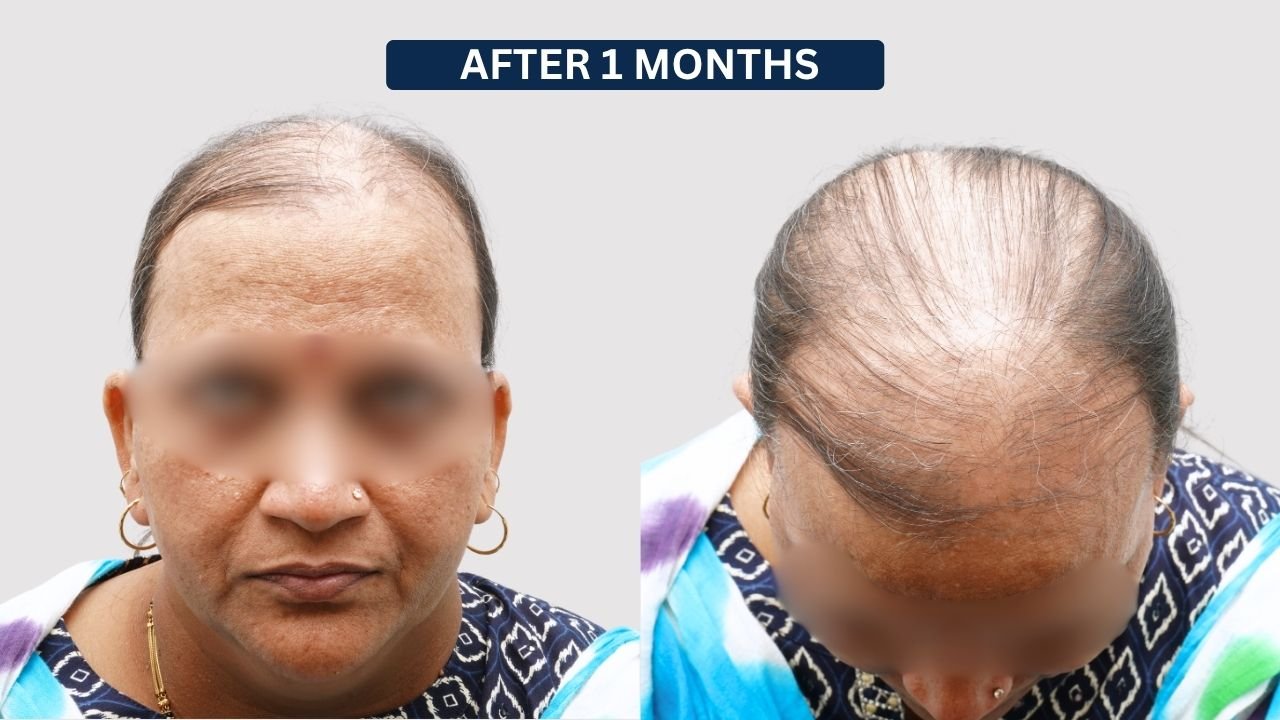
After 1 Month – Early Treatment Stage

At approximately 1 month, the overall scalp appearance remained similar to baseline.

The photographs showed:

  • Persistent frontal and central scalp visibility
  • Sparse hair over the upper scalp
  • Fine residual hair still present
  • Limited visible density improvement at this early stage
  • Continued need for follow-up

This represented a very early treatment stage and should not be interpreted as the final outcome.

SUREKHA CHAVAN3

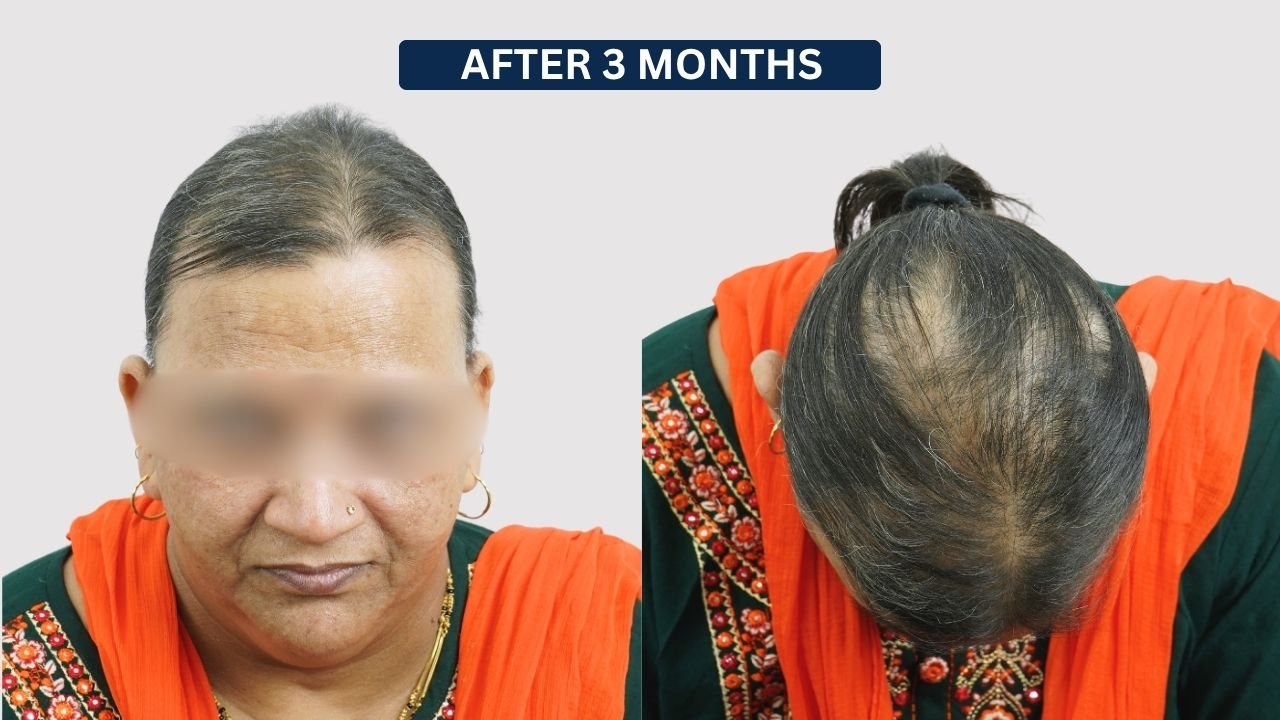
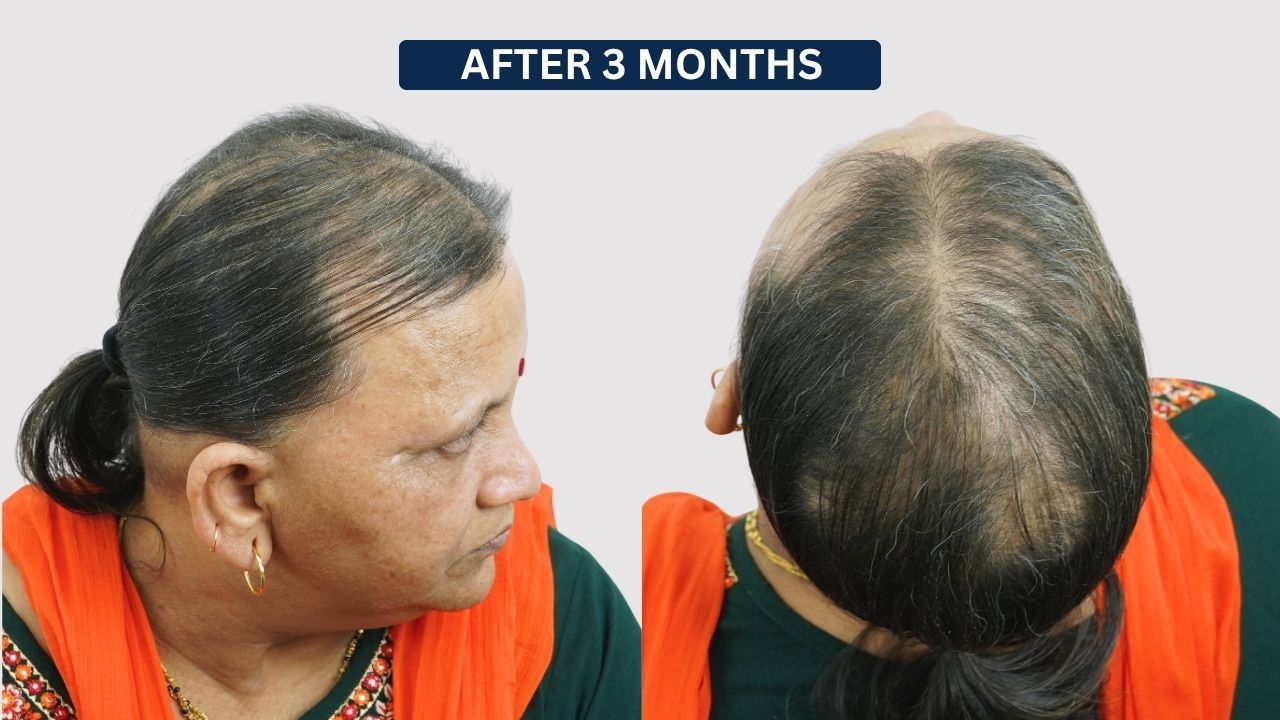
After 3 Months – Developing Improvement

At the 3-month follow-up, visible improvement in coverage had begun.

Compared with baseline:

  • More hair was visible across the upper scalp
  • The scalp appeared less exposed in some areas
  • Frontal hair distribution had improved
  • Hair coverage was developing over previously sparse regions
  • The central scalp remained visibly thin
  • Overall density was still incomplete

This stage indicated developing regrowth and improved coverage, although further maturation was still expected.

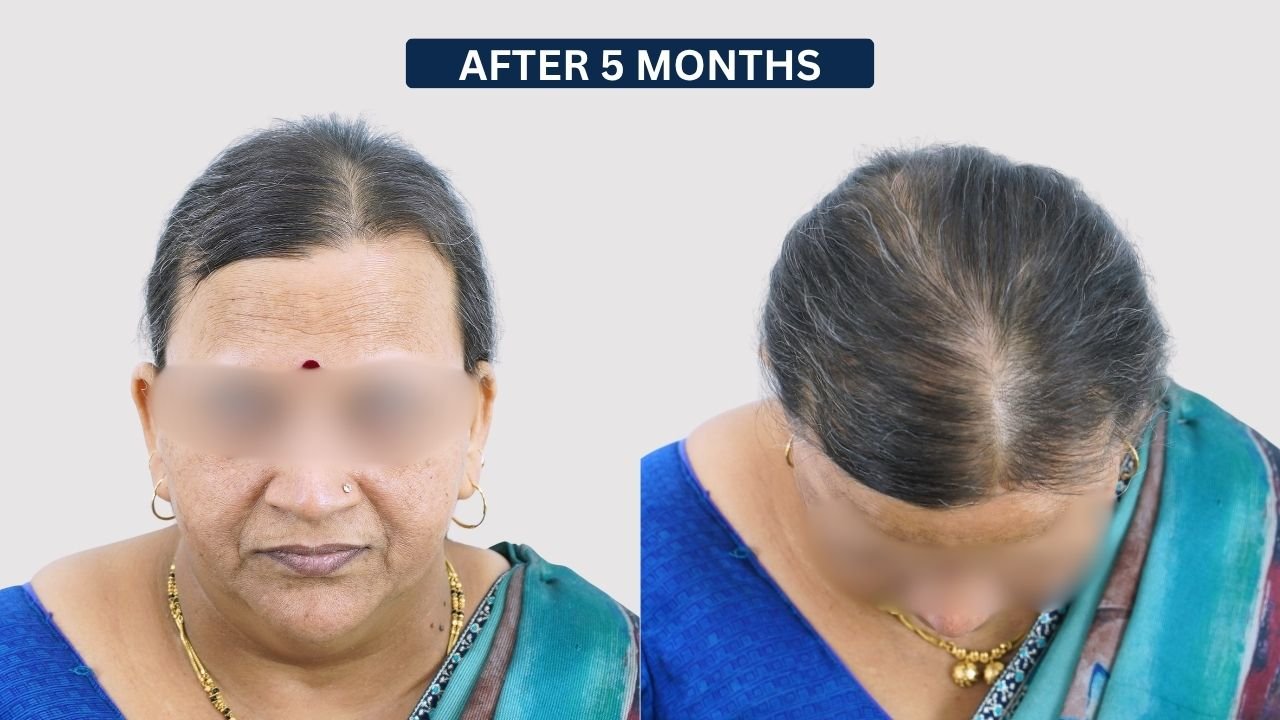
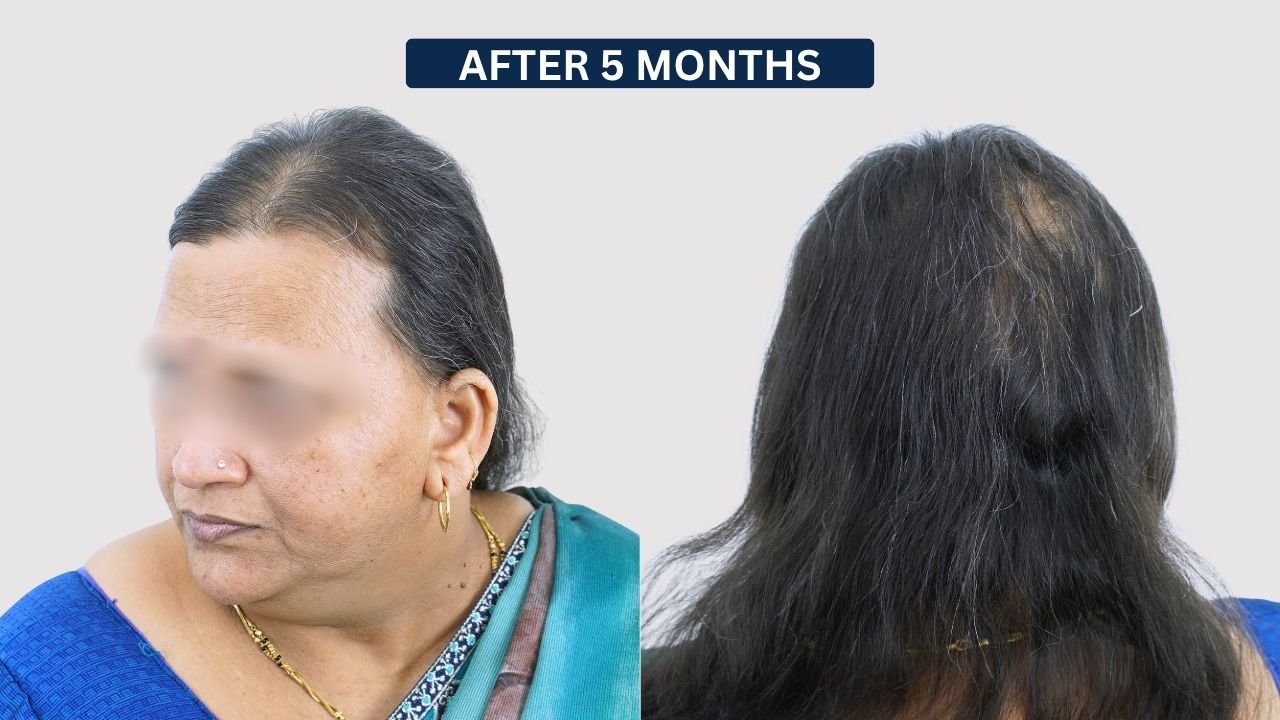
After 5 Months – Progressive Hair Density

By approximately 5 months, the patient’s photographs showed more noticeable improvement.

Visible observations included:

  • Increased overall hair coverage
  • Improved frontal density
  • Better coverage along the central scalp
  • Reduced visible scalp compared with baseline
  • More uniform distribution of hair
  • Hair appearing longer and more mature
  • Residual thinning still visible along the central parting

The difference from the pretreatment stage was increasingly apparent.

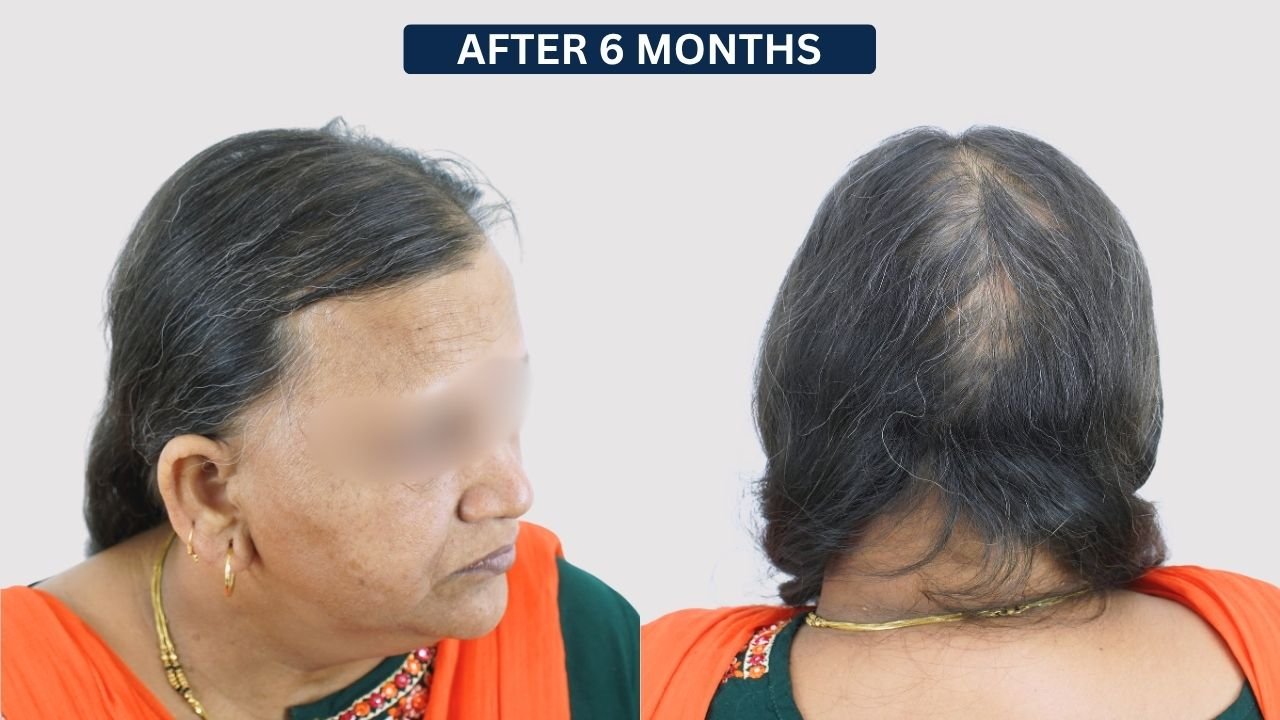
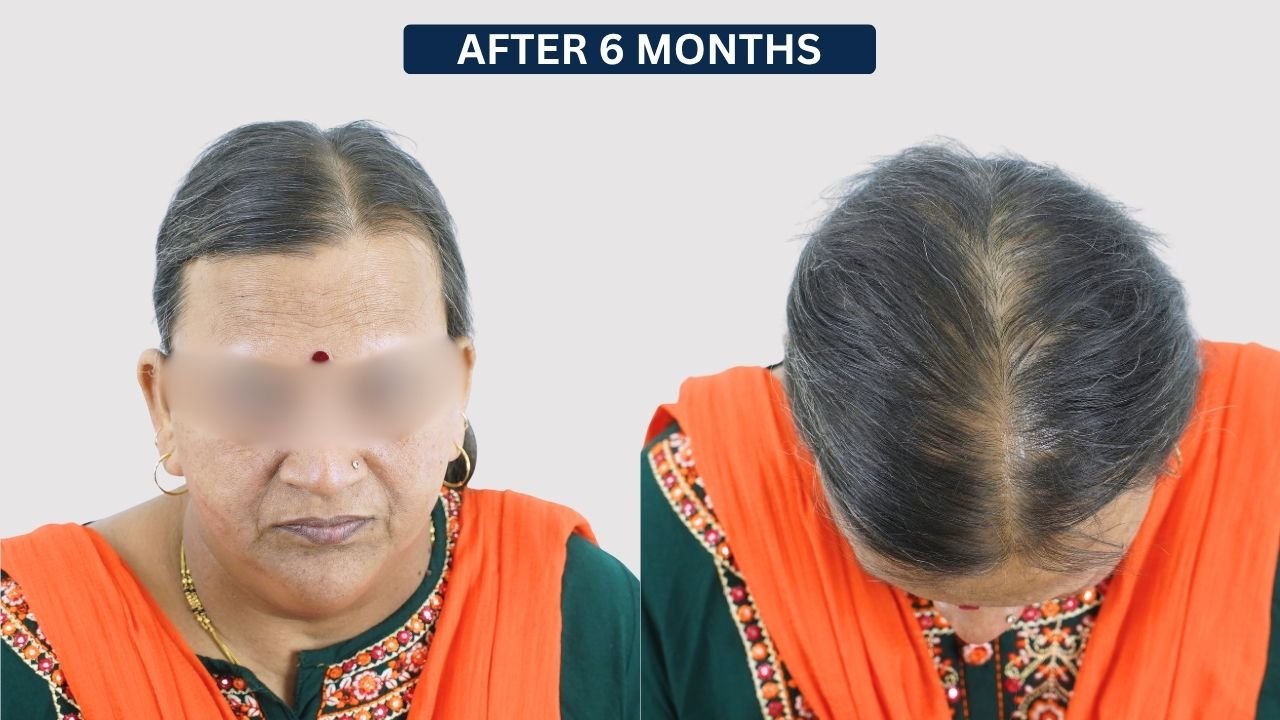
After 6 Months – Latest Documented Progress

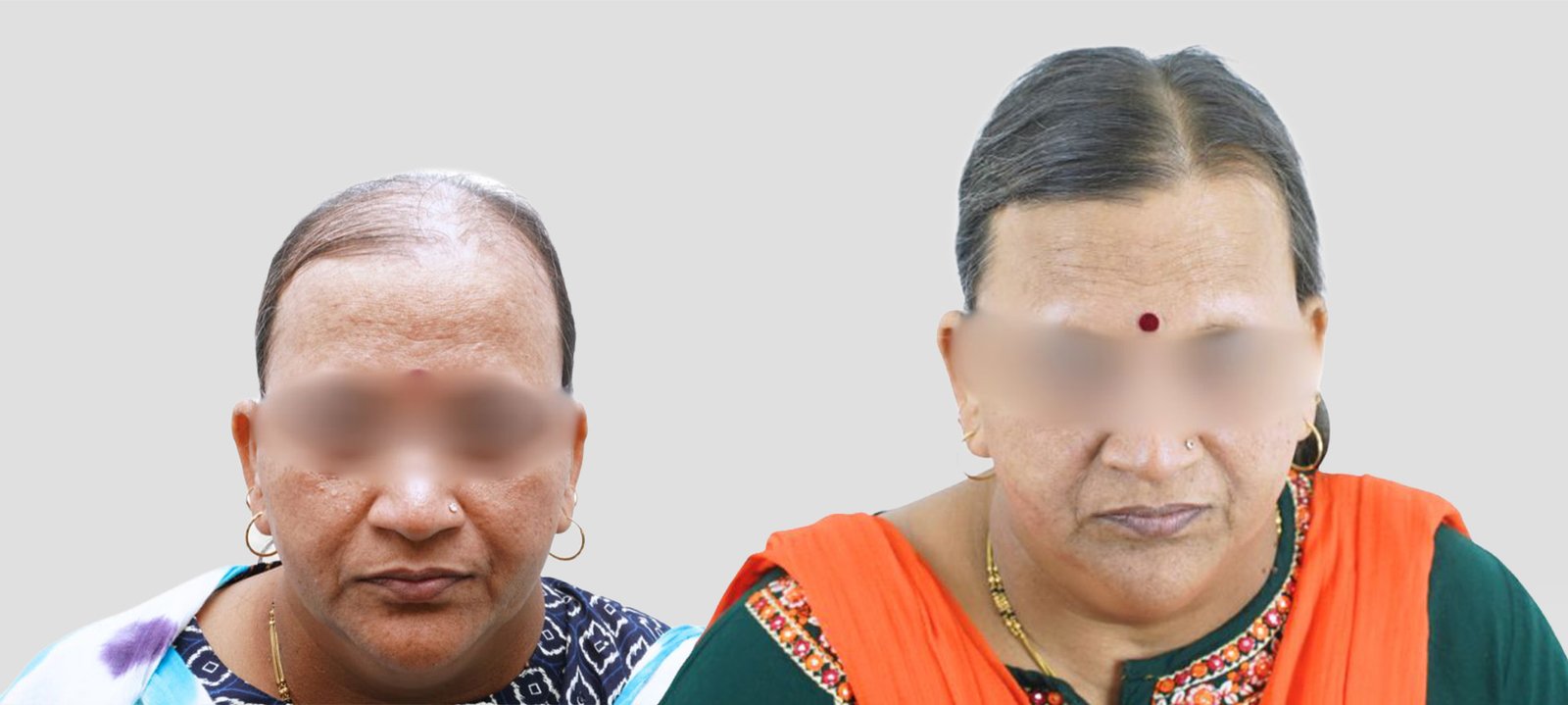
At the 6-month follow-up, the patient showed substantial visible improvement compared with the baseline photographs.

The photographs demonstrate:

  • Improved frontal hair coverage
  • Increased overall density
  • Considerably reduced scalp exposure
  • Better central scalp coverage
  • More mature-looking hair
  • Better blending across the treated scalp
  • Improved overall cosmetic appearance

A central parting remained visible, but the width and prominence of the exposed scalp appeared considerably reduced compared with the pretreatment condition.

The 6-month stage represents the latest documented follow-up, rather than a guaranteed permanent or final result.

After 6 Months – Latest Documented Progress

At the 6-month follow-up, the patient showed substantial visible improvement compared with the baseline photographs.

The photographs demonstrate:

  • Improved frontal hair coverage
  • Increased overall density
  • Considerably reduced scalp exposure
  • Better central scalp coverage
  • More mature-looking hair
  • Better blending across the treated scalp
  • Improved overall cosmetic appearance

A central parting remained visible, but the width and prominence of the exposed scalp appeared considerably reduced compared with the pretreatment condition.

The 6-month stage represents the latest documented follow-up, rather than a guaranteed permanent or final result.

Aftercare & Maintenance

Following Kenacort Injection treatment, the patient should continue dermatologist-directed follow-up and scalp care.

Recommended maintenance may include:

  • Follow the prescribed treatment schedule
  • Avoid scratching or irritating injected scalp areas
  • Avoid unnecessary harsh chemical treatments on affected scalp
  • Maintain a balanced, nutritious diet
  • Monitor previously affected areas for renewed thinning
  • Watch for development of new alopecia patches
  • Attend scheduled dermatologist follow-ups
  • Inform the doctor about sudden or increased hair shedding
  • Continue any supportive treatment only as advised
  • Do not repeat or discontinue corticosteroid injections without medical supervision

Long-term follow-up helps determine whether further treatment is necessary and whether regrowth remains stable. Pasted markdown

Treatment Progress Summary

Treatment Stage

Observed Progress

Before Treatment

Marked frontal and upper scalp thinning with significant scalp exposure

1 Month

Early stage with persistent visible thinning and limited density change

3 Months

Developing hair coverage with reduced scalp exposure in some regions

5 Months

Progressive improvement in frontal and central scalp density

6 Months

Latest documented stage with considerably improved coverage and reduced scalp visibility

Aftercare & Long-Term Maintenance

Long-term dermatologist-directed monitoring remains important because alopecia areata can have an unpredictable course.

General aftercare may include:

  • Follow the prescribed treatment schedule
  • Attend regular dermatologist follow-ups
  • Avoid unnecessary scratching or irritation of treated areas
  • Maintain gentle scalp and hair care
  • Avoid aggressive chemical treatments when advised
  • Monitor previously affected areas for renewed thinning
  • Watch for sudden or localized new hair loss
  • Inform the dermatologist if increased shedding occurs
  • Continue supportive treatment only when advised
  • Do not independently repeat, modify, or discontinue corticosteroid treatment

The supplied reference case similarly emphasizes ongoing clinical monitoring and avoiding unsupervised changes to corticosteroid treatment. Pasted markdown

The Change: A New Beginning

For this patient, Kenacort Injection treatment for hypertrophic scar focused on reducing the raised appearance, thickness, and firmness of the scar while helping improve the overall texture and appearance of the affected skin.

The treatment involved carefully administering Kenacort (triamcinolone) injection directly into the hypertrophic scar according to the dermatologist’s clinical assessment. The injection was targeted to the raised scar tissue, with the treatment plan individualized according to the scar’s size, thickness, location, and response to previous sessions.

Throughout the treatment period, the patient followed the recommended aftercare and attended regular follow-ups to monitor changes in the scar. Over time, the hypertrophic scar gradually became flatter, softer, and less prominent, helping improve the overall appearance and texture of the treated area.


SUREKHA CHAVAN

What Our Patients Says

Why Choose Dr. Kiran Chotaliya for PRP Hair Treatment

  • Expert Hypertrophic Scar Care: Dr. Kiran Chotaliya provides personalized Kenacort Injection treatment plans based on the scar’s size, thickness, location, duration, symptoms, and overall skin condition.

  • Customized Scar Treatment Planning: The concentration, amount of medication, injection points, treatment interval, and number of sessions are decided according to the individual characteristics of the hypertrophic scar and the patient’s response.

  • Precise Intralesional Kenacort Injection: Kenacort is carefully injected directly into the raised scar tissue using a controlled intralesional technique to target the thickened area while minimizing unnecessary treatment of the surrounding skin.

  • Focus on Scar Flattening & Softening: Treatment is planned to help reduce the height, firmness, thickness, and prominence of the hypertrophic scar, while supporting a smoother and more even skin appearance.

  • Symptom-Oriented Scar Management: When hypertrophic scars are associated with discomfort, itching, tightness, or tenderness, the treatment plan may also focus on improving these symptoms based on the dermatologist’s clinical assessment.

  • Regular Follow-Up & Maintenance: Follow-up assessments help monitor changes in scar thickness, texture, softness, symptoms, and overall appearance. Further Kenacort sessions or additional scar-management options may be advised according to the patient’s progress and clinical response.

  •  
drkiranchotaliya

FAQ'S

1. What treatment was used in this alopecia areata case?

The patient’s documented treatment plan included Kenacort Injection for alopecia areata, administered according to the dermatologist’s clinical assessment.

Kenacort contains triamcinolone, a corticosteroid. Intralesional corticosteroid treatment may be used by dermatologists in selected alopecia areata cases. The concentration, dose, injection sites, and treatment intervals should be individualized.

The photographs show that visible improvement became more noticeable around the 3-month follow-up, with continued improvement at 5 and 6 months.

At six months, the photographs showed better frontal and central scalp coverage, increased visible density, and reduced scalp exposure compared with baseline.

Not necessarily. Six months represents the latest documented follow-up for this patient. Alopecia areata may recur, so continued dermatologist monitoring is important.

Hair Transplant in Pune

Dr. Kiran Chotaliya is a leading hair transplant surgeon in Pune, specializing in advanced techniques like FUE and FUT for natural, lasting results. His expertise and patient-centered care ensure successful hair restoration with exceptional outcomes.

Follow Us

GET IN TOUCH

© 2026 Developed & Handle By Dr. Kiran Chotaliya Clinic Team

Location

© 2026 Developed & Handle By Dr. Kiran Chotaliya Clinic Team

Scroll to Top