

Monsoon weather can increase hair fall, dandruff, scalp infections, and frizz due to high humidity, sweat buildup, and rainwater exposure. Following proper monsoon hair care tips such as keeping the scalp clean, avoiding prolonged wet hair, maintaining good scalp hygiene, staying hydrated, and eating a nutrient-rich diet can help reduce hair fall and improve scalp health. Consistent care during the rainy season can keep your hair stronger, healthier, and more manageable.
The monsoon season can lead to hair fall, dandruff, scalp infections, and frizz due to increased humidity and rainwater exposure. If you’re wondering
“how to maintain healthy hair during the rainy season”,
following the right monsoon hair care tips can help keep your hair and scalp healthy.
According to Dr. Kiran Chotaliya, hair transplant surgeon in Pune, seasonal changes can contribute to hair fall during monsoon and affect scalp health. Proper scalp care during monsoon, along with a healthy hair care routine, can help reduce seasonal hair concerns.
Simple practices such as keeping the scalp clean, avoiding prolonged wet hair, staying hydrated, and eating a balanced diet can support healthy hair growth and act as an effective seasonal hair fall treatment.
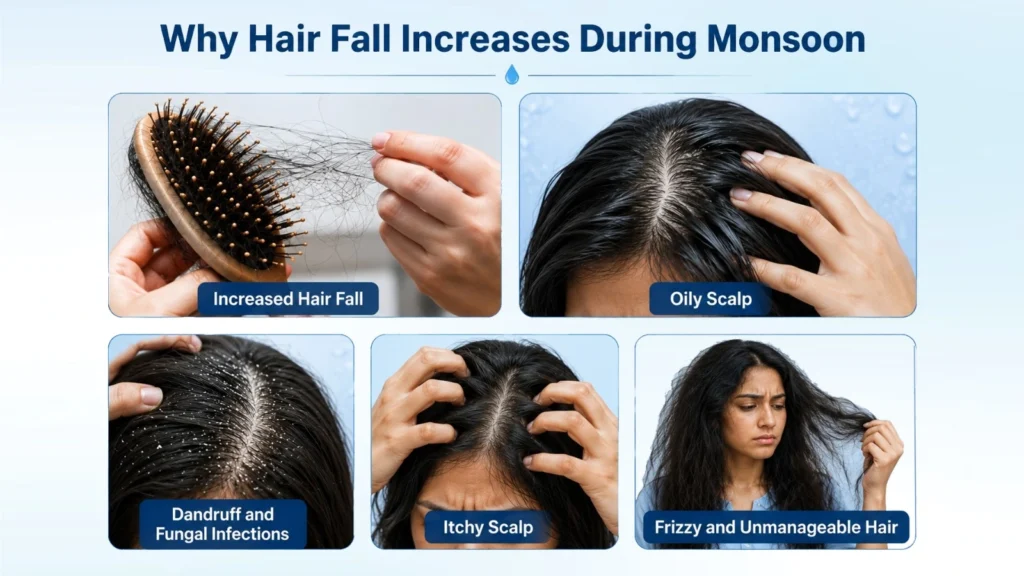
High humidity levels during the rainy season can create an ideal environment for scalp-related issues. Excess moisture and sweat may cause:
Poor scalp hygiene can further worsen these problems, making it important to pay extra attention to hair care during monsoon.
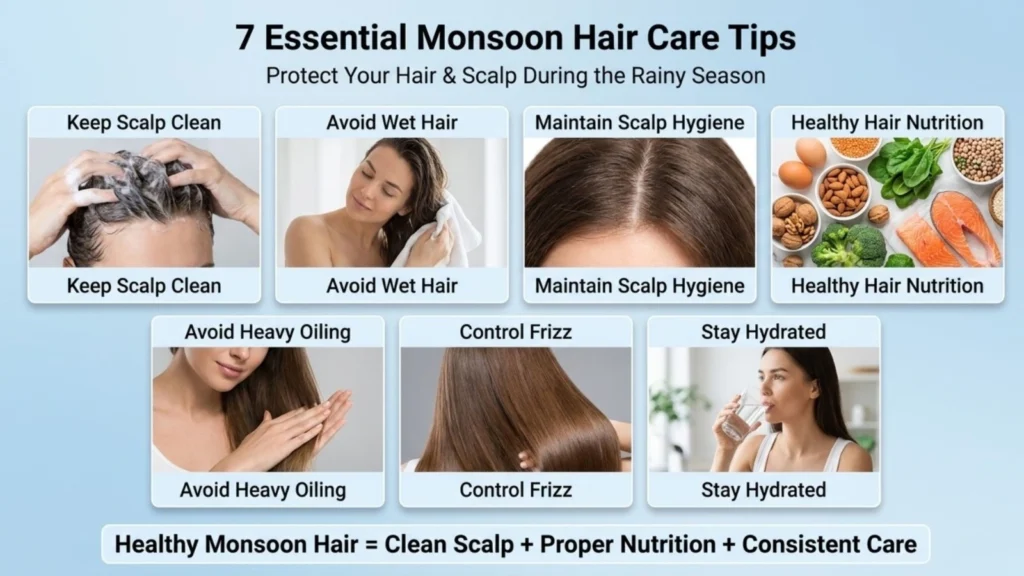
A clean scalp is the foundation of healthy hair. Sweat, dirt, and excess oil can accumulate more quickly during monsoon, increasing the risk of dandruff and scalp irritation.
Tips:
One of the most important monsoon hair care tips is to avoid leaving your hair wet for long periods.
Wet hair is more fragile and prone to breakage. It also creates a favorable environment for fungal growth on the scalp.
Tips:
Good scalp care helps prevent dandruff, itching, and infections during humid weather.
Tips:
Healthy hair starts from within. Proper nutrition helps strengthen hair follicles and reduce seasonal hair fall.
Important Nutrients for Hair Health:
A balanced diet can significantly improve hair quality and support healthy scalp function.
Heavy oiling during monsoon may attract dirt and increase scalp buildup.
Tips:
Humidity often causes hair to become rough and frizzy.
Tips:
Many people overlook hydration during the rainy season. Drinking enough water supports scalp health and overall hair growth.
Benefits:
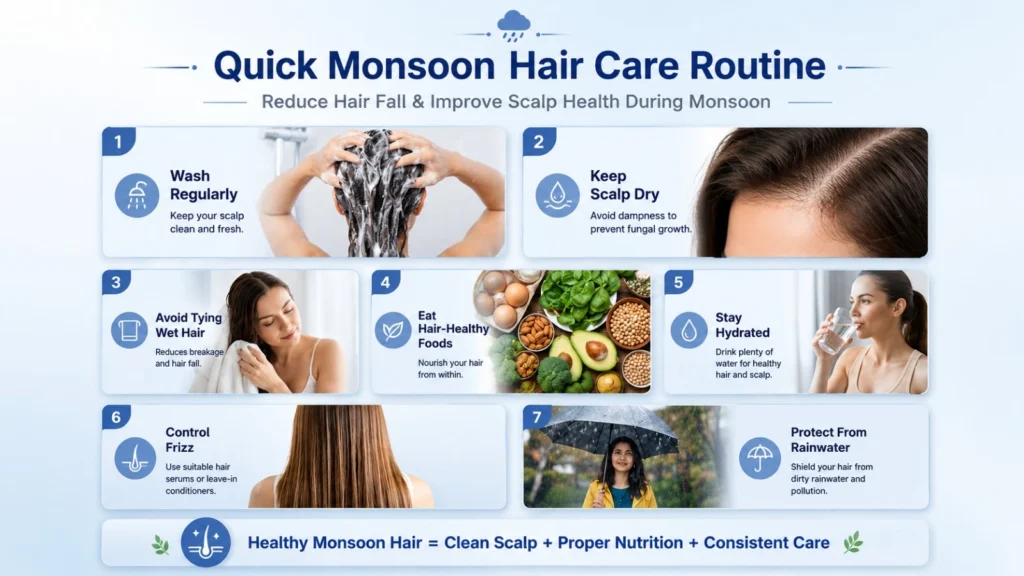
To reduce hair fall and improve scalp health during monsoon:
Monsoon weather can take a toll on your hair and scalp, leading to increased hair fall, dandruff, and irritation. However, following simple monsoon hair care tips such as maintaining scalp hygiene, avoiding prolonged wet hair, eating a nutrient-rich diet, and staying hydrated can help reduce hair fall and improve scalp health. Consistent care during the rainy season can keep your hair stronger, healthier, and more manageable.
High humidity, sweat buildup, scalp infections, and excess oil production can weaken hair roots and contribute to increased hair fall.
Keeping the scalp clean, avoiding wet hair for long periods, eating a healthy diet, and following a proper hair care routine can help reduce seasonal hair fall.
Washing your hair 2–3 times a week with a mild shampoo is generally recommended to maintain scalp hygiene.
Moderate oiling can be beneficial, but excessive oil application may lead to scalp buildup and attract dirt during humid weather.
Protein-rich foods, nuts, seeds, leafy vegetables, fruits, and foods rich in iron, biotin, and omega-3 fatty acids support healthy hair and scalp health.
To improve scalp health during monsoon, keep your scalp clean and dry, wash your hair regularly with a mild shampoo, avoid tying wet hair, maintain a balanced diet rich in nutrients, stay hydrated, and protect your hair from excessive rainwater exposure. These habits can help reduce dandruff, scalp infections, and hair fall during the rainy season.

A free experts curated guide that clears all your doubts
about Costs, Results, Pain, Recovery and much more.
Dr. Kiran Chotaliya is a leading hair transplant surgeon in Pune, specializing in advanced techniques like FUE and FUT for natural, lasting results. His expertise and patient-centered care ensure successful hair restoration with exceptional outcomes.
© 2026 Developed & Handle By Dr. Kiran Chotaliya Clinic Team
© 2026 Developed & Handle By Dr. Kiran Chotaliya Clinic Team