Rohit Sharma Hair Transplant: His Hair Transformation, Facts, and Hair Restoration Insights
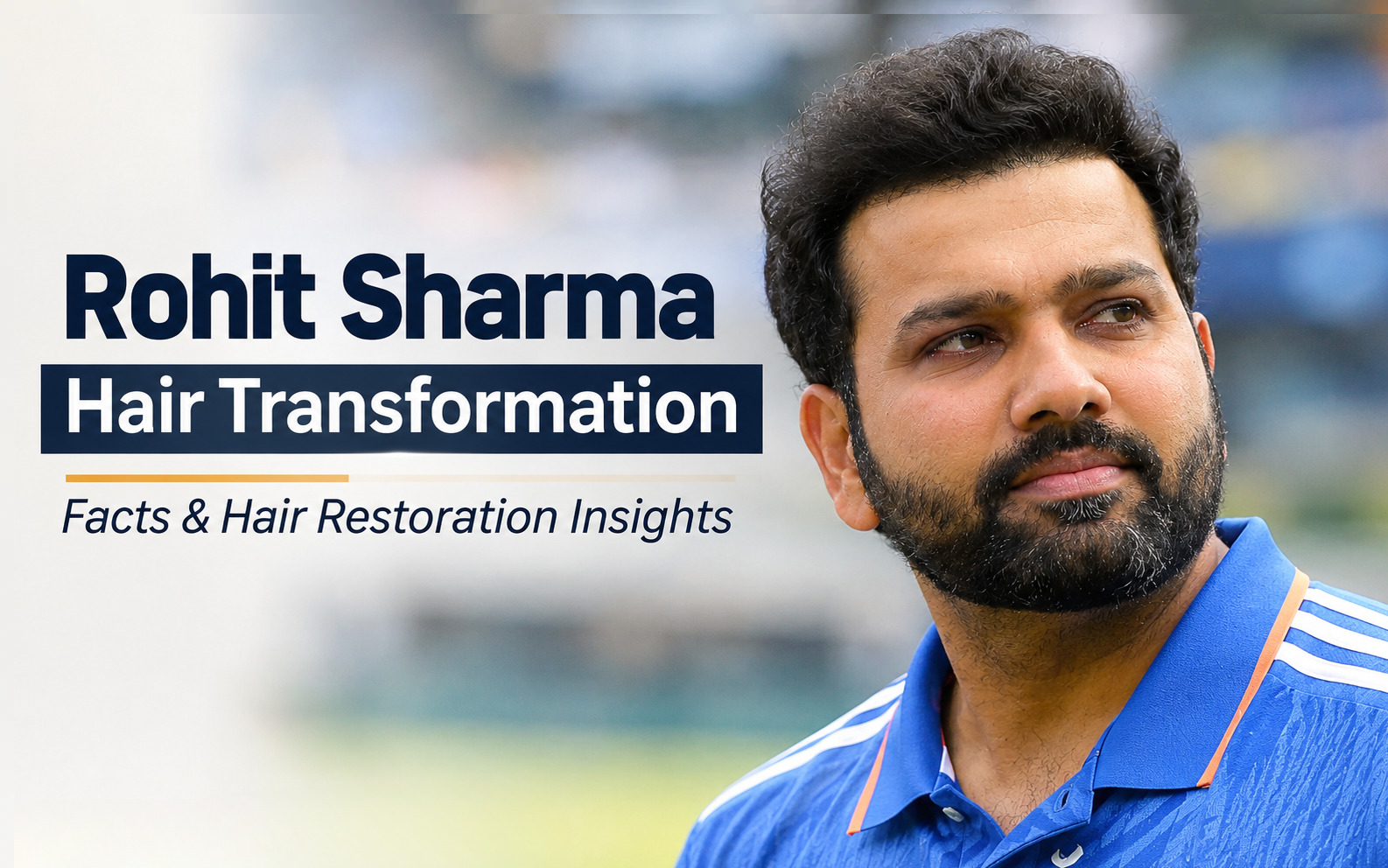
Table of Contents
Rohit Sharma is known for his effortless batting, remarkable cricketing achievements, and calm presence on the field. However, beyond his cricketing career, another topic has attracted attention among fans: Rohit Sharma’s hair transplant journey.
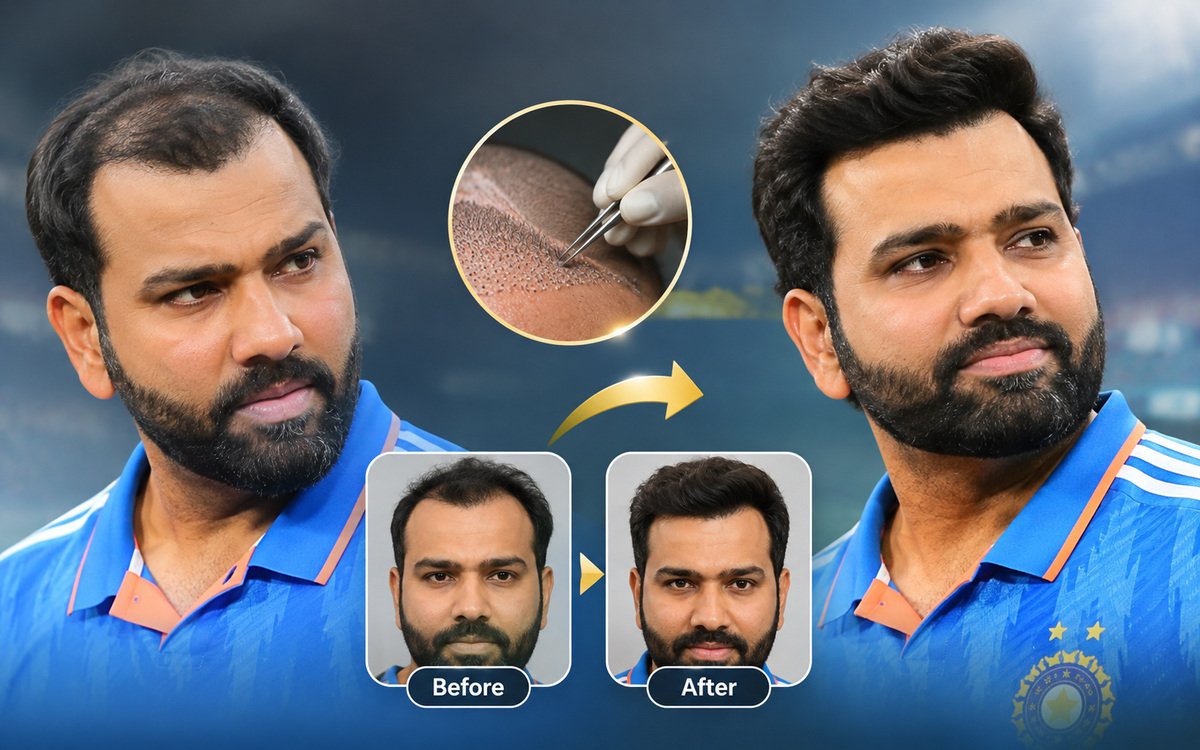
Over the years, his hairstyles and hair appearance have become subjects of discussion on social media. Some fans have compared photographs from different stages of his career, while others have wondered whether he underwent a hair restoration procedure.
But did Rohit Sharma actually have a hair transplant?
Although online speculation continues, there is no verified public confirmation of a surgical hair transplant from the cricketer himself. His publicly reported comments about hair concerns provide some context, but they do not establish a diagnosis or treatment history.
In this article, we explore the public discussion surrounding Rohit Sharma’s hair transformation, explain modern hair transplant techniques, and share educational insights relevant to patients considering hair restoration with Dr. Kiran Chotaliya in Pune.
Rohit Sharma's Hair Transformation: From Early Career to Recent Appearances
Early Cricket Career and Hairstyles
Rohit Sharma entered international cricket in 2007 and gradually established himself as one of India’s most recognised batsmen.
During his early career, he was often seen with short, neatly styled hair. Like many public figures, his appearance changed over time as he experimented with different hairstyles and grooming choices.
Photographs from his early cricketing years continue to circulate online, particularly in discussions comparing his older and more recent appearances.
However, such photographs cannot reliably establish whether someone has experienced medically significant hair loss. Lighting, hairstyle, camera angle, hair length, and image quality can all influence how the scalp and hairline appear.
Hair Appearance During His Established Cricket Career
As Rohit’s cricketing career progressed, fans began discussing changes in his hair appearance.
Some social media users commented on possible thinning around the crown and frontal scalp. Others compared his hairline across different tournaments and public appearances.
These observations contributed to searches such as “Rohit Sharma hair loss” and “Rohit Sharma hair transplant before and after.”
Nevertheless, changes seen in photographs are not sufficient to diagnose male pattern baldness or confirm a hair transplant.
A medical assessment would require a detailed examination of the scalp, hair follicles, medical history, and hair loss pattern.
The 2023 West Indies Test Match Incident
One publicly reported moment brought greater attention to Rohit Sharma’s hair.
During India’s Test series against the West Indies in July 2023, Rohit scored a century in Dominica. According to reports of a stump-microphone conversation, West Indies wicketkeeper Joshua Da Silva encouraged him to remove his helmet while celebrating.
Rohit reportedly responded:
“Nah, I’ve got hair problems.”
The exchange was widely discussed by cricket fans and media outlets.
While the comment suggested that Rohit was comfortable joking about hair concerns, it did not identify a particular medical condition or confirm any hair restoration treatment.
Did Rohit Sharma Really Get a Hair Transplant?
Several online articles have suggested that Rohit Sharma may have undergone hair transplantation.
Some discussions focus on his frontal hairline, while others speculate about changes in crown density.
However, these claims are not supported by a publicly verified surgical record, a confirmed treatment statement, or an identified treating surgeon.
It would therefore be inaccurate to state that Rohit underwent FUE, FUT, or any other procedure as an established fact.
His case demonstrates an important distinction: a publicly discussed hair transformation is not the same as a medically confirmed hair transplant journey.
For readers experiencing similar concerns about their own hairline or crown, a professional scalp assessment is far more useful than attempting to diagnose hair loss from celebrity photographs
What Causes Hairline Changes, and Can Hair Transplantation Help?
Hair appearance can change naturally with age, genetics, grooming habits, and underlying medical conditions.
One common cause of progressive thinning in men is androgenetic alopecia, also known as male pattern hair loss.
Understanding Male Pattern Hair Loss
Male pattern hair loss is influenced by inherited susceptibility and hormonal activity, particularly the effects of dihydrotestosterone (DHT) on sensitive hair follicles.
Over time, affected follicles may gradually produce finer, shorter hairs.
Common signs include a receding hairline, thinning near the temples, reduced crown density, and increasing scalp visibility.
However, not every receding hairline indicates progressive baldness, and not every form of hair loss is caused by DHT.
Stress-related shedding, nutritional deficiencies, certain medicines, thyroid disorders, and inflammatory scalp conditions can also contribute to changes in hair density.
A dermatologist can help identify the underlying cause before recommending treatment.
Can a Hair Transplant Restore a Receding Hairline?
A hair transplant is a surgical procedure in which existing hair follicles are moved from a suitable donor region to areas affected by permanent hair loss.
The donor region is generally located at the back or sides of the scalp.
The goal is to improve coverage and create a hairline that looks appropriate for the patient’s facial proportions, existing hair, and future hair loss risk.
A successful treatment plan involves more than placing grafts in bald areas. It requires careful consideration of donor availability, hair characteristics, expected coverage, and the possibility of continued thinning.
For suitable patients, male hair transplant treatment in Pune may be one option after appropriate clinical assessment.
Can Hair Loss Be Treated Without Surgery?
Yes. Not every patient experiencing thinning requires a hair transplant.
Depending on the diagnosis, treatment options may include topical minoxidil, prescription medicines such as finasteride for suitable men, and other supportive or procedural treatments.
Platelet-rich plasma therapy may also be discussed in selected cases, although the strength of evidence and individual response vary.
Medicines should be used under appropriate medical guidance, particularly when potential side effects or contraindications are involved.
The most suitable approach depends on whether the follicles are still capable of producing hair, how advanced the hair loss is, and the patient’s overall health.
FUE vs FUT Hair Transplant: Procedure, Recovery, and Realistic Results
Although there is no confirmation that Rohit Sharma underwent either procedure, understanding FUE and FUT can help readers make informed decisions about their own hair restoration options.
FUE Hair Transplant
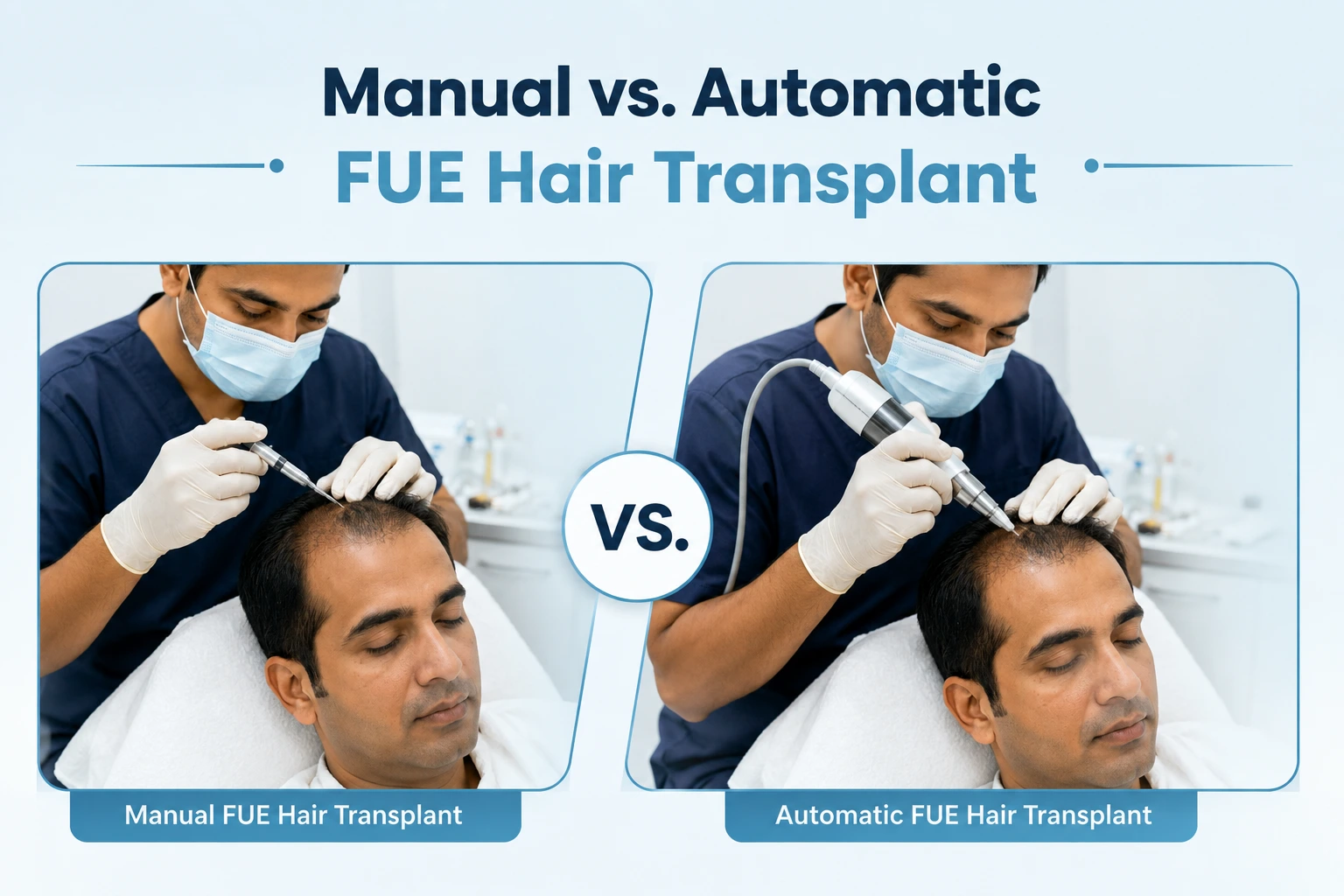
Follicular Unit Extraction (FUE) involves removing individual follicular units from the donor area using specialised instruments.
These grafts are then implanted into carefully planned recipient areas.
FUE does not require removal of a long strip of scalp. Instead, it leaves numerous small extraction scars, which are often less noticeable once healed.
The procedure may be suitable for patients who prefer shorter hairstyles or wish to avoid a linear donor scar.
However, suitability depends on donor density, scalp characteristics, treatment goals, and the number of grafts required.
FUT Hair Transplant
Follicular Unit Transplantation (FUT), commonly called the strip method, involves removing a narrow strip of hair-bearing scalp from the donor region.
The strip is divided into individual follicular grafts, which are then implanted into the recipient area.
The donor wound is closed with sutures, leaving a linear scar.
FUT can be appropriate for selected patients, but the choice between FUT and FUE should be based on individual clinical requirements rather than popularity alone.
Both methods can produce natural-looking results when properly planned and performed.
Hair Transplant Recovery and Growth Timeline
Hair transplantation requires patience because visible hair growth develops gradually.
First 1–2 Weeks: Initial Healing
The scalp may experience temporary redness, swelling, tenderness, and small scabs. Patients must follow the surgeon’s instructions to protect the transplanted grafts.
Weeks 2–8: Temporary Shedding
Many transplanted hair shafts shed during the early recovery period. This is commonly part of the normal growth cycle and does not necessarily mean the follicles have failed.
Months 3–4: Early Growth
New hairs may begin appearing. Initial growth can be fine, uneven, and less dense than the eventual result.
Months 5–6: Developing Coverage
Some patients notice increasing hair length and visible coverage. However, the outcome is still developing, and density may remain limited.
Months 7–9: Progressive Improvement
Hair growth may become more noticeable, with gradual changes in thickness and styling possibilities.
Months 10–12 and Beyond: Continued Maturation
Hair thickness, texture, and overall appearance can continue improving. Some patients require 10–18 months to appreciate their fuller result.
These are general recovery milestones, not a timeline of Rohit Sharma’s personal hair history.
The NHS also explains that transplanted hair commonly sheds initially and that complete results may take several months.
Medical reference: NHS – Hair Transplant Procedure and Recovery
Are Hair Transplant Results Permanent?
Transplanted follicles may provide long-lasting growth, particularly when obtained from an appropriate donor region.
However, a hair transplant does not stop the progression of hair loss in surrounding native follicles.
This is why long-term maintenance, medical treatment where appropriate, and follow-up appointments remain important.
Patients should also understand that results depend on donor quality, graft survival, scalp condition, surgical planning, and individual healing.
No procedure can guarantee a specific density or cosmetic outcome.
Hair Restoration Insights from Dr. Kiran Chotaliya and Hair Transplant Cost in Pune
Celebrity hair transplant discussions often focus on dramatic visual changes. In actual clinical practice, however, hair restoration decisions require careful planning.
Dr. Kiran Chotaliya, a dermatologist and hair restoration practitioner associated with Hairfree & Hairgrow Clinic in Pune, emphasises the importance of planning for long-term hair appearance rather than concentrating only on immediate cosmetic improvement.
Why Natural Hairline Design Matters
A hairline should complement the patient’s facial proportions, age, existing hair density, and potential future thinning.
Placing a hairline too low may require more grafts and can create challenges if the surrounding native hair continues to recede.
Similarly, concentrating all available grafts on the frontal region without considering the crown may limit future treatment options.
A personalised hairline design therefore considers the patient’s present needs and likely long-term hair loss pattern.
For younger patients, a conservative approach may sometimes be preferable to an aggressively low hairline.
Donor Hair Preservation Is Essential
The donor area contains a limited supply of usable follicles.
Excessive extraction can reduce donor density and compromise future restoration options.
Before recommending surgery, a qualified practitioner should evaluate donor hair quality, scalp health, existing thinning, and realistic graft requirements.
This is especially important for individuals who may experience further hair loss over time.
Hair Transplant Cost in Pune
Patients researching celebrity hair restoration frequently want to understand the cost of a similar procedure.
However, the cost of any celebrity’s treatment cannot be established without reliable information about the actual procedure.
For patients considering treatment in Pune, hair transplant pricing generally depends on several factors:
- Number of grafts: Larger treatment areas may require more grafts and surgical time.
- Technique: FUE, FUT, and specialised implantation approaches can have different costs.
- Donor hair quality: Limited donor availability may increase planning complexity.
- Treatment area: Frontal hairline reconstruction and extensive crown coverage have different requirements.
- Surgical expertise: The qualifications and experience of the treating professional matter.
- Post-operative care: Follow-up visits, medicines, and supportive treatment may influence overall expenditure.
Dr. Kiran Chotaliya’s website currently describes a typical price range of approximately ₹25–₹125 per graft, depending on the treatment plan. This is indicative information rather than an individual quotation.
Readers can explore the detailed hair transplant cost in Pune guide for more information.
What Should Patients Learn from Celebrity Hair Discussions?
The biggest lesson is not that a particular celebrity may have chosen surgery. It is that hair loss deserves an individualised approach.
Someone with early hairline recession may benefit from medical treatment and monitoring, while another person with stable, permanent baldness and suitable donor hair may be a candidate for transplantation.
The right treatment depends on diagnosis, expectations, scalp condition, and long-term planning.
Rather than requesting a celebrity’s exact hairline, patients should focus on achieving a natural appearance that suits their own features.
Why Choose Dr. Kiran Chotaliya?
If you are experiencing hair loss or considering hair transplantation, schedule a professional consultation with Dr. Kiran Chotaliya at Hairfree & Hairgrow Clinic, Pune, to discuss your scalp condition, suitable treatment options, realistic expectations, and long-term hair maintenance
Conclusion
Rohit Sharma’s hair transformation has attracted considerable attention, but the available public information does not establish that he underwent hair transplantation.
His reported comments about hair concerns nevertheless highlight a familiar issue: hair thinning can affect people from all backgrounds, including successful athletes and public figures.
For anyone noticing a changing hairline, increased scalp visibility, or progressive hair loss, the most useful step is to identify the underlying cause before choosing treatment.
Modern hair restoration offers medical and surgical options, but successful planning depends on individual needs rather than celebrity comparisons.
FAQs
Did Rohit Sharma officially confirm a hair transplant?
No verified public confirmation was identified during research for this article. Although online sources discuss the possibility of a Rohit Sharma hair transplant, the claims remain unconfirmed.
Why do people search for Rohit Sharma hair transplant before-and-after photos?
Fans have compared his hairstyles and hair appearance across different phases of his cricketing career. However, photographs alone cannot confirm surgery or establish the cause of changes in hair density.
Did Rohit Sharma publicly discuss hair loss?
During a Test match against the West Indies in July 2023, Rohit reportedly joked about having hair problems when asked to remove his helmet after scoring a century. The comment did not confirm a medical diagnosis or treatment.
Which hair transplant technique is better: FUE or FUT?
Neither technique is universally better. FUE avoids a linear donor scar, while FUT may be appropriate for selected patients. A qualified hair transplant surgeon can recommend an approach based on donor hair, scalp condition, and restoration goals.
Where can I consult a hair transplant specialist in Pune?
Patients concerned about hairline recession, crown thinning, or progressive baldness can consult Dr. Kiran Chotaliya at Hairfree & Hairgrow Clinic in Pune for an individual assessment and discussion of suitable treatment options.
Medical Disclaimer:
This article is intended for general education. It does not establish Rohit Sharma’s medical history or confirm that he underwent any procedure. Dr. Kiran Chotaliya is not represented as having examined or treated Rohit Sharma. Treatment suitability and results vary between individuals. Consult a qualified healthcare professional for personalised advice.