

Written by: Dr. Kiran Chotaliya Editorial Team · Reviewed by: Dr. Kiran Chotaliya, M.D. Dermatologist & Chief Hair transplant Surgeon · Hairfree & Hairgrow Clinics, India · Updated Oct 2026
This case study documents the PRP hair treatment plan of a 32-year-old male patient who had been experiencing progressive hair loss for approximately 6.5 years. According to the supplied patient profile, no significant medical history or personal habits were reported. Before PRP, the patient had already been using hair serum and vitamins as part of his hair-care routine.
The case-study structure follows the same professional format used in the supplied reference, including patient assessment, treatment planning, PRP procedure, progress documentation, aftercare, outcome assessment, and realistic results disclaimers. Pasted markdown
Documentation note: The supplied treatment plan records 5 PRP sessions advised at approximately one-month intervals. No separate 1st–6th PRP progress photographs have been provided in the current upload. Therefore, visible density improvement, regrowth, or reduced hair fall should not be attributed to individual sessions unless the relevant follow-up images or clinical records are available.
Patient Consent Notice
This case study should be published only after obtaining the patient’s appropriate consent. Patient photographs, treatment details, and progress information should be used solely for educational, clinical, or promotional purposes as permitted by the patient.
Individual results may vary, and PRP treatment outcomes cannot be guaranteed.
The patient presented with a long-standing history of progressive male hair loss affecting primarily the vertex and upper scalp.
Patient Profile
The treatment objective was to support the patient’s existing hair, manage progressive thinning, and potentially improve the overall appearance of density in areas where viable hair follicles remained.

After approximately 6.5 years of progressive hair loss, the patient’s primary concerns were related to reduced coverage over the upper scalp and vertex.
Based on the supplied patient photograph, the concerns included:
Because daily hair shedding was not objectively documented, the exact amount of reduction in hair fall should not be stated as a measured outcome.
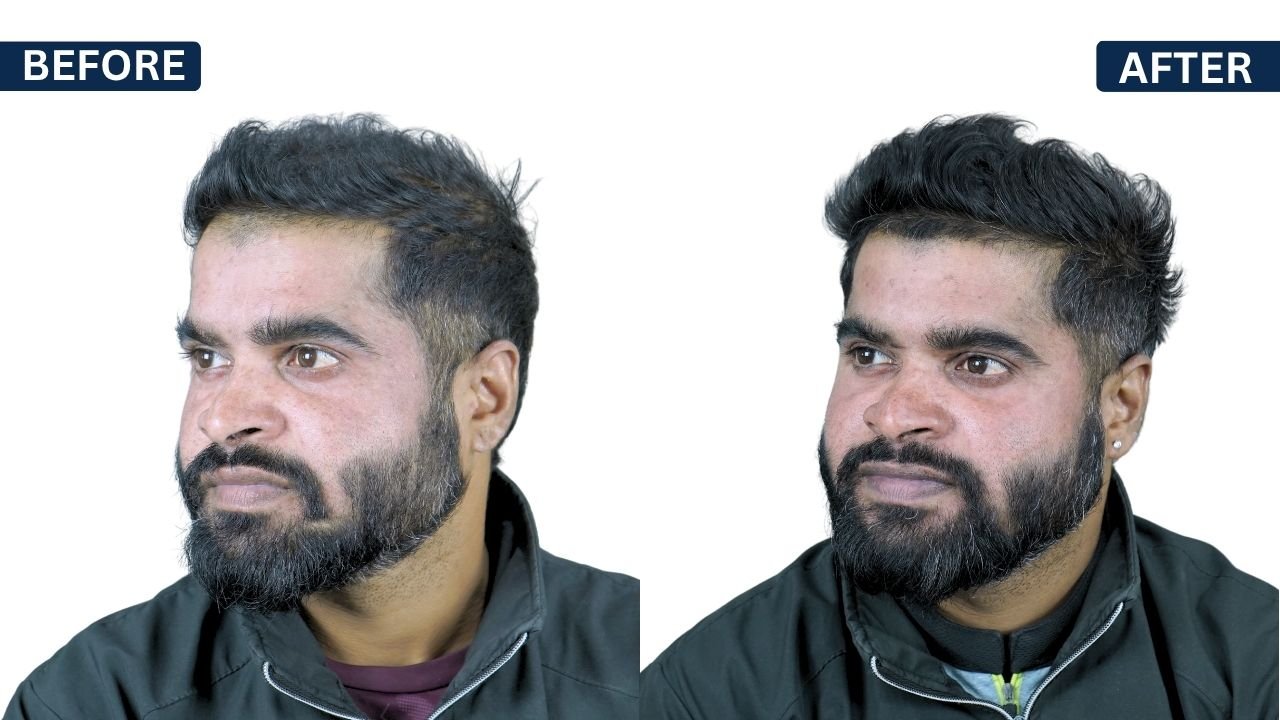
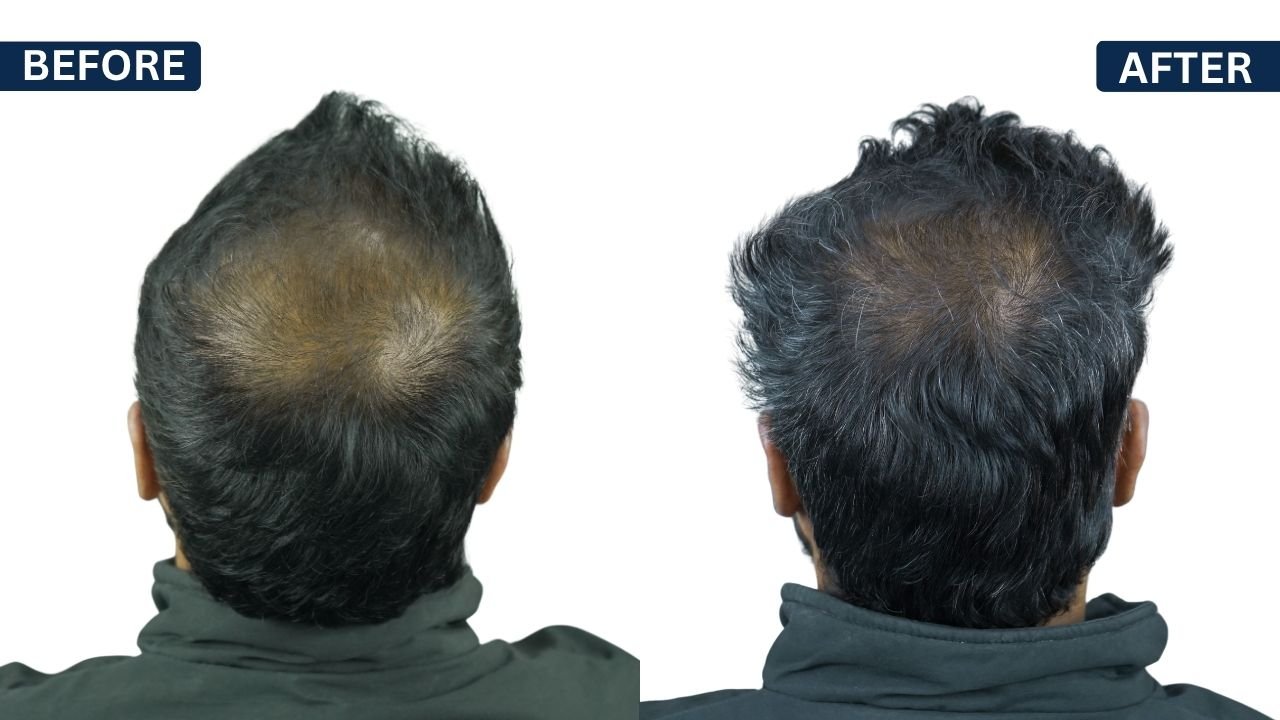
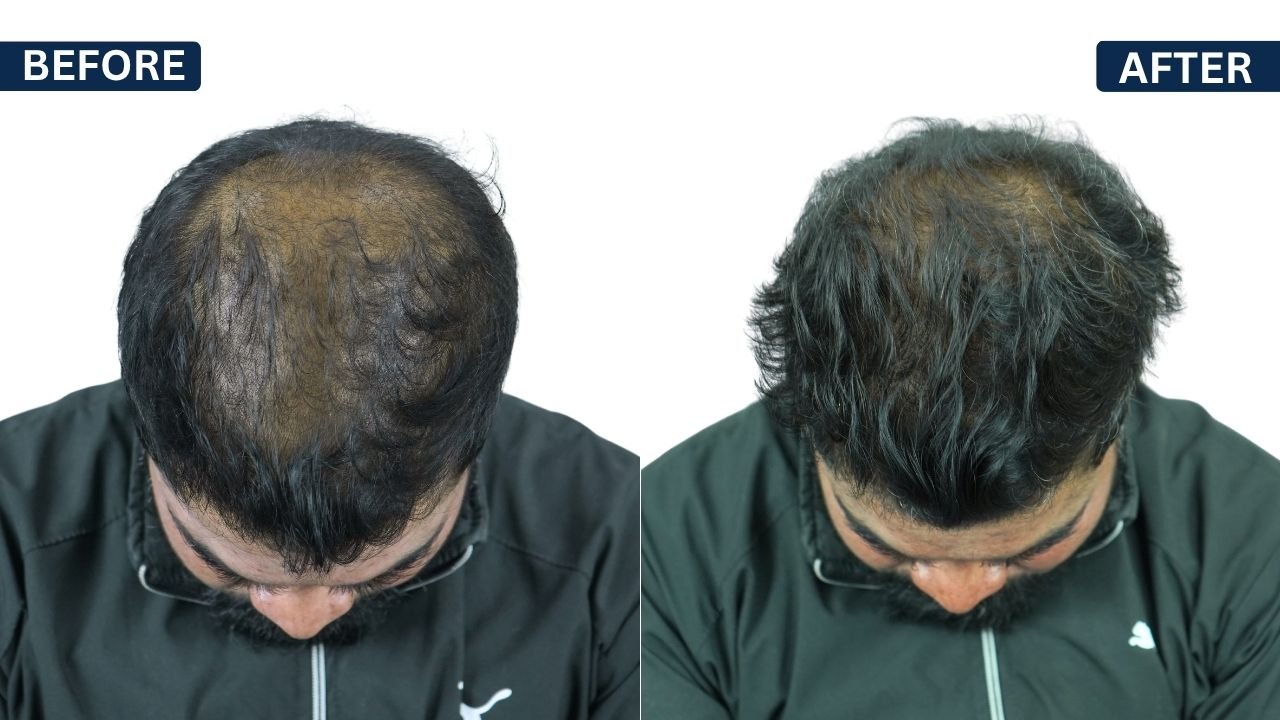
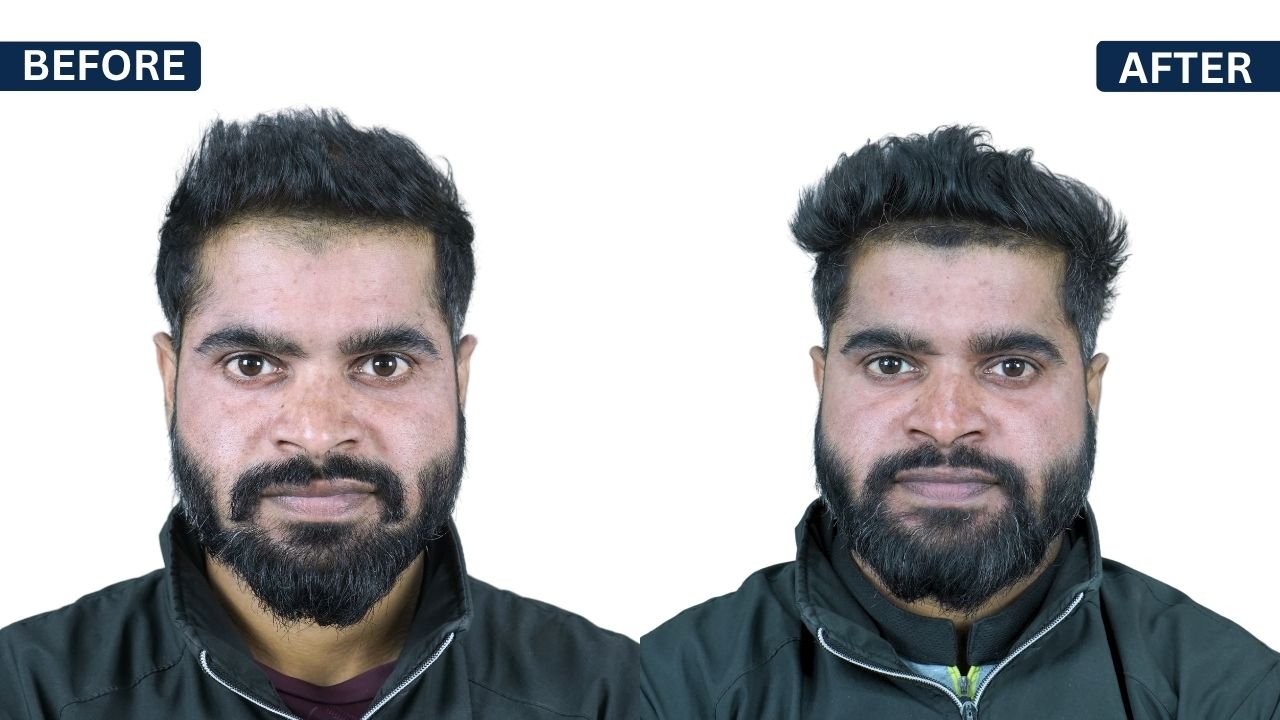
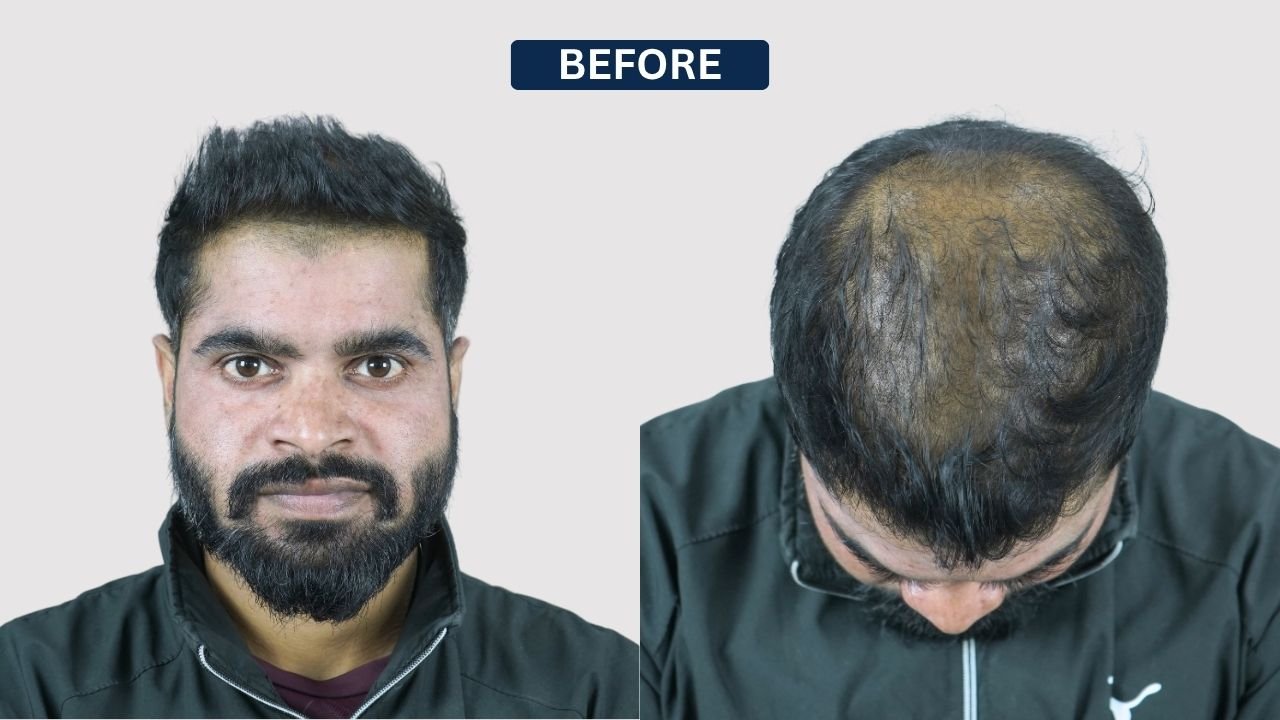
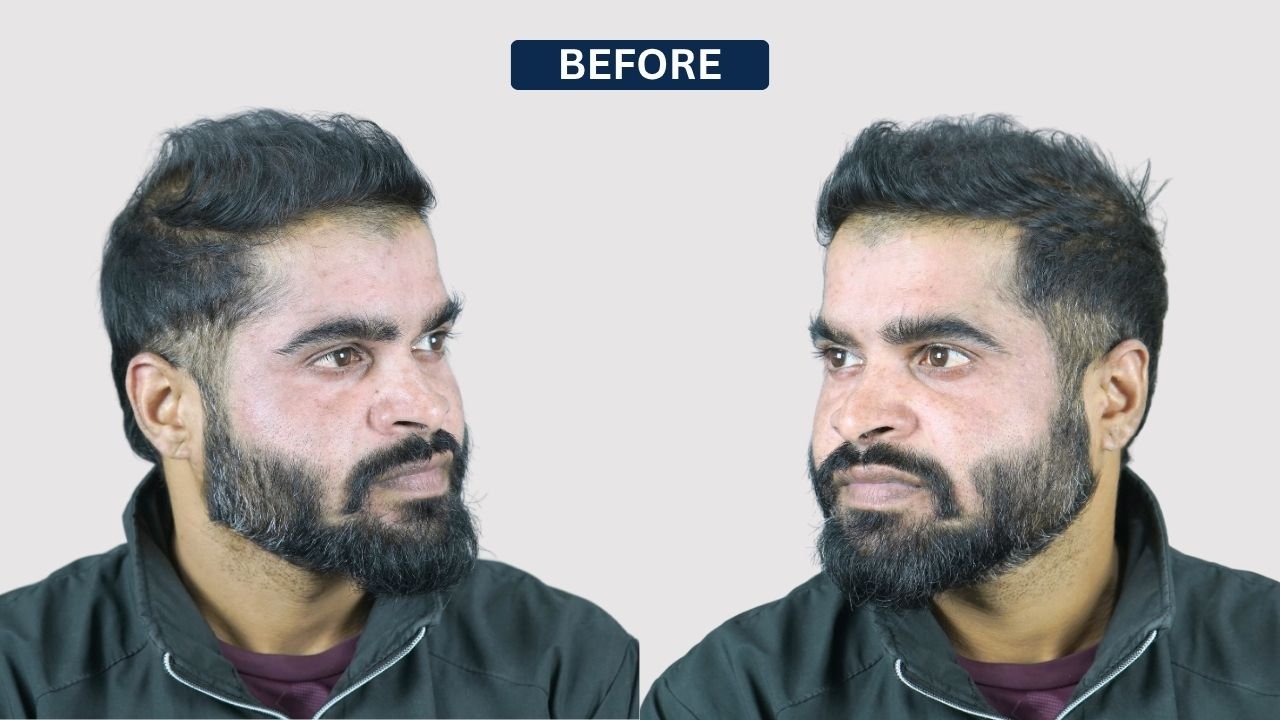
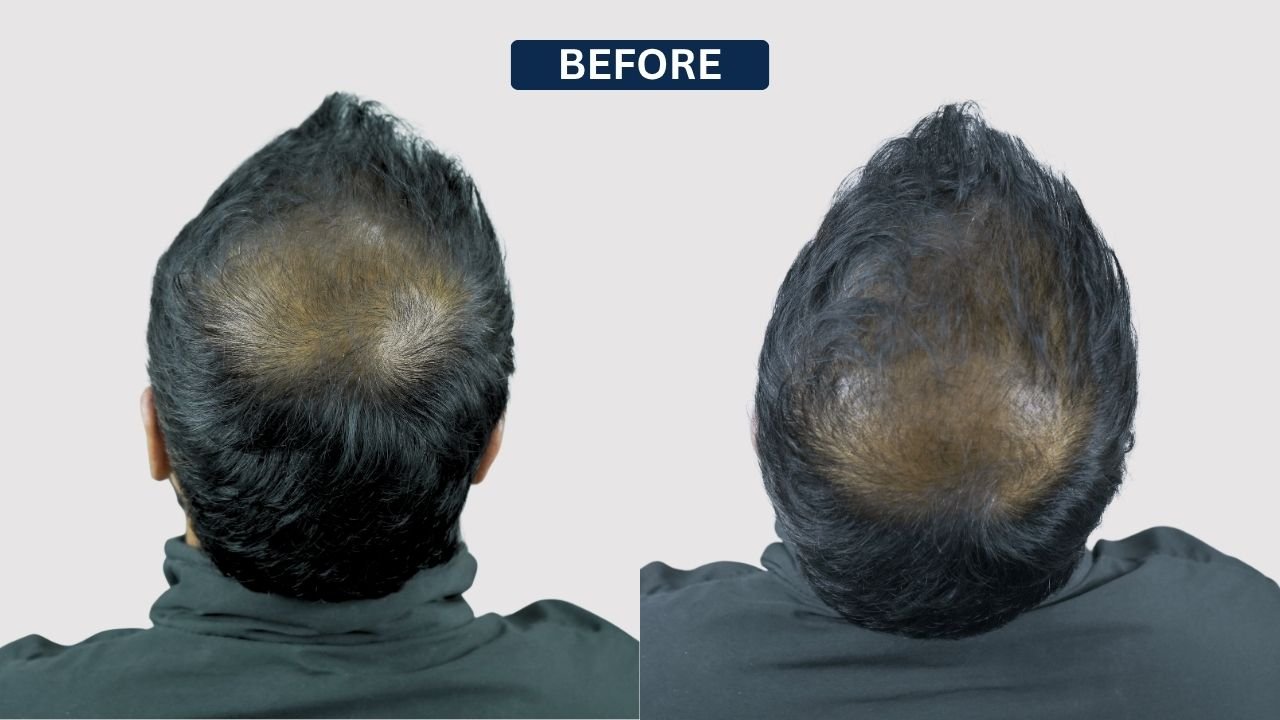
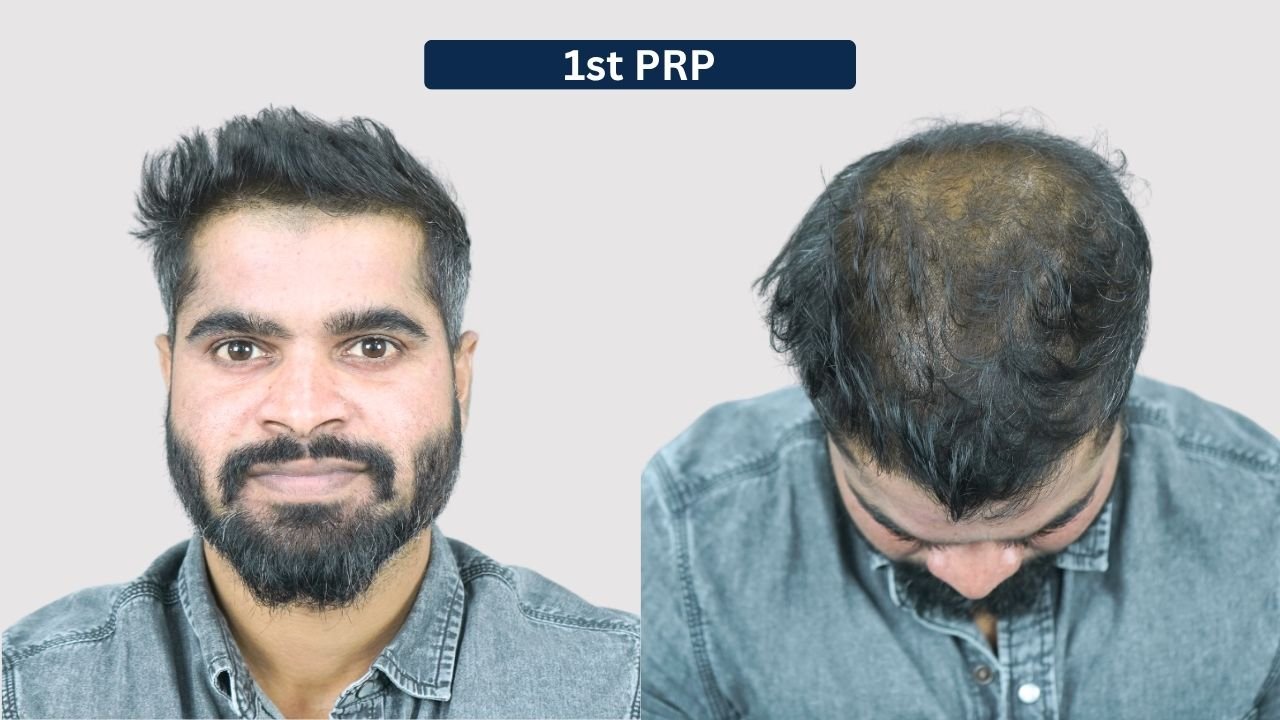
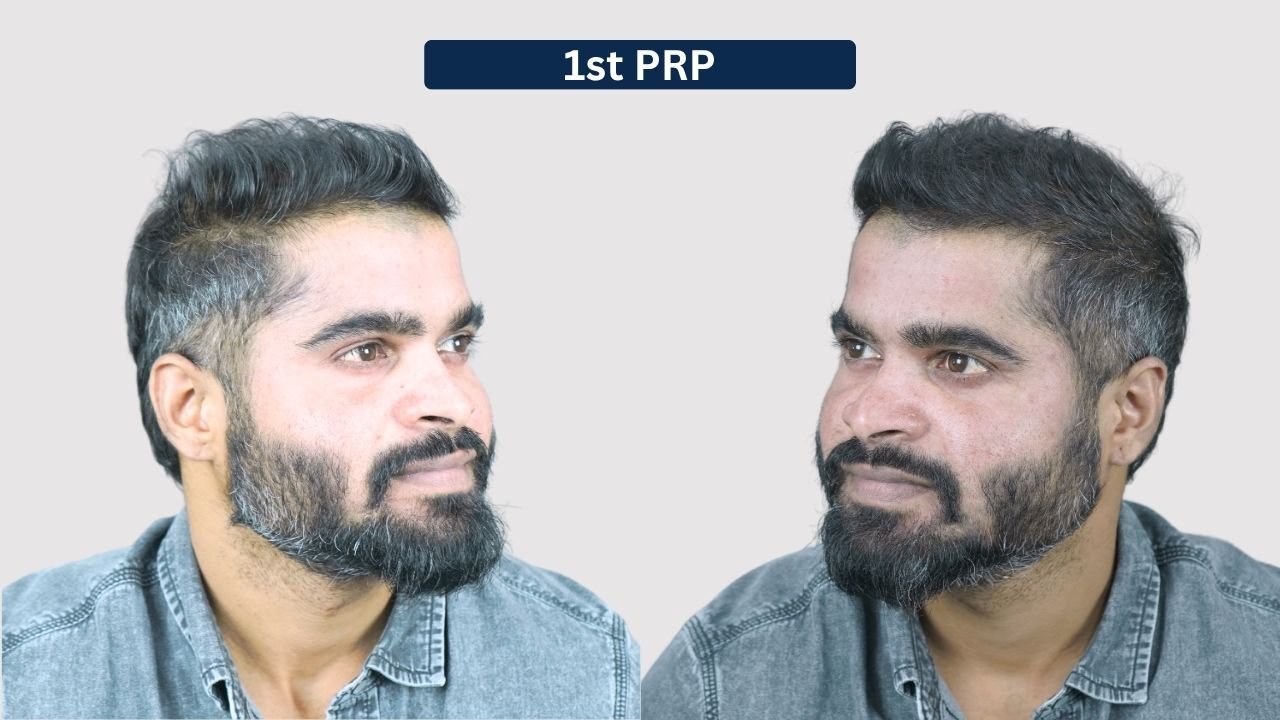
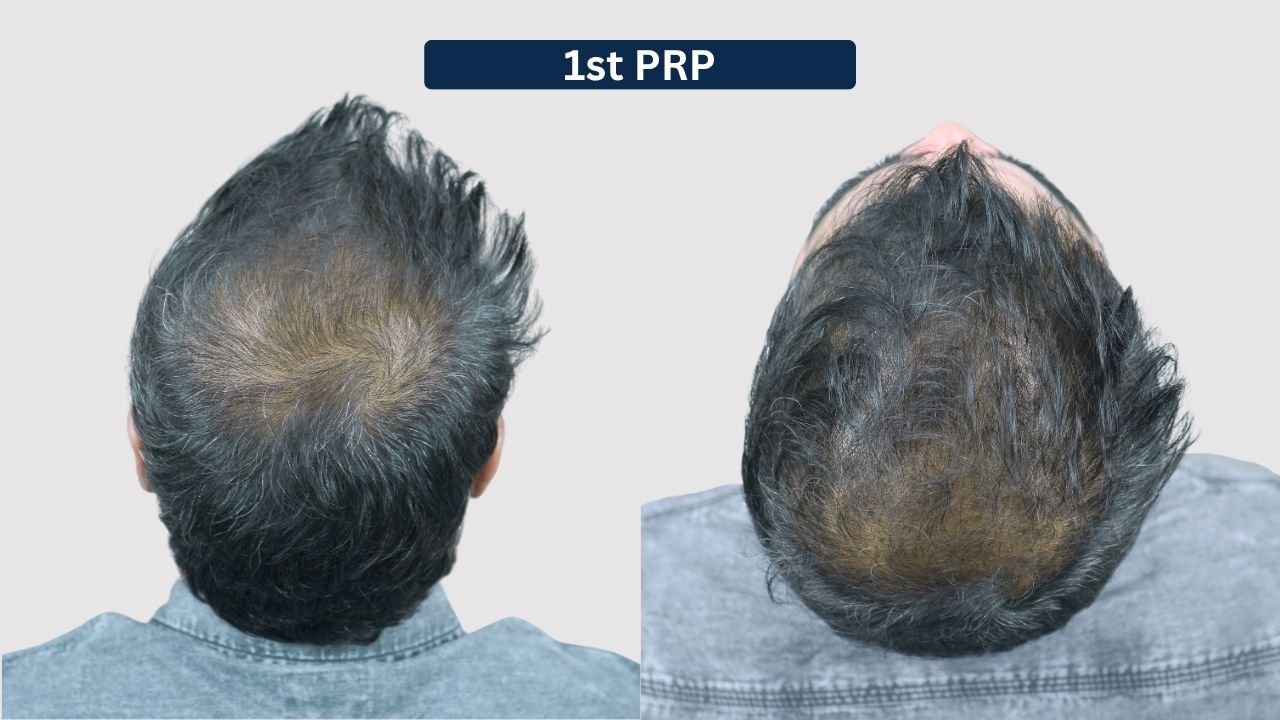
The baseline photograph shows advanced visible thinning over the vertex and upper scalp, with considerable scalp visibility through the existing hair.
Baseline Visual Findings
The supplied treatment plan classifies the patient’s condition as Grade 4–5 vertex progressive hair loss.
A structured PRP treatment course was advised based on the patient’s progressive vertex thinning.
Documented Treatment Plan
Hair-Loss Classification:
Grade 4–5 vertex progressive
Treatment:
PRP hair treatment
Technique:
Micro-injection technique
Anaesthesia:
Topical anaesthesia
Treatment Interval:
Approximately 1 month
Sessions Advised:
5 PRP sessions
Post-Treatment Support:
Minoxidil and vitamins
The treatment was planned as a multi-session supportive approach rather than expecting a major visible change after a single PRP session.
|
Parameter
|
No. of Grafts
|
Details
|
|---|---|---|
|
|
530
|
For natural hairline
|
|
|
2480
|
Mid scalp coverage
|
|
|
3010
|
|
PRP, or Platelet-Rich Plasma therapy, is a non-surgical procedure in which a patient’s blood is collected and processed to prepare a platelet-rich plasma fraction. The prepared PRP is then administered into selected thinning areas of the scalp.
For this case, the supplied material specifically documents a micro-injection technique with topical anaesthesia.
The supplied material does not document PRP volume, platelet concentration, centrifugation protocol, or exact number of injections. These details should therefore not be added as clinical facts.
The first PRP session marked the beginning of the patient’s planned treatment course.
At baseline, the patient showed:
At this stage, the main goal was to begin supportive treatment for the existing hair follicles and monitor how the scalp responded over the coming sessions.
A major visible density change would not be expected immediately after the first PRP session.
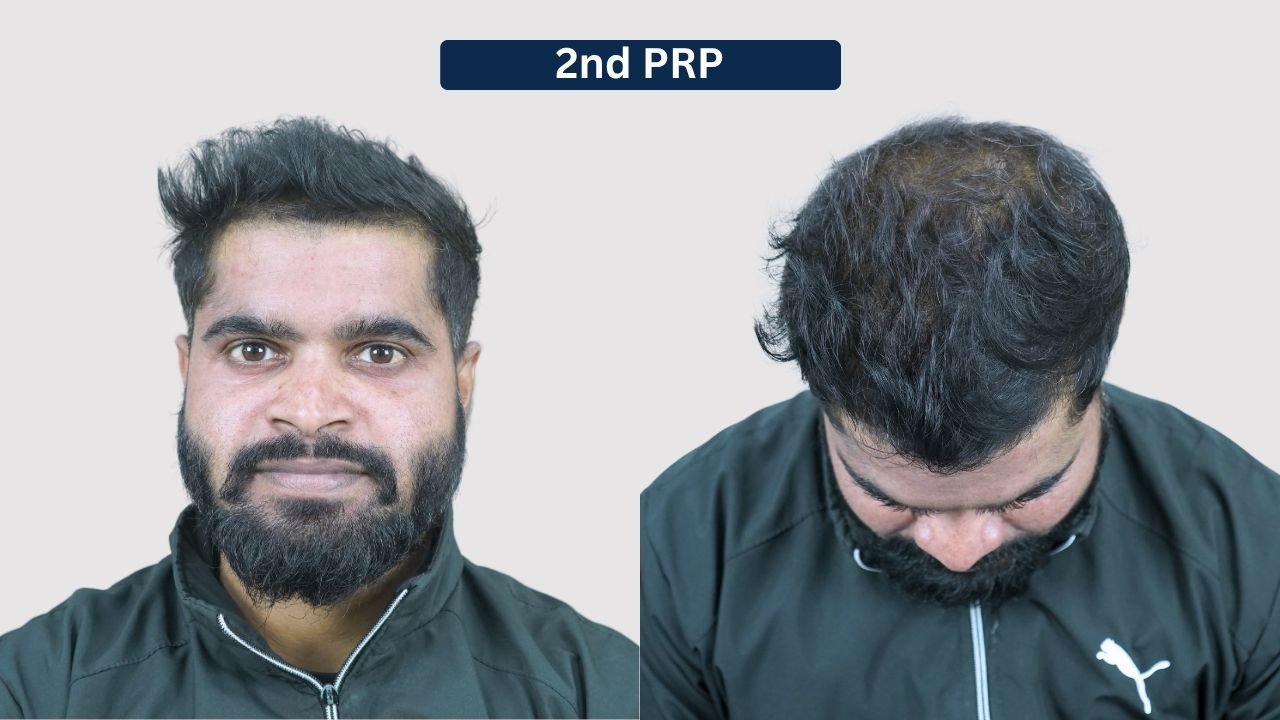
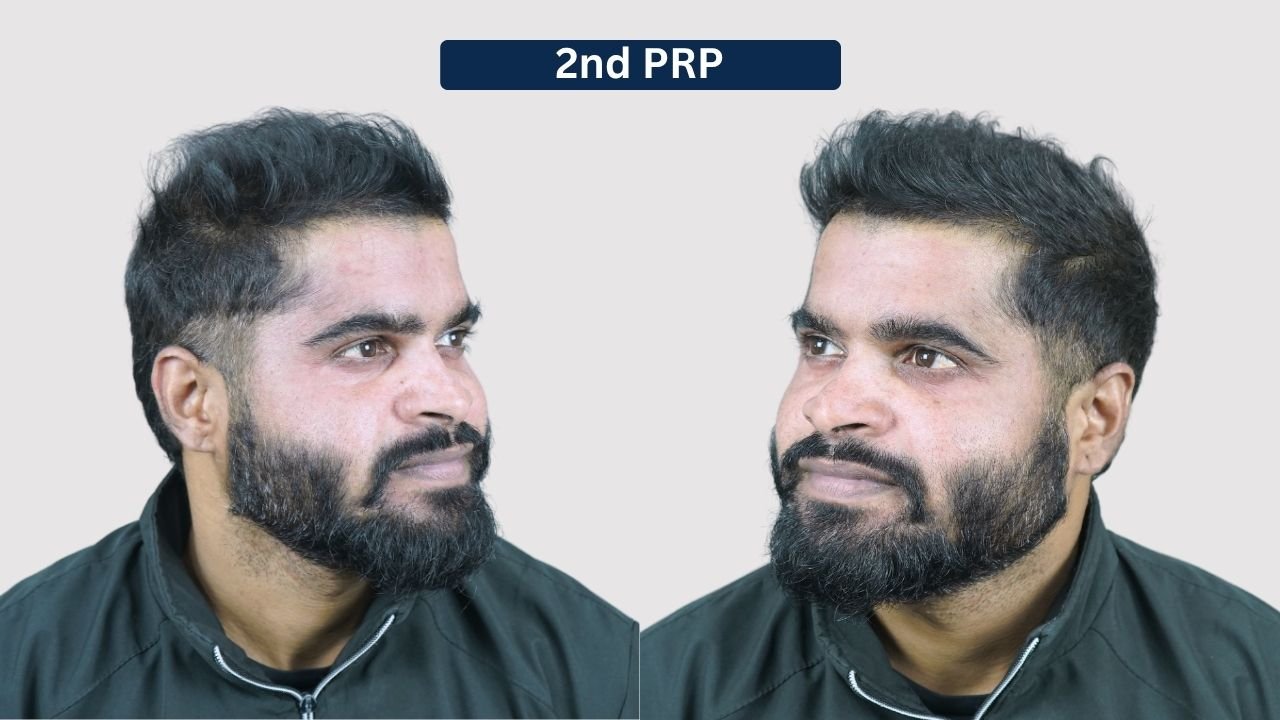
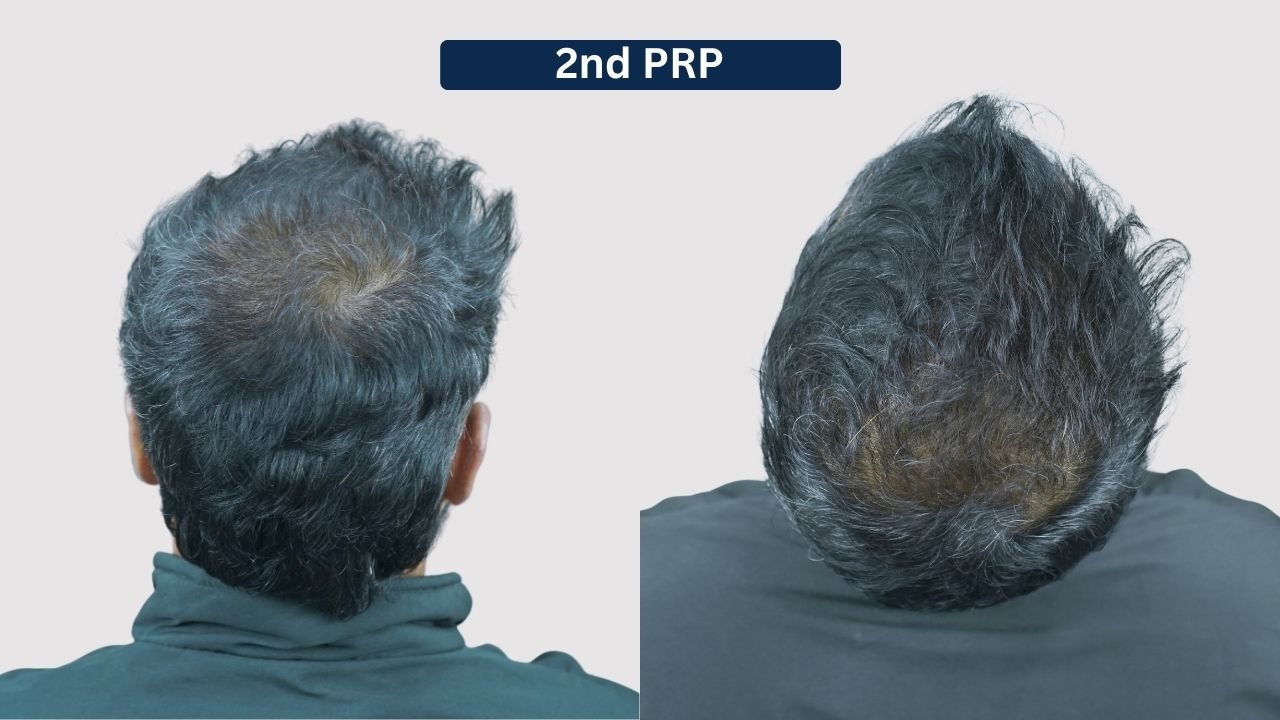
By the second PRP session, the patient had entered the early treatment phase.
The focus at this stage was to continue supporting the existing follicles and monitor:
Any improvement at this stage should be described as gradual rather than dramatic.
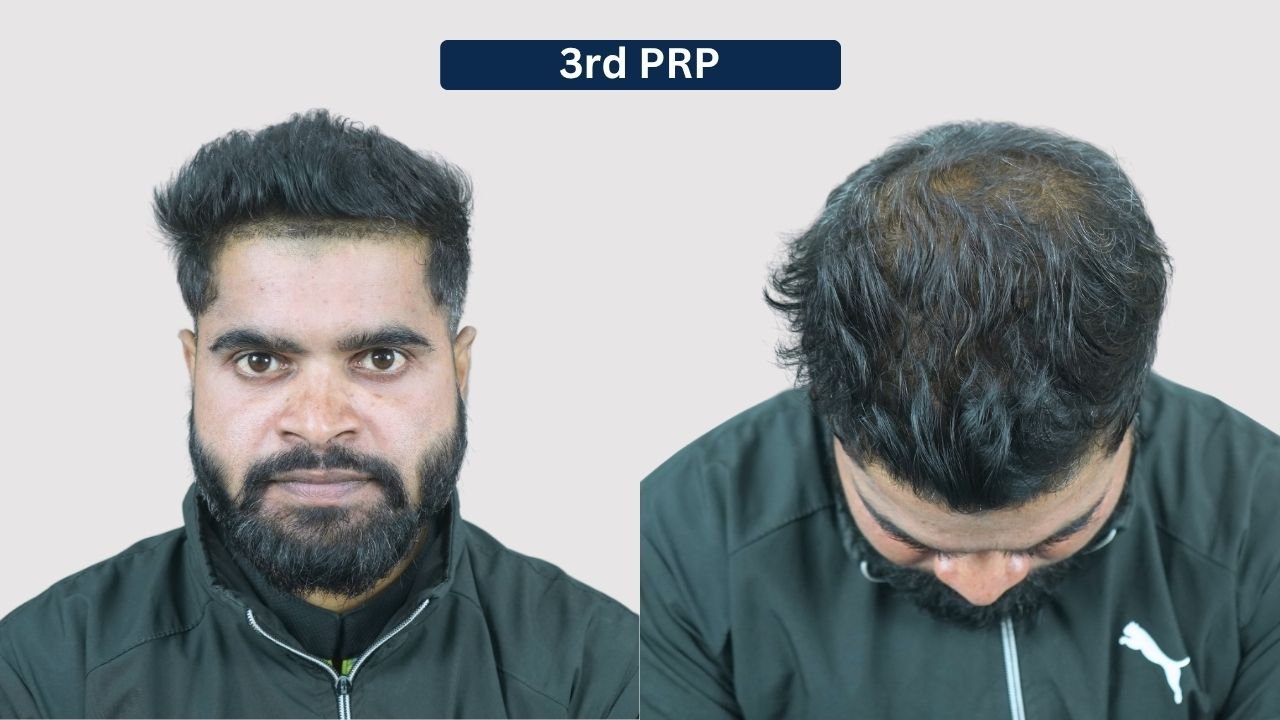
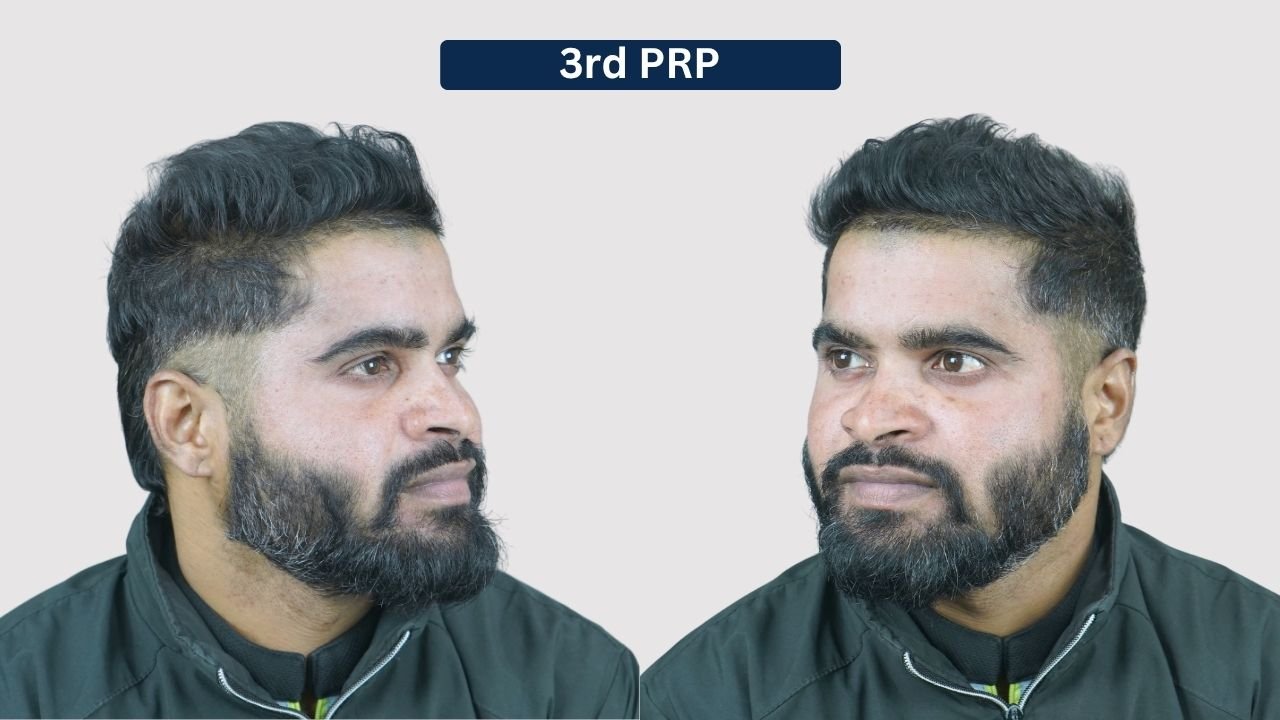
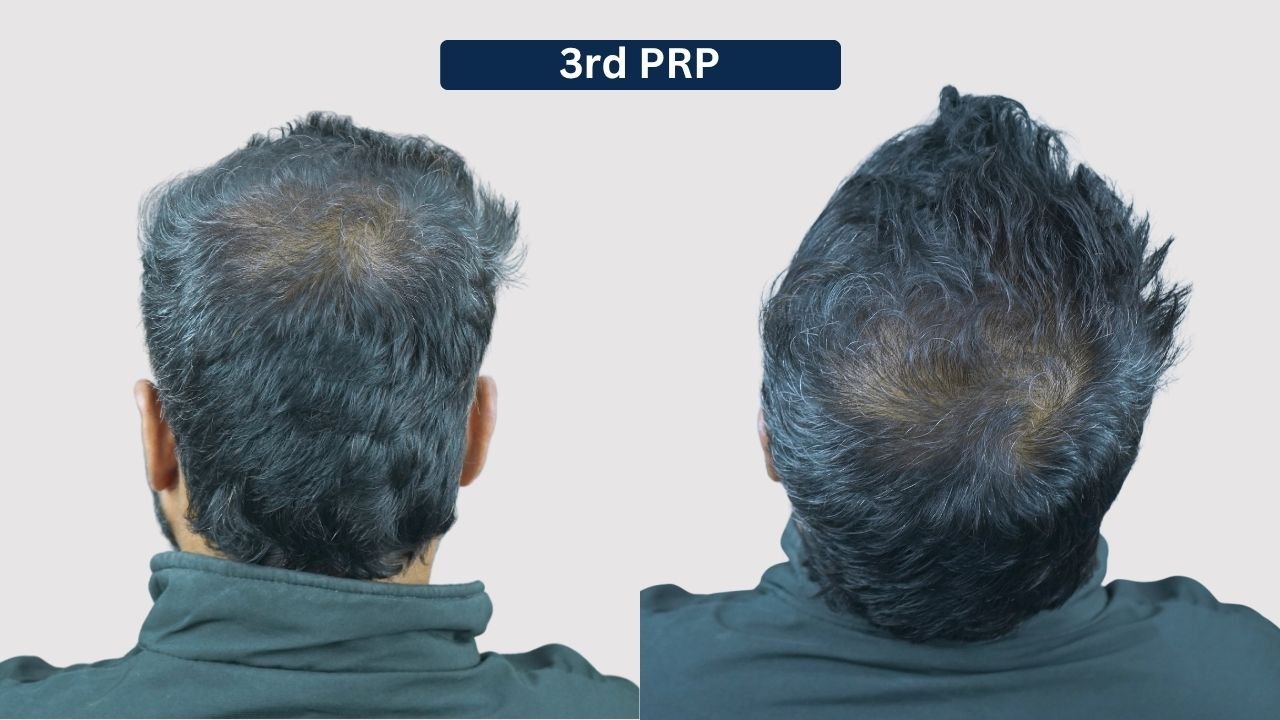
The third PRP session represented the middle phase of the planned treatment course.
At this stage, clinical follow-up would typically focus on whether the patient was showing:
Progress should be assessed by comparing standardized follow-up photographs with the initial baseline.
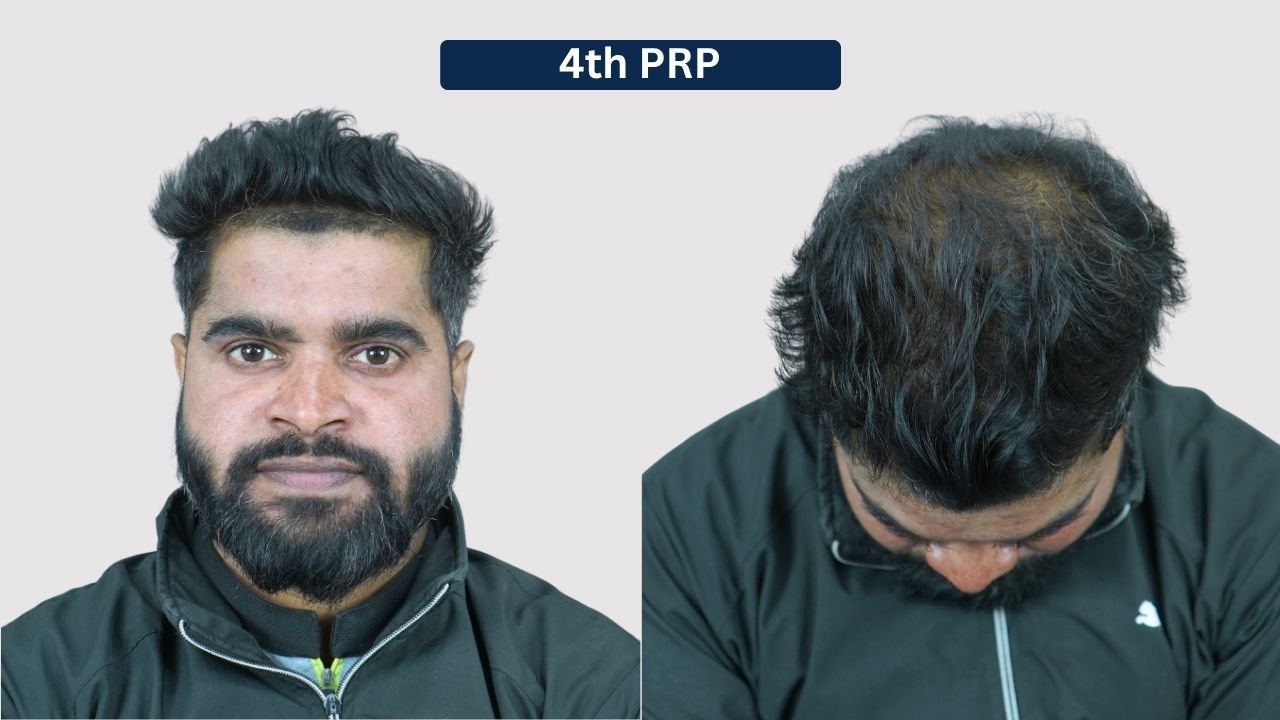
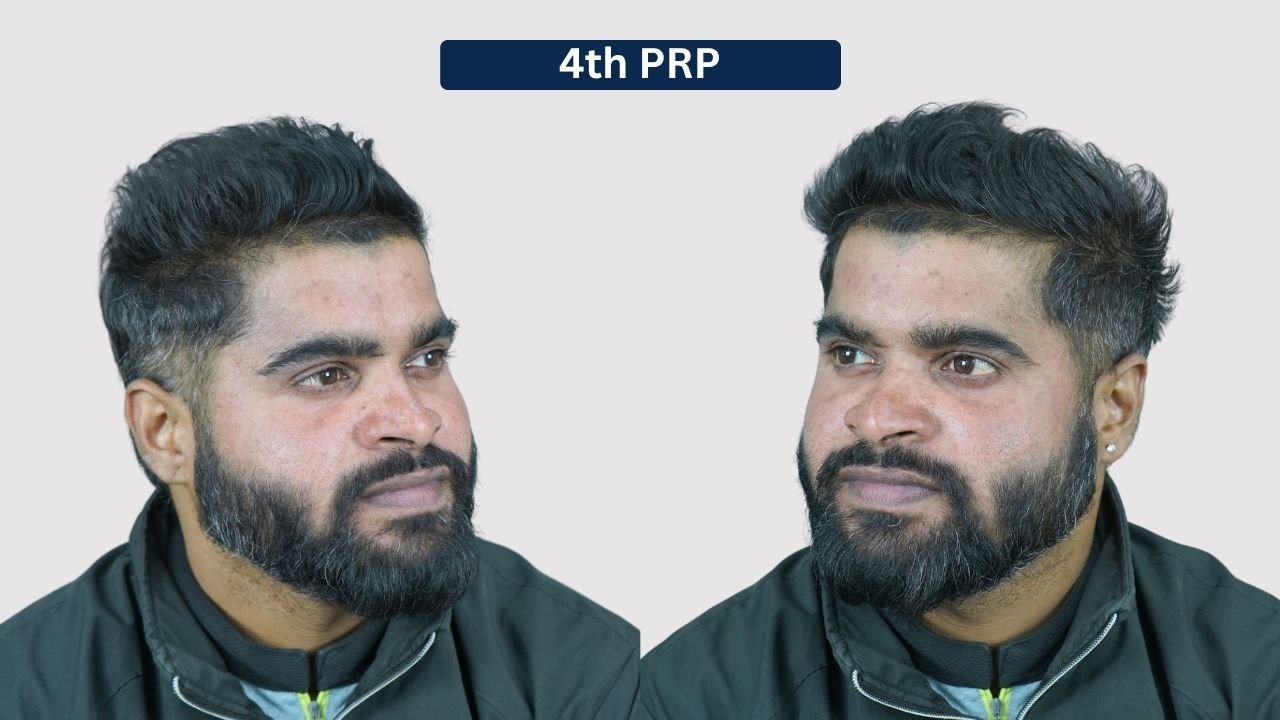
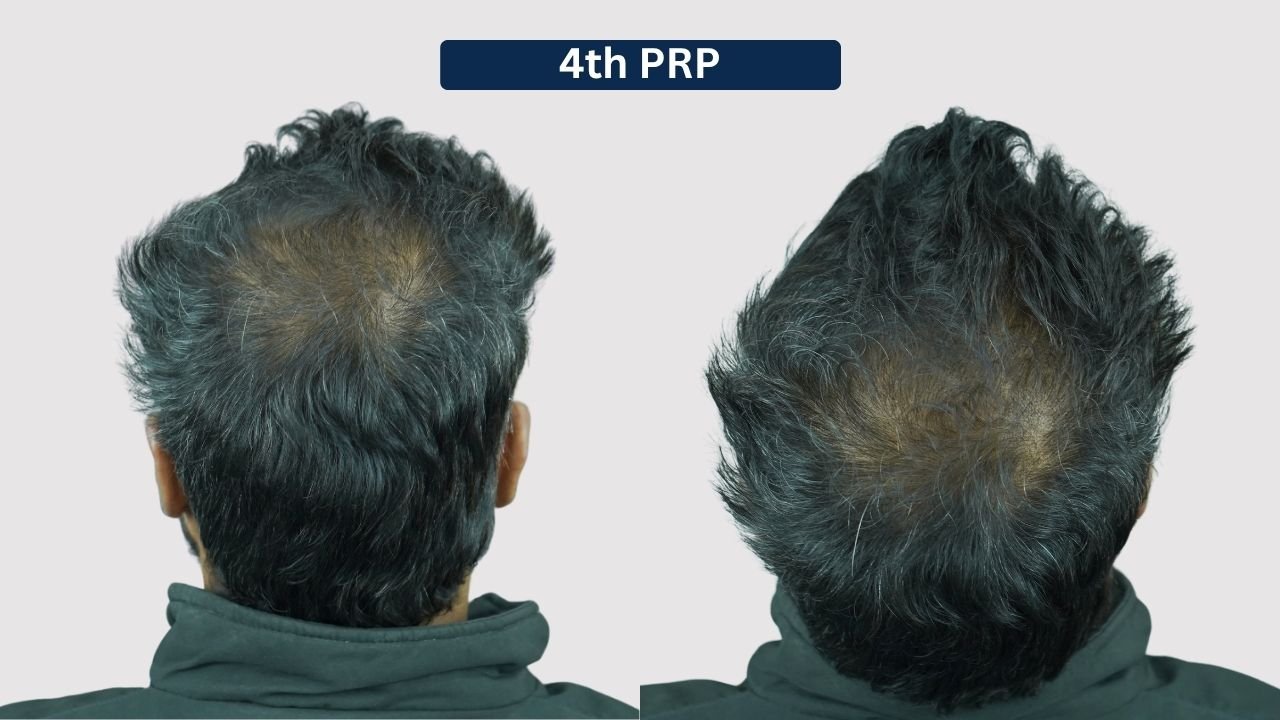
By the fourth PRP session, the patient had completed most of the advised treatment course.
The main areas of observation at this stage included:
If improvement was visible, it should be described conservatively as better apparent coverage, improved thickness, or reduced scalp visibility in some areas, rather than complete regrowth.
The 5th PRP session was the final documented treatment session in this case, completing the planned PRP course.
At this stage, the patient’s response should be assessed by comparing the final follow-up with the baseline appearance.
Final Assessment Focus
Because the treatment ended after the 5th PRP session, no further PRP sessions are included in this case.
Treatment Completion
This case concluded after the 5th PRP session.
The final outcome should be presented as the result of a five-session PRP treatment course, with any claims regarding density improvement, reduced hair fall, better hair thickness, or visible regrowth limited to what is clearly supported by the patient’s follow-up photographs and clinical records.
Based on the currently supplied material, this case documents the patient’s baseline condition and planned PRP treatment course, rather than a confirmed final before-and-after result.
The available records support the following:
Once follow-up images become available, the final-result section can evaluate:
The reference case-study format similarly avoids assigning an exact percentage of improvement unless objectively measured. Pasted markdown
The third PRP session represented the middle phase of the planned treatment course.
At this stage, clinical follow-up would typically focus on whether the patient was showing:
Progress should be assessed by comparing standardized follow-up photographs with the initial baseline.
The patient’s baseline appearance shows advanced progressive thinning over the vertex and upper scalp.
The PRP treatment strategy was intended primarily to:
Because session-wise clinical photographs have not been supplied, the outcome should currently be described as treatment planned/undertaken, rather than presenting a confirmed multi-session transformation.
Before PRP:
Grade 4–5 progressive vertex thinning with marked scalp visibility.
During PRP Treatment:
Response should be monitored through clinical assessment and standardized photographs.
After Treatment Course:
Changes in density, thickness, scalp coverage, or hair fall should be documented only when supported by follow-up findings.
Immediate Post-PRP Care
According to the supplied post-care instructions, the patient was advised to:
Long-Term Hair Maintenance
The patient’s ongoing hair-care plan included:
Long-term medical hair care can remain important because progressive native hair loss may continue independently of the initial PRP treatment course.
Patient Consent Notice
Clinical photographs and case information should be published only after appropriate informed patient consent has been obtained.
Patient privacy should be maintained even when identifiable facial features are not clearly visible.
Results Disclaimer
PRP hair-treatment outcomes vary between individuals.
Treatment response may depend on:
PRP should not be presented as guaranteeing complete hair regrowth or restoration of original hair density.
In advanced hair loss, visible response may also be limited by the number and condition of remaining viable hair follicles. Results from one patient should not be interpreted as a guarantee of similar results for another patient.
The reference format likewise emphasizes that PRP outcomes should be communicated cautiously and without guarantees. Pasted markdown
This case involves a 32-year-old male patient with approximately 6.5 years of progressive hair loss, predominantly affecting the vertex and upper scalp.
Documented Treatment Details
At present, this case should be presented as a PRP treatment-plan and baseline clinical case unless follow-up session photographs are added.


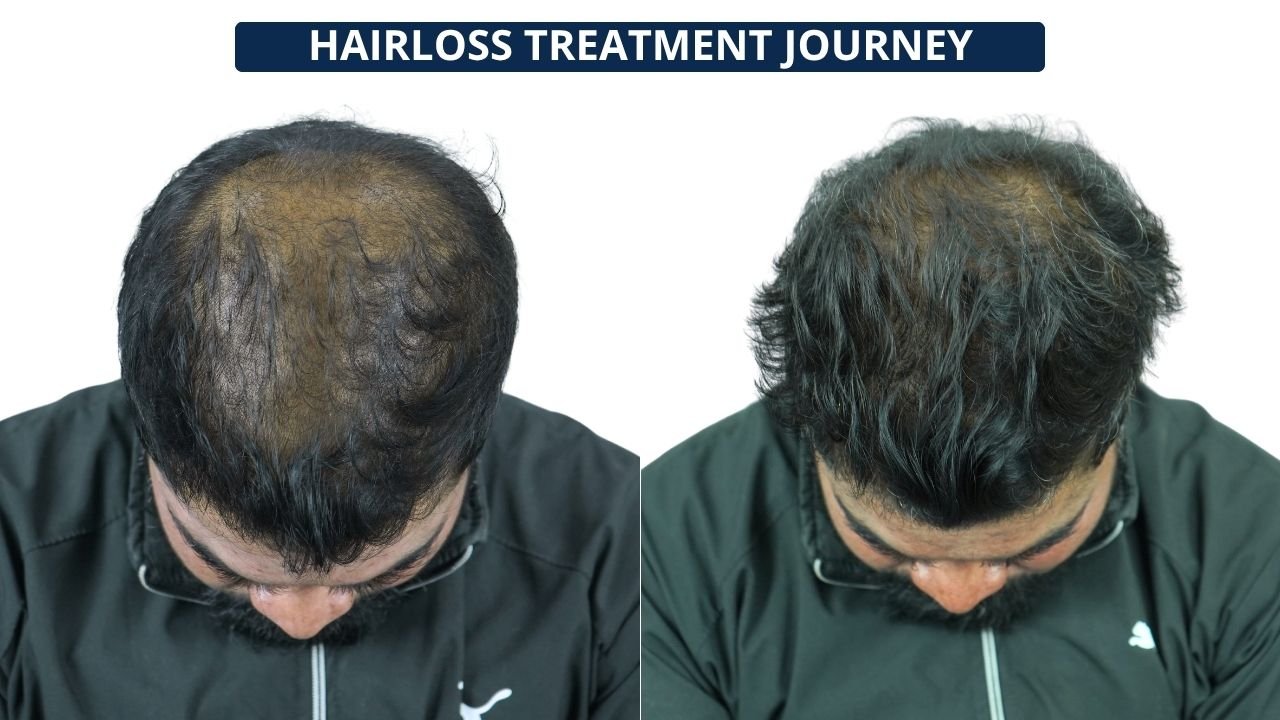
For this patient, the PRP journey was focused on managing progressive hair thinning and supporting healthier hair growth.
With a structured series of PRP sessions, along with recommended hair care, Minoxidil, vitamins, and lifestyle support, the treatment aimed to strengthen existing hair follicles and improve the overall appearance of hair density.
As the treatment progressed, the patient continued regular follow-ups and maintenance care, marking a positive step toward better hair health, improved scalp coverage, and greater confidence in his appearance.
Trustindex verifies that the original source of the review is Google. Dr kiran is very good in listening and giving solution accordingly...he did my hair treatment with good carePosted onTrustindex verifies that the original source of the review is Google. I have seen good results on skin and hair. I would recommend this to everyonePosted onTrustindex verifies that the original source of the review is Google. Doctors experience everything clearly before the procedurePosted onTrustindex verifies that the original source of the review is Google. Posted onTrustindex verifies that the original source of the review is Google. I've got great results with transplant and PRP treatment. Dr. Chotalia is a very nice surgeon and very gentle with his patients. I highly recommend Hair Free and Hair Grow clinic.Posted onTrustindex verifies that the original source of the review is Google. Best hair transplant clinic in punePosted onTrustindex verifies that the original source of the review is Google. Posted onTrustindex verifies that the original source of the review is Google. It was great session dr kiran and all other staff gives very good support and confidence I highly recommend this clinic to everyonePosted onTrustindex verifies that the original source of the review is Google.

The patient was advised to undergo 5 PRP sessions, generally at approximately one-month intervals. The final number of sessions may vary according to clinical response and the treating doctor’s assessment.
The supplied treatment plan documents Grade 4–5 progressive vertex hair loss, with significant thinning and scalp visibility around the crown and upper scalp.
PRP may be used to support existing viable hair follicles and improve hair quality in appropriately selected areas. In more advanced hair loss, the degree of visible improvement can be limited, so expectations should be individualized after clinical evaluation.
PRP is generally performed as a course of treatments, and any improvement tends to develop gradually rather than immediately. The timing and degree of response vary between patients, so follow-up assessment is important.
Maintenance may be advised depending on the underlying hair-loss pattern and response to treatment. In this case, the documented plan included Minoxidil, vitamins
Dr. Kiran Chotaliya is a leading hair transplant surgeon in Pune, specializing in advanced techniques like FUE and FUT for natural, lasting results. His expertise and patient-centered care ensure successful hair restoration with exceptional outcomes.
© 2026 Developed & Handle By Dr. Kiran Chotaliya Clinic Team
© 2026 Developed & Handle By Dr. Kiran Chotaliya Clinic Team