
Is Hair Transplant Permanent? The Truth About Long-Term Results

Table of Contents
One of the most common questions patients ask before undergoing surgery is:
“Is hair transplant permanent?”
Hair transplant surgery has helped millions of people regain natural hair growth and confidence. However, many patients worry about whether the results will last permanently or if the transplanted hair will fall again.
The short answer is yes — in most cases, hair transplant results are permanent.
However, understanding why the results are permanent and what factors influence long-term success is essential for realistic expectations.
In this guide, Dr. Kiran Chotaliya, hair transplant surgeon at Hairfree & Hairgrow Clinic in Pune, explains the science behind permanent hair restoration.
Is Hair Transplant Permanent, Hair transplant growth after surgery, Hair Transplant In Pune, dr. kiran chotaliya clinic, Is Hair Transplant Permanent, Hair transplant growth after surgery, Hair Transplant In Pune, dr. kiran chotaliya clinic,Is Hair Transplant Permanent, Hair transplant growth after surgery, Hair Transplant In Pune, dr. kiran chotaliya clinic
Why Hair Transplant Results Are Permanent
Hair transplant surgery works because it uses genetically resistant hair follicles.
The donor area at the back of the scalp contains hair follicles that are resistant to the hormone DHT (dihydrotestosterone).
DHT is the hormone responsible for male pattern baldness.
When these resistant follicles are transplanted to bald areas, they retain their genetic resistance, allowing them to continue growing hair even in regions affected by hair loss.
This principle is known as donor dominance
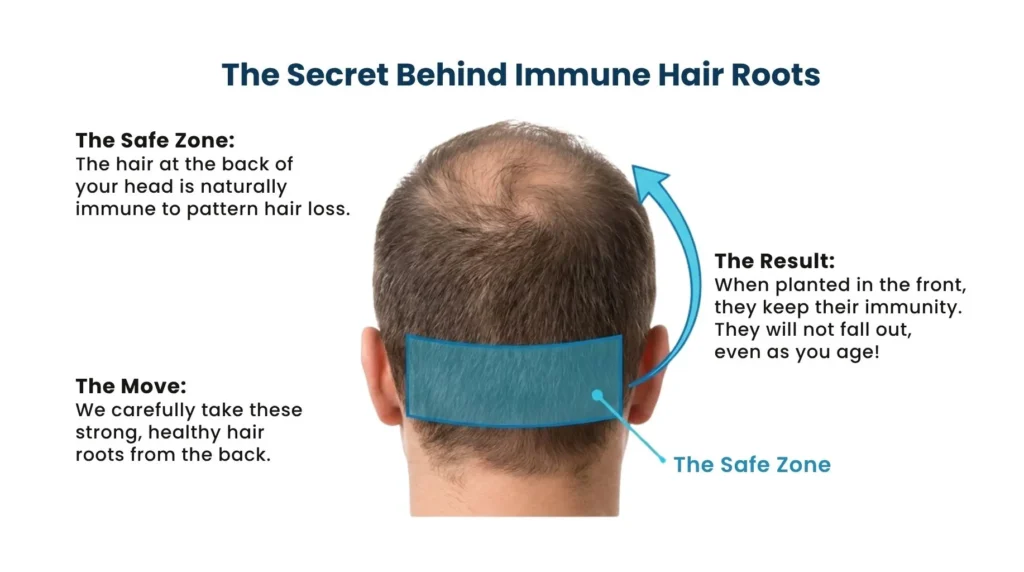
Donor dominance is a key scientific concept in hair transplantation.
It means that transplanted hair follicles maintain the characteristics of the area from which they were taken, regardless of where they are implanted.
For example:
Hair from the back of the scalp that is resistant to hair loss will continue growing permanently, even after being moved to the front hairline or crown.
Because of this property, transplanted hair usually behaves like natural hair from the donor area.
Do Transplanted Hairs Ever Fall Out?
Immediately after surgery, patients often notice temporary shedding of transplanted hair.
This stage is called shock loss.
During this phase:
- transplanted hair shafts fall out
- follicles remain healthy under the scalp
After a few months, the follicles begin producing new hair growth.
This is a normal part of the hair growth cycle and does not mean the transplant has failed.
When Do Permanent Results Appear?
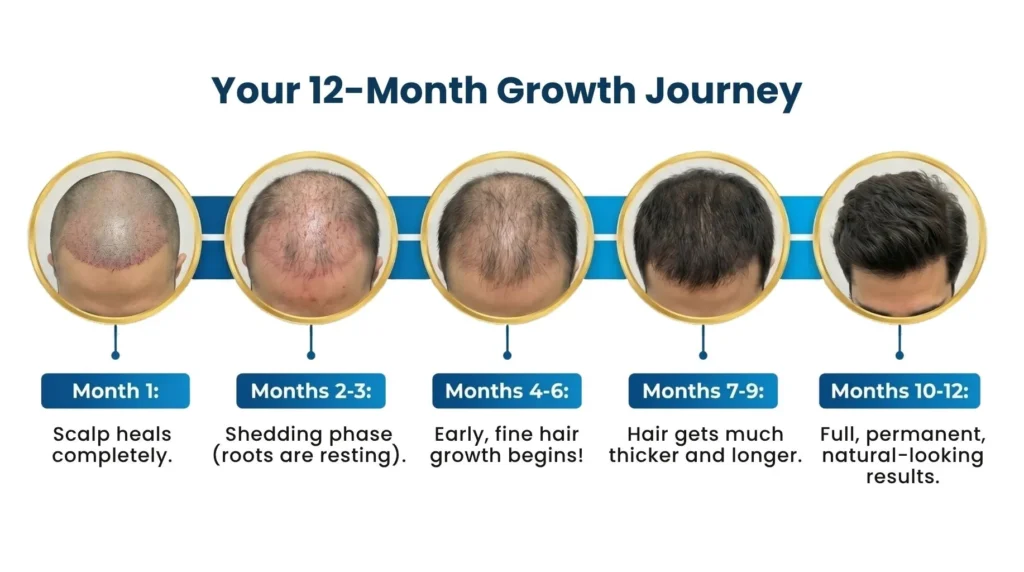
Hair transplant growth occurs gradually.
Typical timeline:
Month 1
Healing phase
Month 2–3
Temporary shedding phase
Month 4–6
Early hair growth
Month 7–9
Visible improvement in density
Month 10–12
Final hair transplant results
Full cosmetic results are usually visible within 10–12 months after surgery.
Yes.
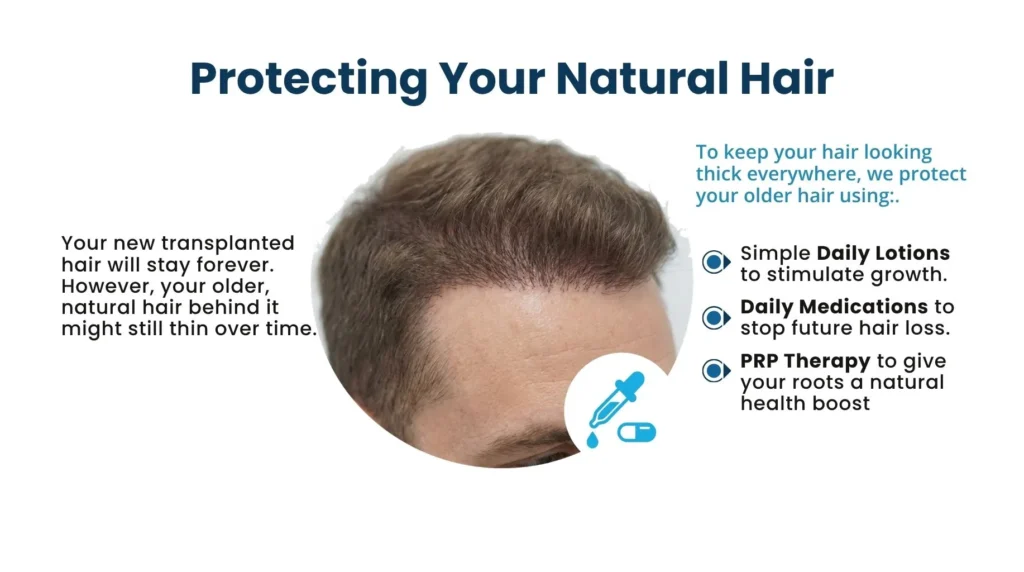
Hair transplant surgery restores transplanted hair, but it does not stop the natural progression of hair loss in non-transplanted areas.
For example:
If a patient continues losing existing hair, the transplanted region may remain dense while surrounding hair thins.
This is why doctors often recommend medical treatments to protect existing hair.
Doctors may recommend medications or supportive treatments to maintain overall hair density.
Common options include:
Minoxidil
A topical treatment that stimulates hair growth and improves follicle activity.
Finasteride
An oral medication that reduces DHT levels and slows hair loss progression.
PRP Therapy
Platelet-rich plasma treatment may support follicle health and hair growth.
These treatments help preserve existing hair and maintain a natural appearance after transplantation.
Although transplanted hair is permanent, the final outcome depends on several important factors.
Surgeon Expertise
Proper graft extraction, placement, and hairline design are crucial for achieving natural results.
Donor Area Quality
A strong donor area ensures sufficient healthy follicles for transplantation.
Surgical Planning
Long-term planning ensures the transplant looks natural even if future hair loss occurs.
Post-Operative Care
Following the surgeon’s instructions helps protect grafts during the healing phase.
Conclusion
Hair transplant surgery is considered a permanent solution for restoring hair in balding areas.
Because transplanted follicles come from DHT-resistant regions of the scalp, they typically continue growing hair for many years.
However, maintaining overall hair density may require medical treatments and proper long-term planning.
FAQ's
1. How long does hair transplant last?
In most cases, transplanted hair lasts a lifetime because donor hair is resistant to hair loss.
2. Can transplanted hair turn grey?
Yes. Transplanted hair behaves like natural hair and can turn grey with age.
3. Will I need another hair transplant?
Some patients may require additional sessions in the future if hair loss progresses in untreated areas.
Dr. Kiran Chotaliya MD (Skin & VD)
Our Latest Video
Hair Transplant

Hair Loss Treatment
Our Services
Latest Hair Transplant Results


Thinking about Hair Transplant?
Read this First.
A free experts curated guide that clears all your doubts
about Costs, Results, Pain, Recovery and much more.
Hair Transplant in Pune
Dr. Kiran Chotaliya is a leading hair transplant surgeon in Pune, specializing in advanced techniques like FUE and FUT for natural, lasting results. His expertise and patient-centered care ensure successful hair restoration with exceptional outcomes.
Follow Us
GET IN TOUCH
- +91 7066661143
- drkiranhairguide@gmail.com
- Dr. Kiran Chotaliya, Kate Square Building, 402, 4th floor, Chowk, Kate Puram, Pimple Gurav, Pimpri-Chinchwad, Maharashtra 411061
© 2026 Developed & Handle By Dr. Kiran Chotaliya Clinic Team
Location
© 2026 Developed & Handle By Dr. Kiran Chotaliya Clinic Team