Hair transplant surgery is an effective treatment for hair loss and baldness in men and women. At Dr. Kiran Chotaliya’s clinic, healthy hair follicles are transplanted from the donor area to bald or thinning areas for natural-looking results.
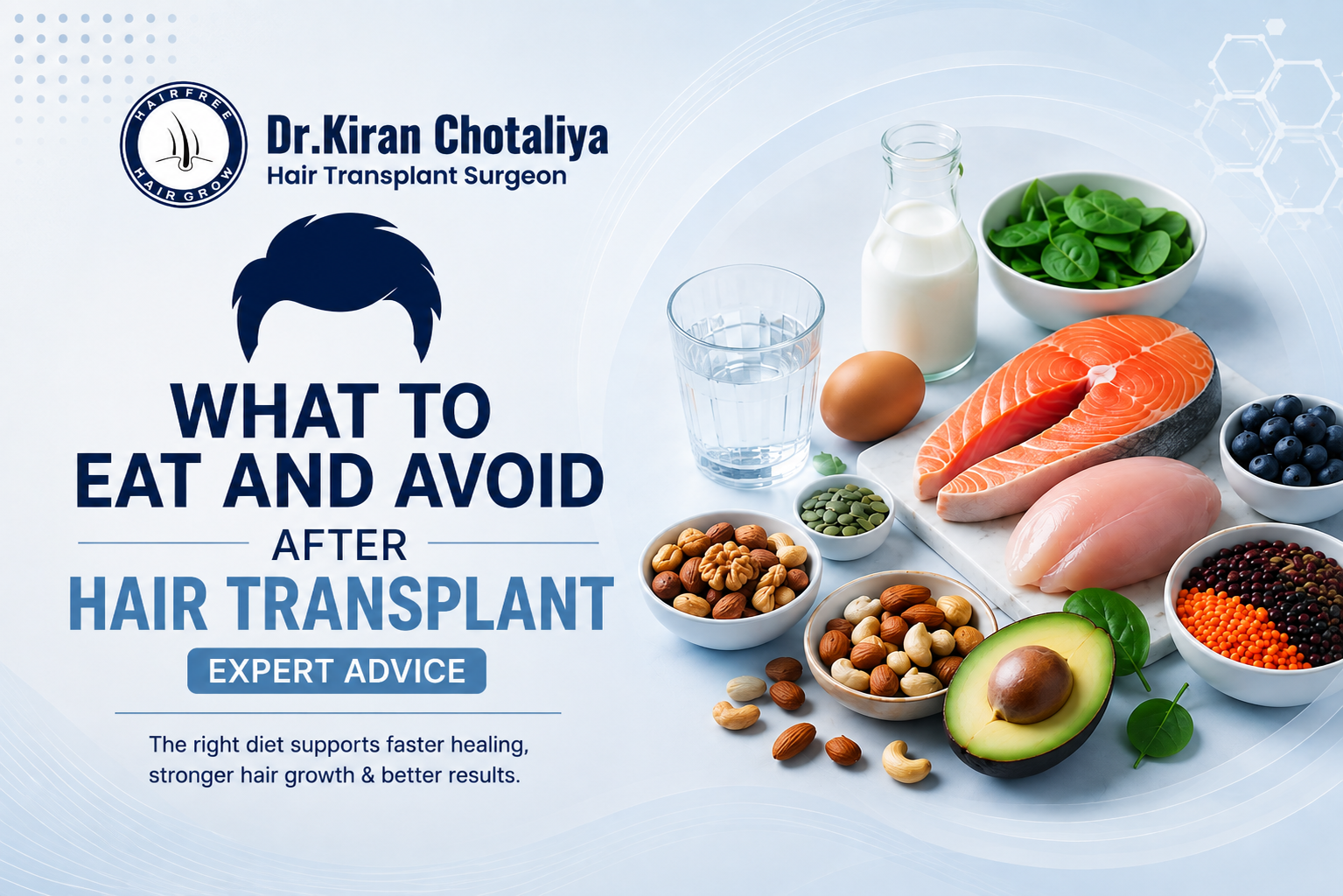
Along with proper aftercare, following the right diet after hair transplant in Pune helps improve healing, reduce inflammation, and support healthy hair growth. A balanced diet rich in protein, vitamins, and minerals helps nourish transplanted grafts and supports faster recovery.
Under the guidance of Dr. Kiran Chotaliya, patients are advised to follow proper post-transplant care and healthy eating habits to achieve better healing and natural hair growth results.
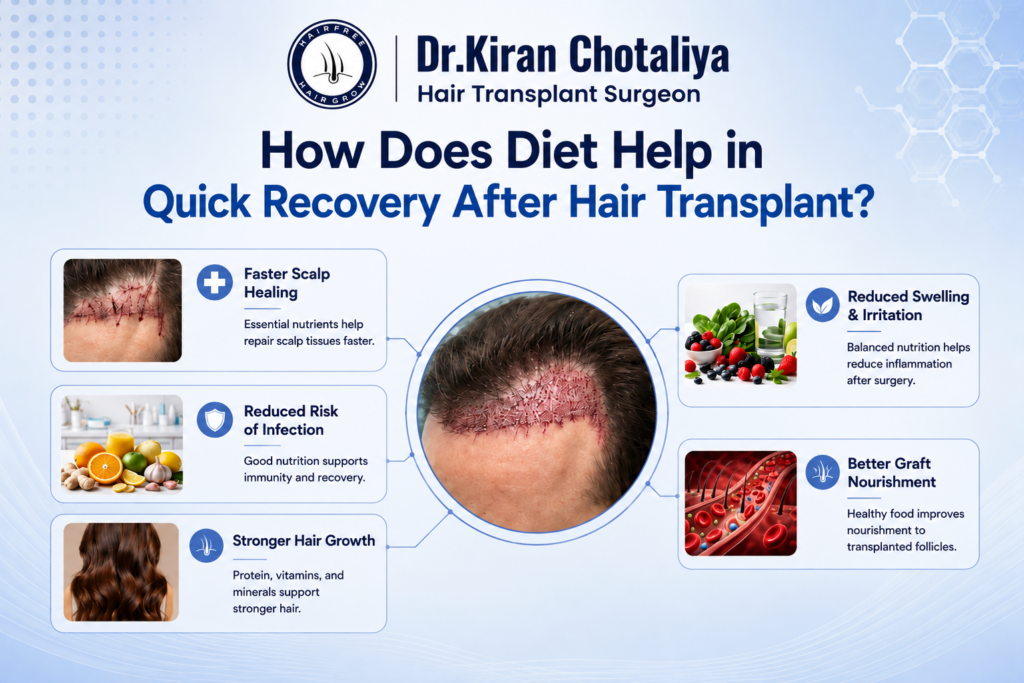
After a hair transplant, the scalp needs time to heal properly. The body requires essential nutrients to repair tissues and improve blood circulation around the transplanted grafts.
Following a balanced diet after hair transplant in Pune offers several benefits:
A poor diet, dehydration, smoking, or unhealthy food habits may negatively affect the healing process and hair transplant results.
Eating nutrient-rich foods after surgery can help improve recovery and hair growth.
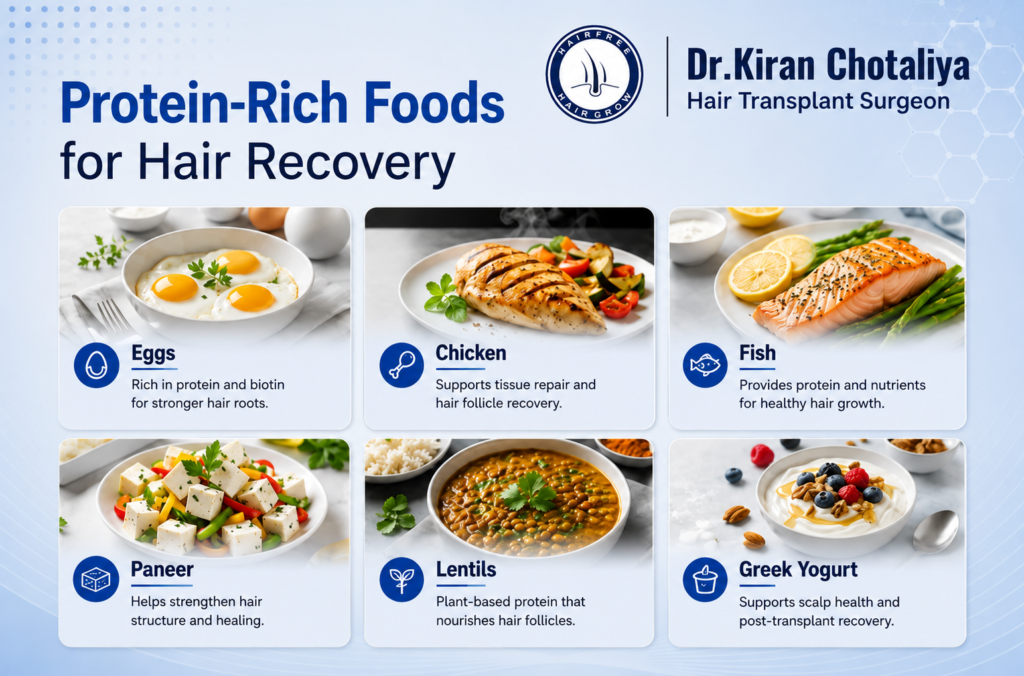
Hair follicles are mainly made of keratin, which is a type of protein. Protein helps repair tissues and strengthen hair roots.
Best protein-rich foods include:
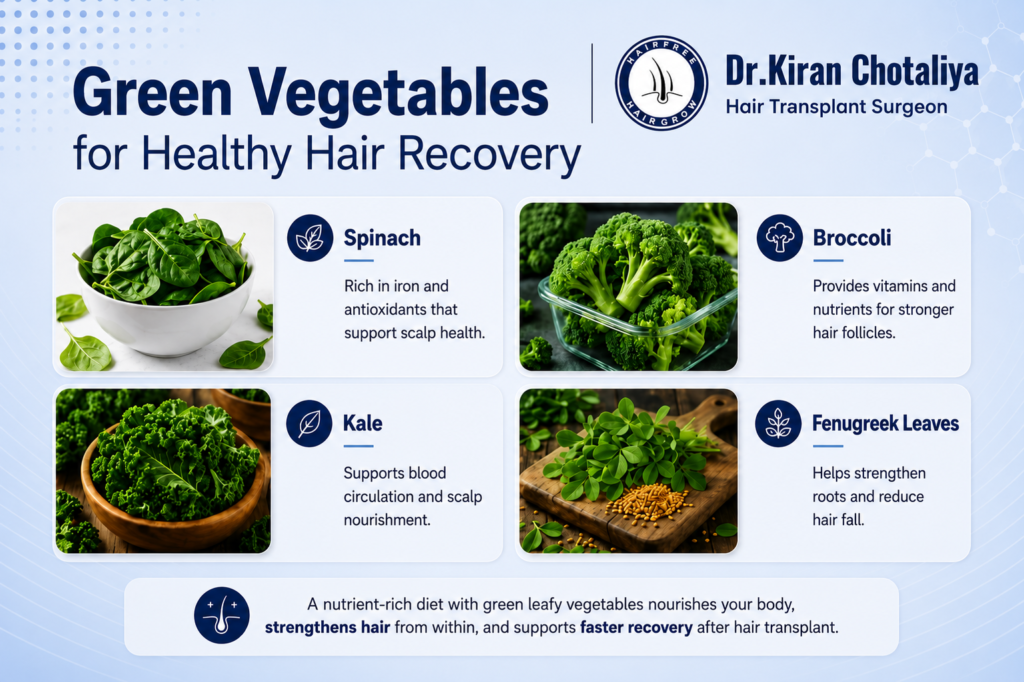
Green leafy vegetables are rich in iron, folate, and antioxidants that support scalp health.
Recommended vegetables:
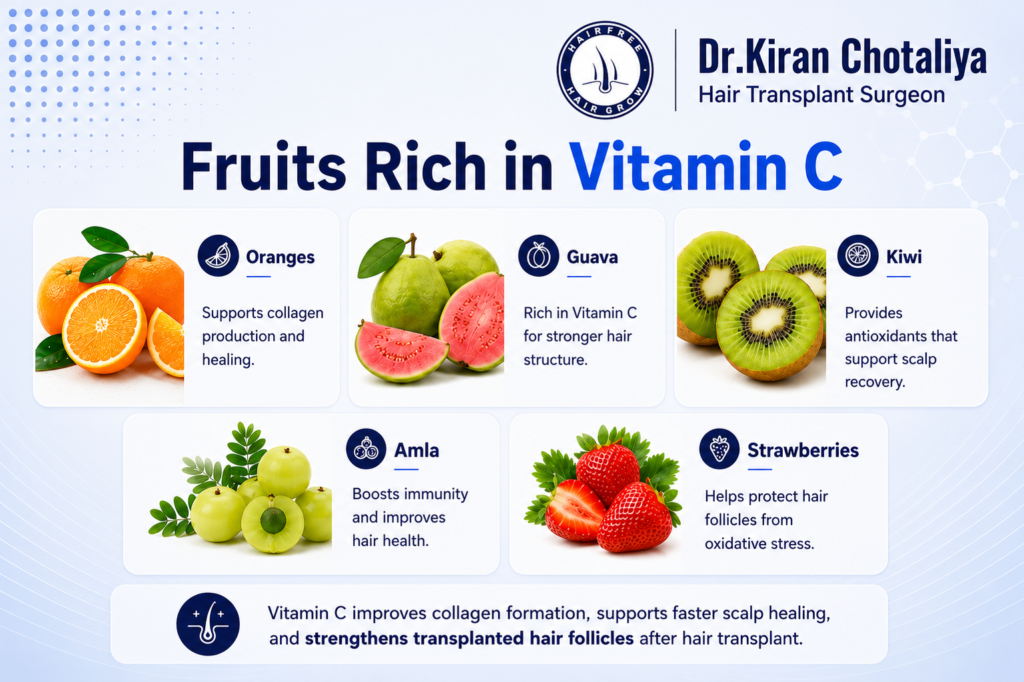
Vitamin C helps improve collagen production and supports faster healing.
Best fruits:
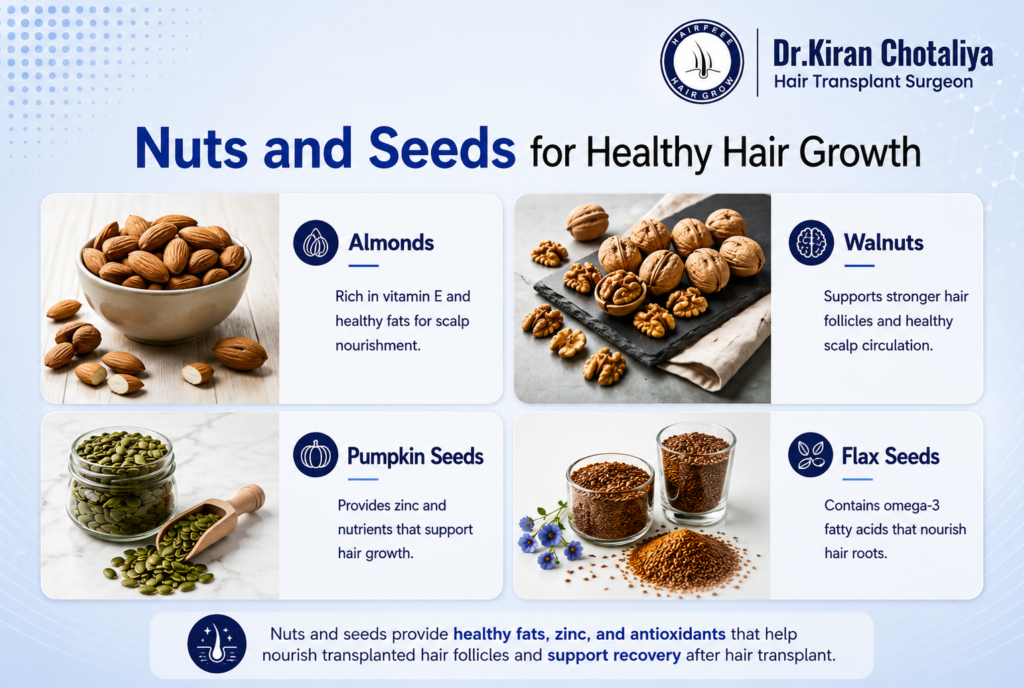
Nuts and seeds contain healthy fats, zinc, and vitamin E that help nourish hair follicles.
Healthy options:
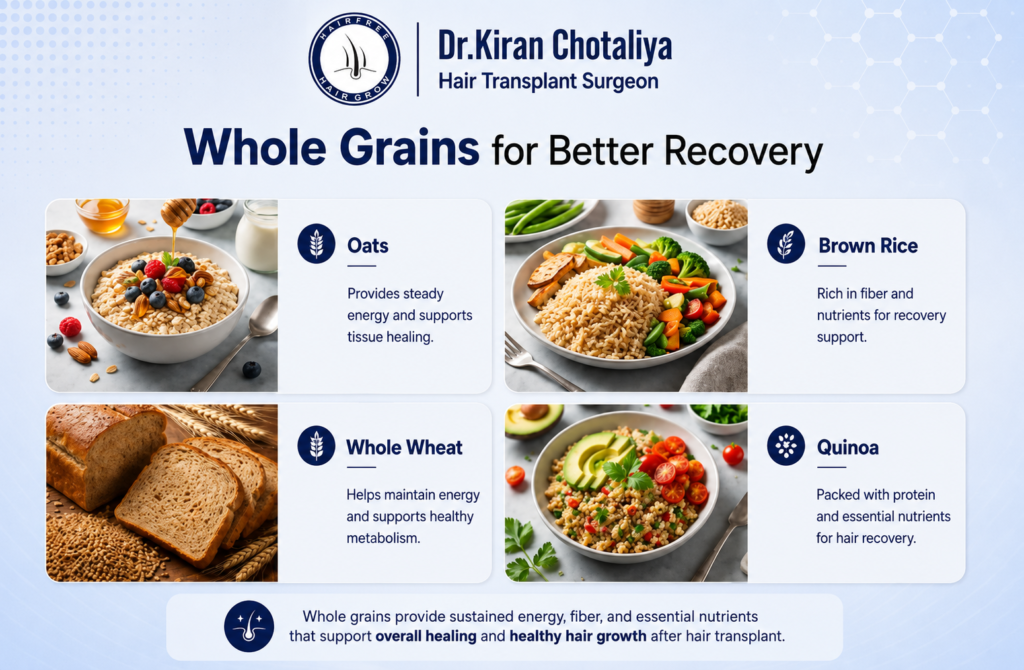
Whole grains help maintain energy levels and support overall recovery.
Include foods like:
Maintaining a healthy diet after hair transplant, as recommended by a hair specialist in Pune, helps provide essential nutrients for healthy hair growth.
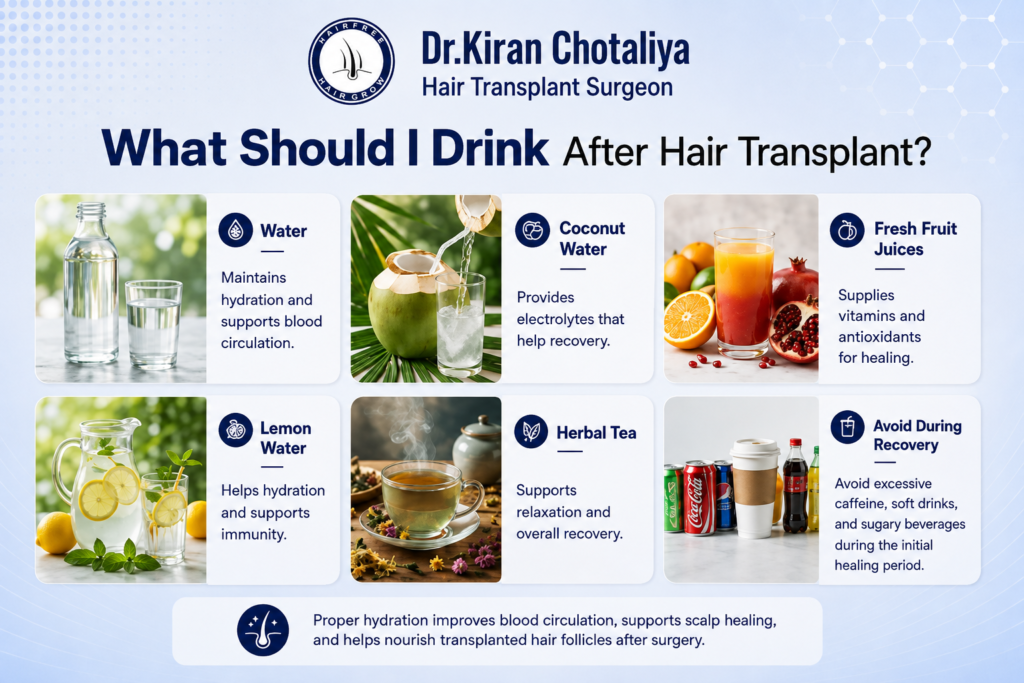
Hydration is extremely important after surgery. Drinking enough fluids helps maintain blood circulation and supports the healing process.
Recommended drinks after hair transplant:
Patients should avoid excessive caffeine, soft drinks, and sugary beverages during the initial recovery period.
Yes, biotin is commonly recommended after hair transplant surgery because it helps support hair strength and growth. Biotin is a vitamin that supports keratin production and may improve hair quality.
Benefits of biotin:
However, supplements should only be taken after consulting a hair transplant specialist.
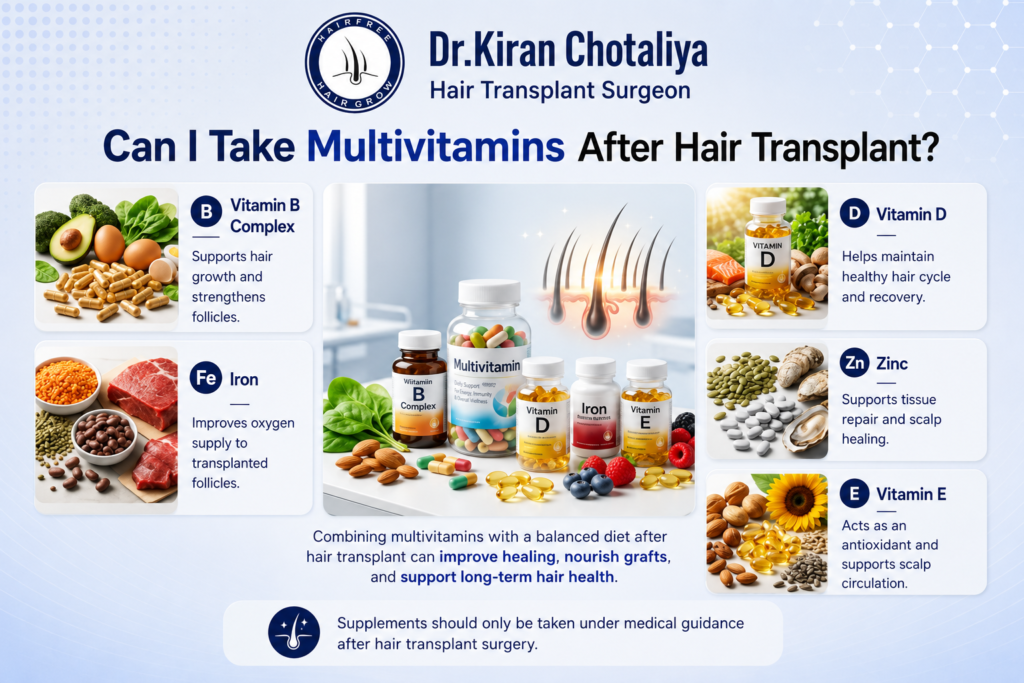
Many doctors recommend multivitamins after surgery to improve recovery and support hair growth. Vitamins and minerals help nourish transplanted follicles and strengthen the immune system.
Important nutrients include:
Combining supplements with a balanced diet after hair transplant can support better healing and long-term hair health.
Most patients can start eating non-vegetarian food within one or two days after surgery unless advised otherwise by their doctor.
Good non-veg options include:
Avoid oily, spicy, or heavily processed non-vegetarian food during the first few days after surgery.
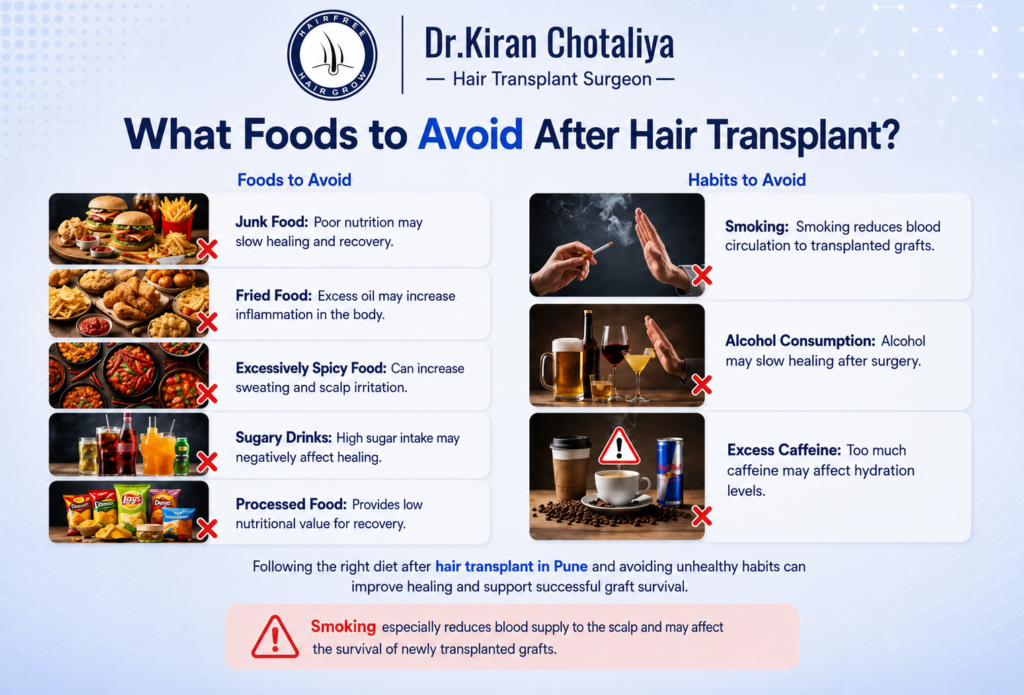
Certain foods and habits may slow down healing or affect graft survival after a hair transplant.
Foods to Avoid
Habits to Avoid
Smoking reduces blood circulation to the scalp and may affect the survival of newly transplanted grafts. Following the right diet after hair transplant in Pune and avoiding unhealthy habits can improve overall results.
Following the right diet after hair transplant is essential for faster recovery and healthy hair growth. A balanced diet rich in protein, vitamins, fruits, vegetables, and fluids helps nourish transplanted grafts and supports healing.
Patients should also avoid smoking, alcohol, junk food, and unhealthy eating habits during the recovery period. Along with proper aftercare and medical guidance, maintaining healthy nutrition can improve hair transplant success and help achieve natural-looking results.
The best diet includes protein-rich foods, fruits, vegetables, nuts, seeds, and plenty of water to support healing and hair growth.
A healthy diet should be maintained for at least 3–6 months after surgery for better recovery and hair growth.
You should limit caffeine intake during the first few days because excessive caffeine may affect hydration.
Yes, protein is important because hair follicles are mainly made of protein called keratin.
Avoid junk food, spicy food, fried food, alcohol, smoking, and sugary drinks because they may slow healing.
Yes, coconut water helps maintain hydration and supports recovery after surgery.
Yes, maintaining the right diet after hair transplant in Pune can improve recovery and support healthy hair growth results.
Dr. Kiran Chotaliya is a leading hair transplant surgeon in Pune, specializing in advanced techniques like FUE and FUT for natural, lasting results. His expertise and patient-centered care ensure successful hair restoration with exceptional outcomes.
© 2026 Developed & Handle By Dr. Kiran Chotaliya Clinic Team
© 2026 Developed & Handle By Dr. Kiran Chotaliya Clinic Team