
FUE Hair Transplant in PCMC: Hair loss can affect confidence, appearance, and everyday quality of life. With modern hair-restoration techniques, FUE hair transplant in PCMC has become a preferred option for people dealing with thinning hair, a receding hairline, or pattern baldness.
Despite its popularity, many people hesitate because of misconceptions about pain, visible scars, recovery time, and whether the results will look natural. Separating FUE hair transplant myths and facts is essential before deciding on treatment.
A consultation with an experienced hair transplant specialist in PCMC can help you understand whether FUE is suitable for your hair-loss pattern, donor area, and long-term goals
FUE, or Follicular Unit Extraction, is a minimally invasive hair-restoration technique. Individual healthy hair follicles are extracted from the donor area—usually the back or sides of the scalp—and implanted into areas affected by hair loss.
Unlike older strip-based methods, FUE does not require removing a strip of scalp. The procedure focuses on precise follicle extraction, careful graft handling, and natural hairline restoration.
A qualified specialist evaluates several factors before recommending treatment:
This personalized planning helps create natural-looking, long-lasting results
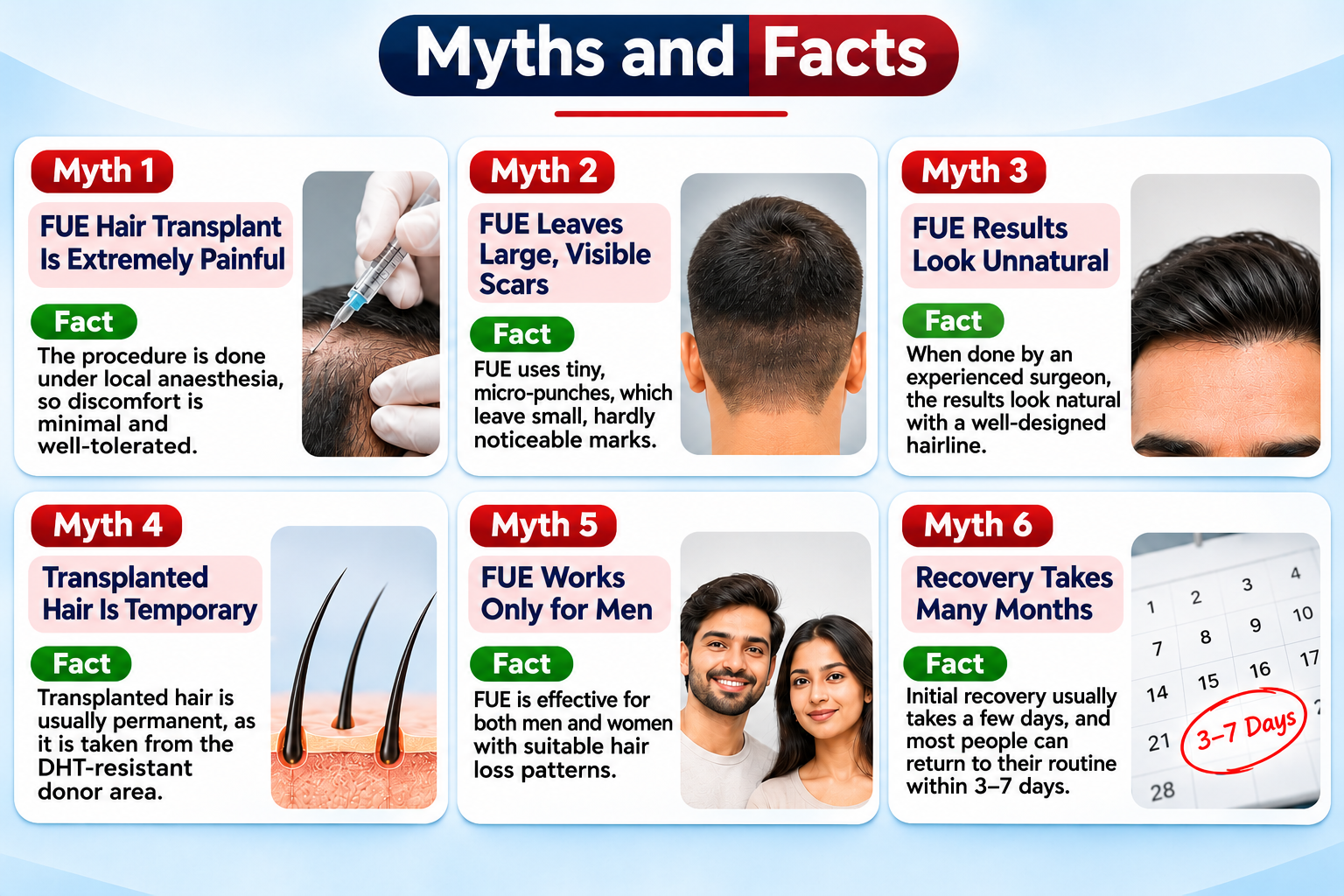
Myth 1: FUE Hair Transplant Is Extremely Painful
Fact: Modern FUE hair transplant treatment in PCMC is performed under local anaesthesia, so most patients remain comfortable throughout the procedure. Some sensation may be felt during anaesthetic injections, but the extraction and implantation stages are generally well tolerated.
Advanced techniques, careful graft handling, and proper aftercare help reduce discomfort and support a smoother treatment experience.
Myth 2: FUE Leaves Large, Visible Scars
Fact: One of the main advantages of FUE is that it does not create a long linear scar. Instead, individual follicles are removed using very small punches, leaving tiny dot-like marks that usually become difficult to notice once healed.
This makes FUE a suitable choice for people who prefer:
Myth 3: FUE Results Look Unnatural
Fact: Natural results depend far more on planning and surgical skill than on the FUE technique itself. Important factors include hairline design, graft placement, hair angle, direction, spacing, and density management.
An experienced FUE hair transplant specialist in PCMC designs the hairline according to the patient’s age, facial structure, hair characteristics, and pattern of hair loss. When these details are planned properly, transplanted hair can blend naturally with existing hair.
Myth 4: Transplanted Hair Is Temporary
Fact: FUE provides long-lasting results because transplanted follicles are generally taken from the donor area, which is genetically more resistant to hair loss. Once these follicles establish a blood supply and begin growing, they can continue to grow naturally for many years.
However, existing non-transplanted hair may still be affected by progressive hair loss. Your doctor may recommend supportive treatments or maintenance plans to protect the surrounding hair.
Myth 5: FUE Works Only for Men
Fact: FUE is not limited to male pattern baldness. Women with certain types of hair thinning or localised hair loss may also be suitable candidates, depending on donor availability and the underlying cause of hair loss.
FUE hair transplant may help with:
Women considering treatment can learn more about female hair transplant options, while men with progressive baldness can explore dedicated male hair transplant solutions
A detailed consultation is necessary to confirm whether FUE is the right option.
Myth 6: Recovery Takes Many Months
Fact: FUE generally has a quicker recovery than traditional hair-transplant methods. Many patients can resume light, normal activities within a few days, although strenuous exercise, direct sun exposure, and certain hair-care activities may need to be avoided temporarily.
To support existing hair and reduce further thinning, your specialist may recommend non-surgical options such as GFC hair treatment, depending on your scalp condition and hair-loss stage
Hair growth itself is gradual. A typical FUE hair transplant timeline includes:
Yes, FUE hair transplant is considered safe when performed by a qualified and experienced specialist in a sterile clinical environment. As with any surgical procedure, safety depends on proper patient selection, medical evaluation, hygienic technique, advanced equipment, and clear aftercare instructions.
Before treatment, patients should discuss their medical history, current medications, expectations, hair-loss pattern, and donor-area condition with a qualified hair transplant specialist in PCMC.
Minimal scarring: Individual follicle extraction avoids a linear scar.
Patients with extensive hair loss may also be evaluated for BIG FUE hair transplant, an advanced large-session approach designed to restore greater density in a single sitting.

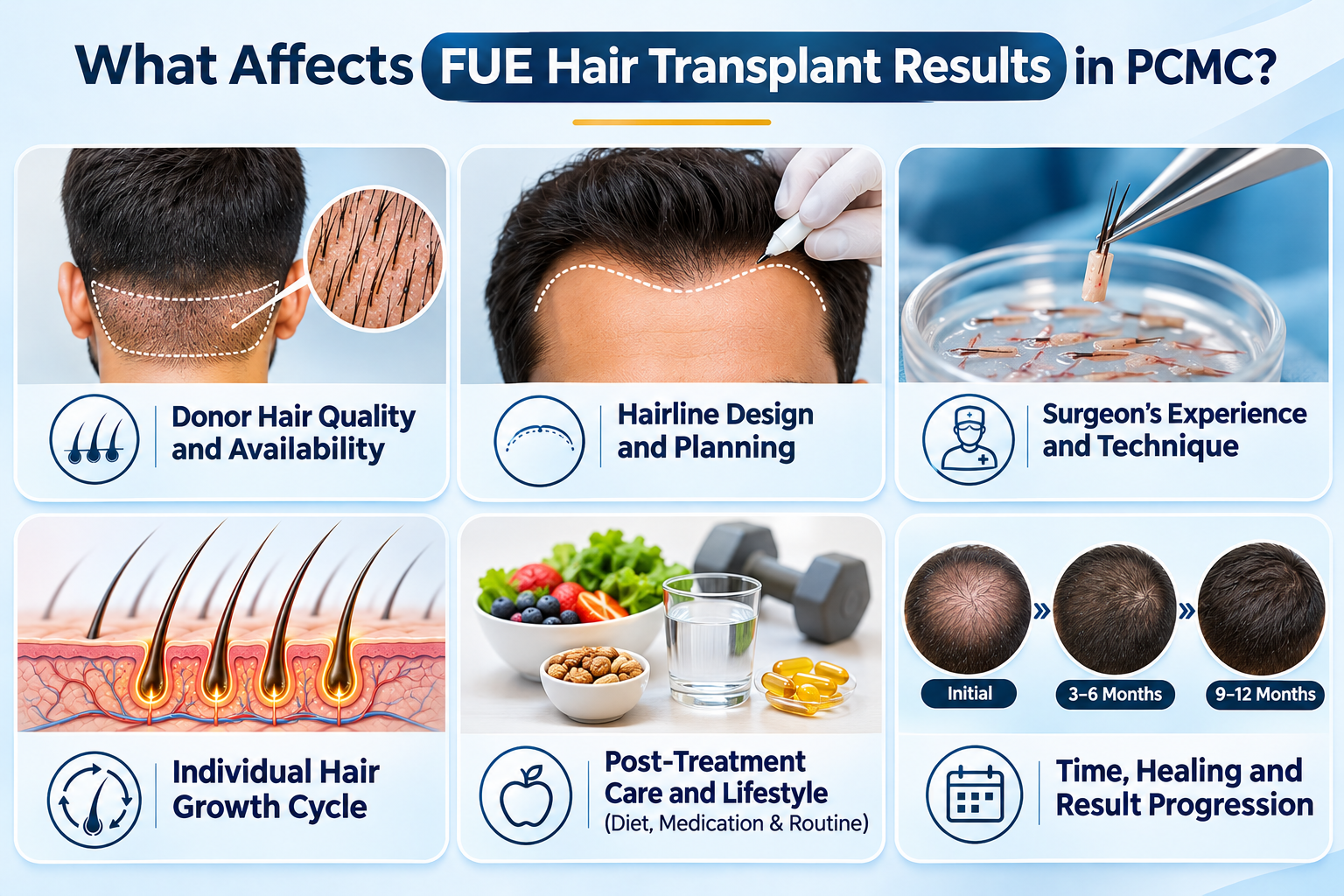
Successful outcomes depend on more than the procedure itself. Key factors include:
Before selecting a clinic, consider the following:
Doctor’s qualifications, training, and experience
Before-and-after photos of similar cases
The clinic’s treatment approach and technology
Patient reviews and testimonials
Transparency about graft numbers, costs, and expected outcomes
Quality of the consultation and aftercare plan
A detailed consultation should result in a personalised hair-restoration plan rather than a one-size-fits-all recommendation. For patients looking for an experienced hair transplant surgeon offering advanced FUE and BIG FUE techniques, you can consult Dr. Kiran Chotaliya in Pune for a detailed scalp assessment and customised treatment plan.
Follow your doctor’s FUE aftercare instructions carefully.
Avoid touching, scratching, or rubbing the transplanted area.
Protect the scalp from direct sunlight, dust, and pollution.
Avoid smoking and alcohol during the recovery period.
Eat a healthy diet and stay hydrated to support hair growth.
Use prescribed medications or supportive treatments to maintain existing hair.
Attend all follow-up appointments to monitor healing and FUE hair transplant results.
Many concerns about FUE hair transplant come from outdated information and common misconceptions. Modern FUE hair transplant treatment in PCMC offers a minimally invasive approach that can create natural-looking, long-lasting results when planned and performed correctly.
Understanding FUE hair transplant myths and facts helps patients make informed decisions about their hair-restoration journey. Consulting the best FUE hair transplant specialist in PCMC can help you assess your hair-loss condition and choose the most appropriate treatment approach.
Yes, transplanted hair is generally permanent because it is taken from hair-loss-resistant donor areas. Dr. Kiran in Pune can assess your donor area and suggest the right plan.
Yes, when performed by an experienced FUE hair transplant specialist in Pune, it is a safe and effective hair restoration option.
It usually takes 4–8 hours, depending on the number of grafts and case complexity. Dr. Kiran in Pune can confirm the expected duration after evaluation.
Initial growth begins in 3–4 months, with visible improvement around 6–9 months. Final results usually appear within 12–18 months.
Yes, women with adequate donor hair and suitable hair-loss patterns can undergo FUE. A consultation with Dr. Kiran can confirm whether it is right for you.
Dr. Kiran Chotaliya is a leading hair transplant surgeon in Pune, specializing in advanced techniques like FUE and FUT for natural, lasting results. His expertise and patient-centered care ensure successful hair restoration with exceptional outcomes.
© 2026 Developed & Handle By Dr. Kiran Chotaliya Clinic Team
© 2026 Developed & Handle By Dr. Kiran Chotaliya Clinic Team