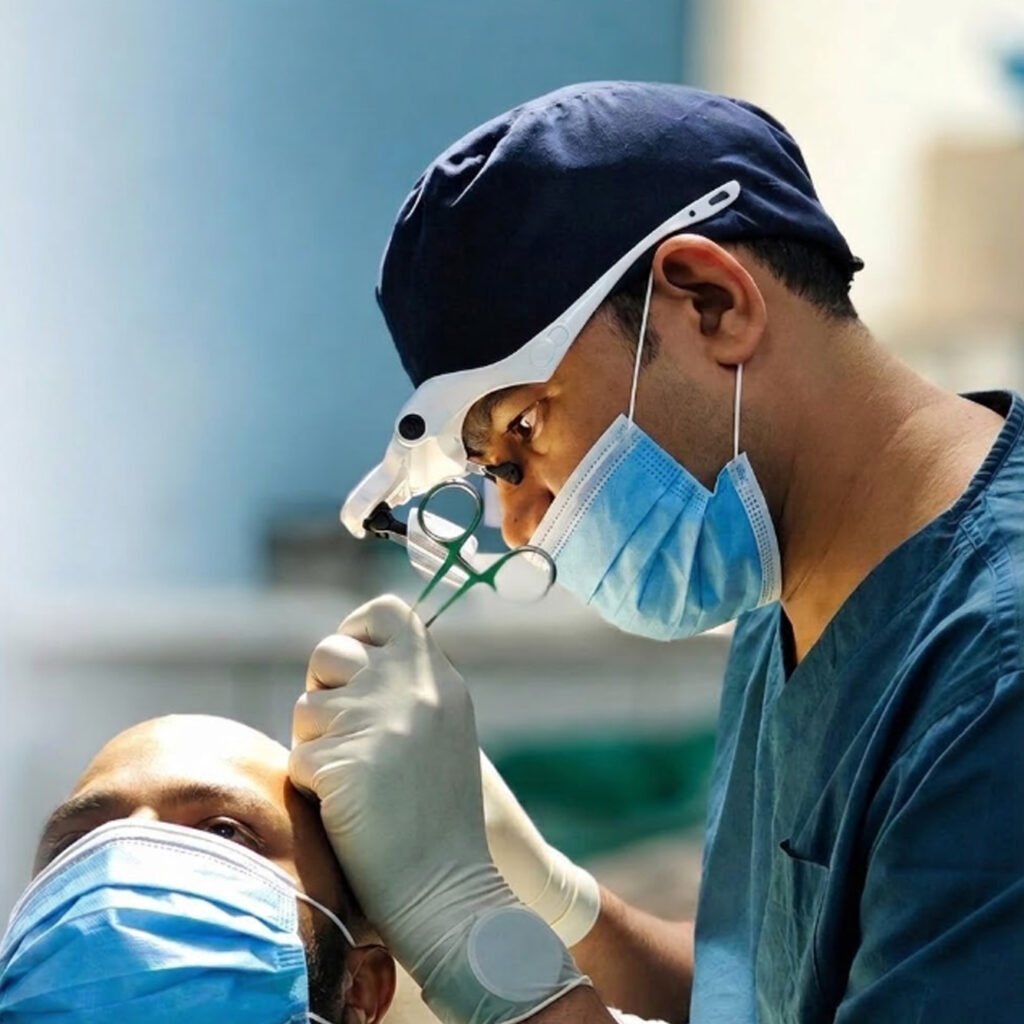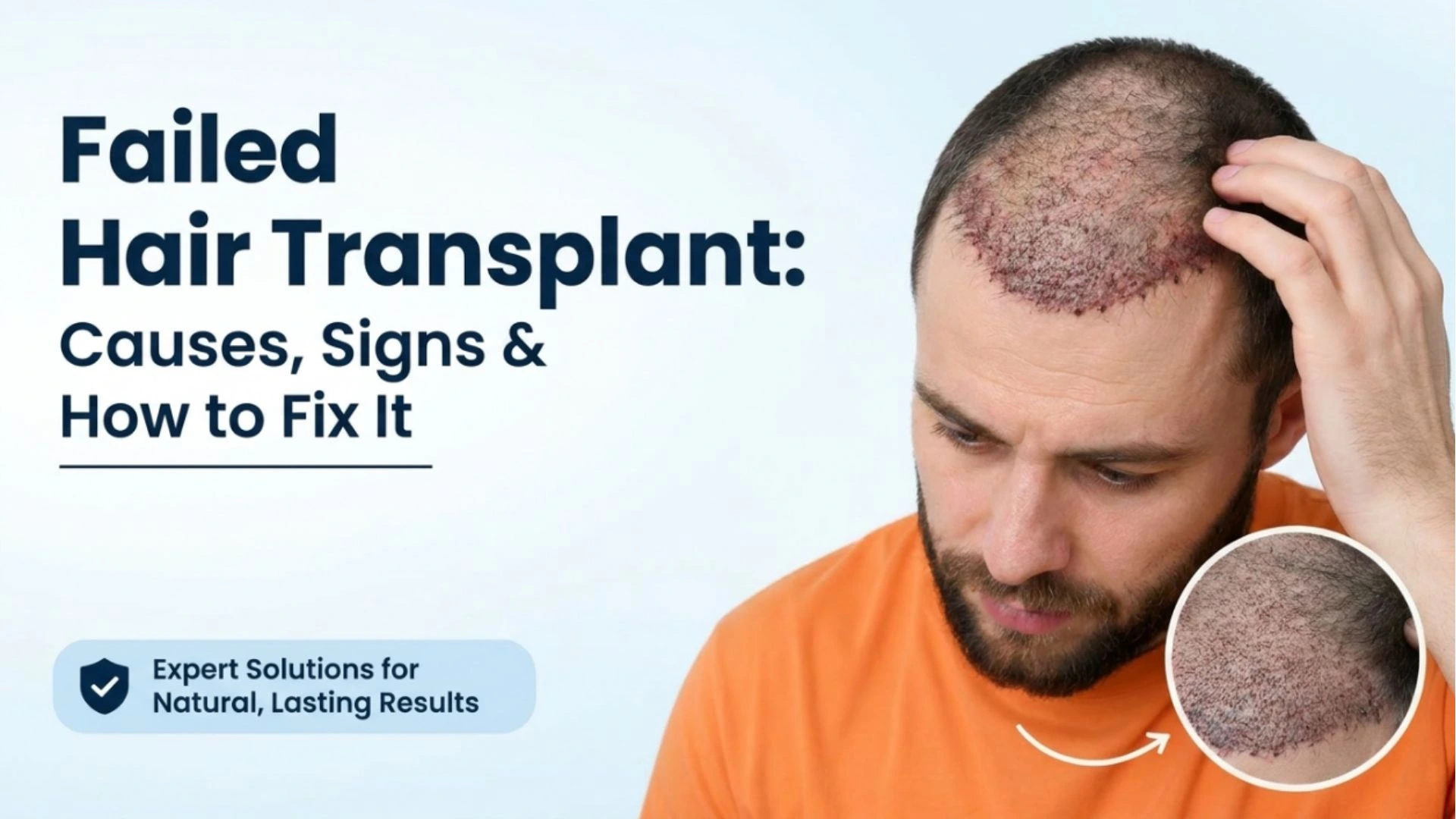
Hair transplant in PCMC : Hair loss can feel worrying, especially when you begin noticing more hair on your pillow, in the shower, or around your hairline. For many men, the first question is simple: can medicines restore hair, or is a hair transplant in PCMC the better solution?
The honest answer is that both treatments serve different purposes. Medications can slow hair fall and improve hair growth in the early stages, while a hair transplant restores hair in areas where follicles have permanently stopped working. The right option depends on your hair-loss stage, donor-hair availability, expectations, and long-term goals.
Hair loss can happen due to genetics, hormonal changes, stress, nutritional deficiencies, certain medical conditions, and some medicines. In men, the most common cause is androgenetic alopecia, also known as male pattern baldness. This condition gradually shrinks hair follicles, leading to thinner hair, a receding hairline, and visible bald patches over time.
Early diagnosis is important. Hair-loss treatments usually give better results when started before extensive baldness develops, because medicines work best on follicles that are still active
Hair loss medications are non-surgical treatments designed to reduce hair fall, strengthen existing hair, and encourage regrowth in suitable candidates. They are often the first line of treatment for early male pattern baldness.
Minoxidil
Minoxidil is a topical solution or foam applied directly to the scalp. It helps improve blood flow around hair follicles, stimulates growth, and can increase hair thickness in people who respond well to treatment.
Minoxidil usually requires consistent use for several months before visible improvement appears. If treatment is stopped, the benefits may gradually reduce and hair fall can return.
Finasteride
Finasteride is an oral prescription medicine that reduces DHT, a hormone linked to male pattern baldness. By lowering DHT levels, it can slow further hair loss and support regrowth in some men.
Finasteride should always be taken under the guidance of a qualified dermatologist or hair transplant surgeon, as it may not be suitable for everyone and requires proper monitoring.
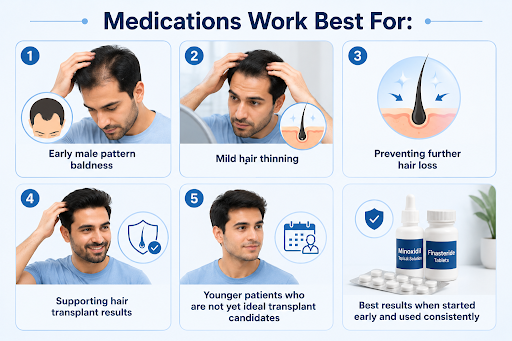
Medications are usually recommended for:
Medicines work best when hair follicles are still active. They cannot reliably regrow hair in completely bald areas where follicles have permanently disappeared.
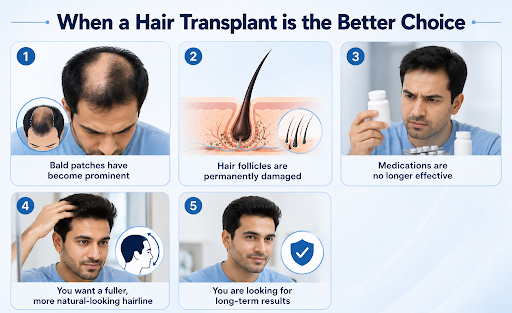
A hair transplant treatment in PCMC may be the better option when:
A transplant is especially useful for restoring the hairline, temples, crown, and other areas where medicines alone cannot recreate adequate density.
Yes. You may be able to avoid or delay surgery if your hair loss is in the early stage and your follicles are still responsive to treatment.
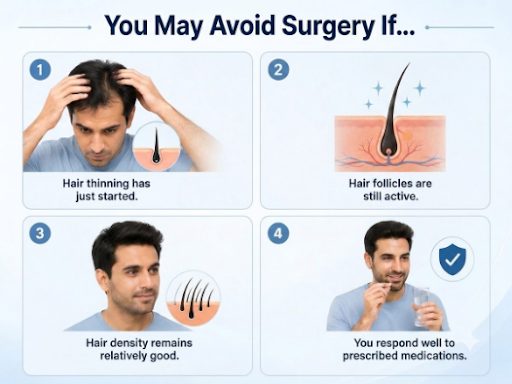
You may avoid surgery if:
However, surgery may become the better option when:
Yes. In many cases, combining treatments gives the best outcome. A hair transplant restores lost hair, while medicines help protect the remaining native hair from further thinning.
A personalised treatment plan may include:
This combined approach can help maximise hair density and maintain results over the long term.
Hair restoration is not a one-size-fits-all treatment. Two people with similar visible hair loss may need completely different plans depending on their age, rate of hair loss, donor supply, scalp condition, family history, and expectations.
An experienced hair transplant surgeon in PCMC will examine your scalp, assess your donor area, identify your hair-loss pattern, and recommend whether medication alone, hair transplant surgery, or a combination approach is right for you.
Dr. Kiran Chotaliya provides personalised hair restoration solutions based on each patient’s level of hair loss, donor hair quality, scalp condition, and long-term goals.
Patients choose Dr. Kiran Chotaliya for:
Choosing between medications and a hair transplant depends on the severity of your hair loss, your expectations, and your long-term goals. Medicines can effectively slow hair loss and improve hair growth in the early stages, while a hair transplant in PCMC provides a long-lasting solution for advanced baldness.
If you are unsure which option is right for you, consulting an experienced specialist is the best first step. A professional assessment can help determine whether medication alone is enough or whether hair transplant treatment in PCMC will give better long-term results.
A hair transplant offers permanent restoration of lost hair, while medications help slow hair loss and stimulate existing follicles. The right option depends on your stage of hair loss
No. Medications cannot regrow hair in areas where follicles are permanently lost. In such cases, a hair transplant is the most effective solution.
If you have significant bald patches, a receding hairline, or medications are no longer effective, you may benefit from consulting a hair transplant surgeon in Pune
Yes. Transplanted hair follicles are generally resistant to hair loss and continue to grow naturally for many years
Yes. Dermatologists often recommend medications after surgery to help preserve existing hair and support long-term results.
Dr. Kiran Chotaliya is a leading hair transplant surgeon in Pune, specializing in advanced techniques like FUE and FUT for natural, lasting results. His expertise and patient-centered care ensure successful hair restoration with exceptional outcomes.
© 2026 Developed & Handle By Dr. Kiran Chotaliya Clinic Team
© 2026 Developed & Handle By Dr. Kiran Chotaliya Clinic Team