
Experiencing hair thinning or shedding can be an emotionally taxing experience. However, unlike male pattern baldness, female hair loss is often highly treatable once the root cause is accurately identified.
If you are exploring options for women hair loss treatment in Pune, the first and most critical step is moving away from trial-and-error home remedies and seeking a proper clinical diagnosis. In this guide, Dr. Kiran Chotaliya hair specialist Hairfree and Hairgrow clinic breaks down how female hair loss is diagnosed, common causes, and the advanced treatments available to restore your hair’s volume and your confidence.
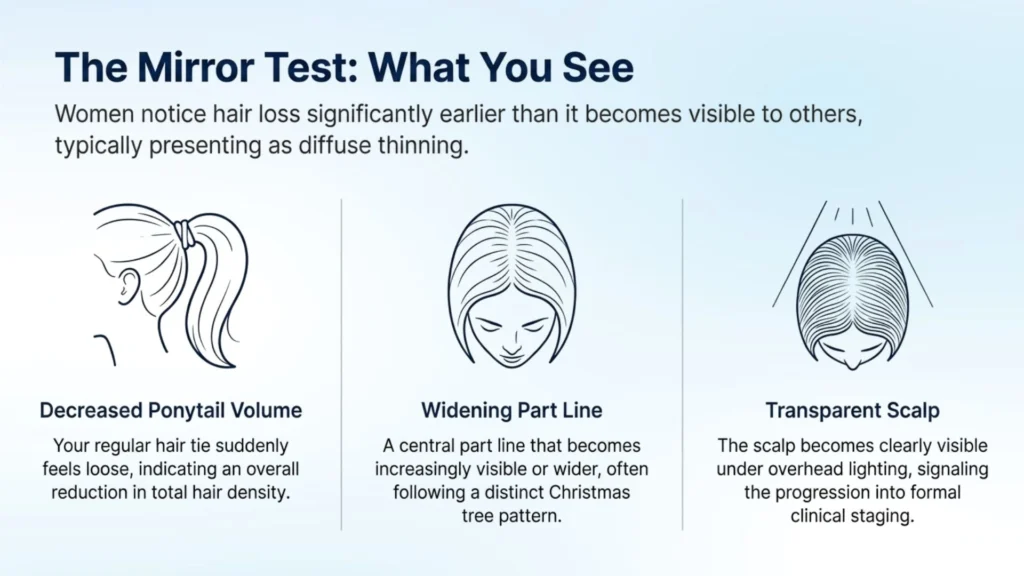
Women often notice hair loss significantly earlier than it becomes visible to others. Because female hair loss typically presents as diffuse thinning rather than a receding hairline, you can perform a few simple self-checks at home:
Decreased Ponytail Volume:
If your regular hair tie suddenly feels loose, you are likely experiencing an overall reduction in hair density.
Widening Part Line:
A central part line that becomes increasingly visible or wider—sometimes following a “Christmas tree” pattern—is a hallmark sign of Female Pattern Hair Loss (FPHL).
Transparent Scalp:
If your scalp is clearly visible under overhead lighting, you may be progressing through the stages of the Ludwig Scale, which clinicians use to measure female hair loss.
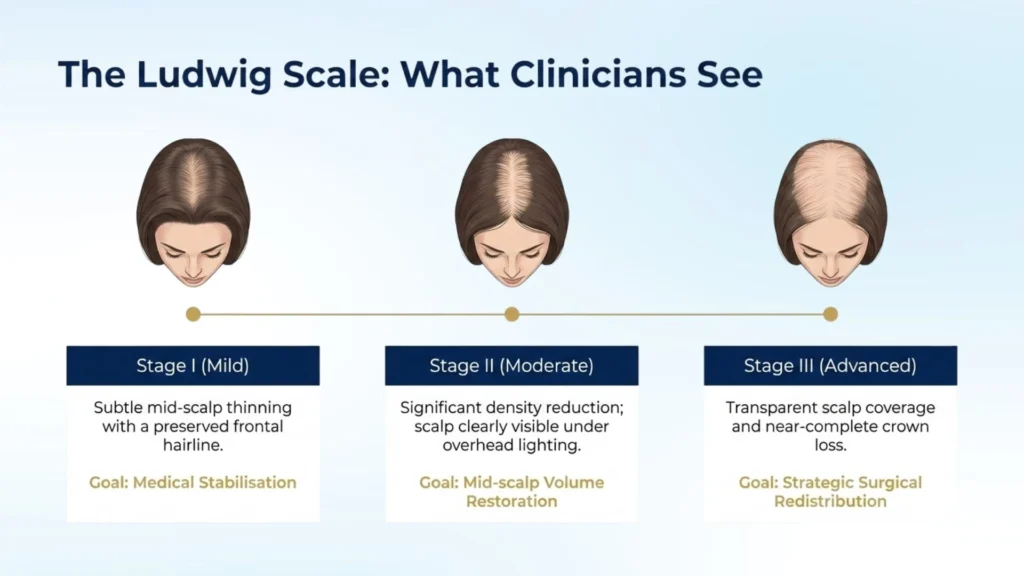
To accurately diagnose and treat female pattern hair loss, specialists utilize the Ludwig Scale, which classifies the progression into three clinical stages.
Effective women hair loss treatment in Pune relies on a rigorous diagnostic workup to rule out systemic or reversible causes before any advanced procedures are considered. Women are disproportionately affected by nutritional and hormonal imbalances that can trigger or worsen shedding.
To accurately identify the causes of female hair loss, your specialist will likely recommend a comprehensive blood panel, which should include:
Once the cause is diagnosed, a customized treatment plan can be developed. Depending on the severity of the thinning, treatments range from medical management to advanced surgical restoration.
For early-stage thinning (Ludwig Grade I) or temporary shedding (Telogen Effluvium), medical stabilization is the primary goal.
For women facing permanent hair thinning, widening part lines, or traction alopecia, a Female Hair Transplant in Pune is a safe, effective, and permanent solution.
Hair loss in women can occur due to multiple factors such as hormonal imbalances, nutritional deficiencies, stress, genetics, or underlying medical conditions. Proper diagnosis is essential for identifying the exact cause and selecting the most effective women hair loss treatment in Pune. From medical therapies and PRP to advanced female hair transplant in Pune, modern treatment options can effectively restore hair density, improve scalp health, and boost confidence.
If you are noticing continuous thinning, widening of the part line, or excessive shedding, consulting an experienced hair specialist early can help prevent further progression. With personalized care and advanced techniques, hair loss treatment for women in Pune can provide safe, natural-looking, and long-lasting results.
The cost varies depending on individual factors, such as the extent of hair loss, the number of grafts required for your desired density, and the technique used (like FUE or FUT). Pricing is highly customized based on your specific treatment plan.
Yes. The transplanted hair is genetically resistant to DHT (the hormone that causes hair miniaturization) and will continue to grow naturally for a lifetime.
Ideal candidates are women with permanent thinning, widening part lines, or receding hairlines (Ludwig Grade I–III) who possess a healthy and stable donor hair area at the back of the scalp.
Hair restoration is a biological investment. Initial fine hair growth begins within 3 to 4 months. Full, mature results with improved density and a natural appearance are typically visible between 8 to 12 months post-procedure.
When performed by experienced specialists, the procedure is safe, minimally invasive, and involves minimal downtime. It is done under local anesthesia, ensuring minimal discomfort and a quick recovery.

A free experts curated guide that clears all your doubts
about Costs, Results, Pain, Recovery and much more.
Dr. Kiran Chotaliya is a leading hair transplant surgeon in Pune, specializing in advanced techniques like FUE and FUT for natural, lasting results. His expertise and patient-centered care ensure successful hair restoration with exceptional outcomes.
© 2026 Developed & Handle By Dr. Kiran Chotaliya Clinic Team
© 2026 Developed & Handle By Dr. Kiran Chotaliya Clinic Team