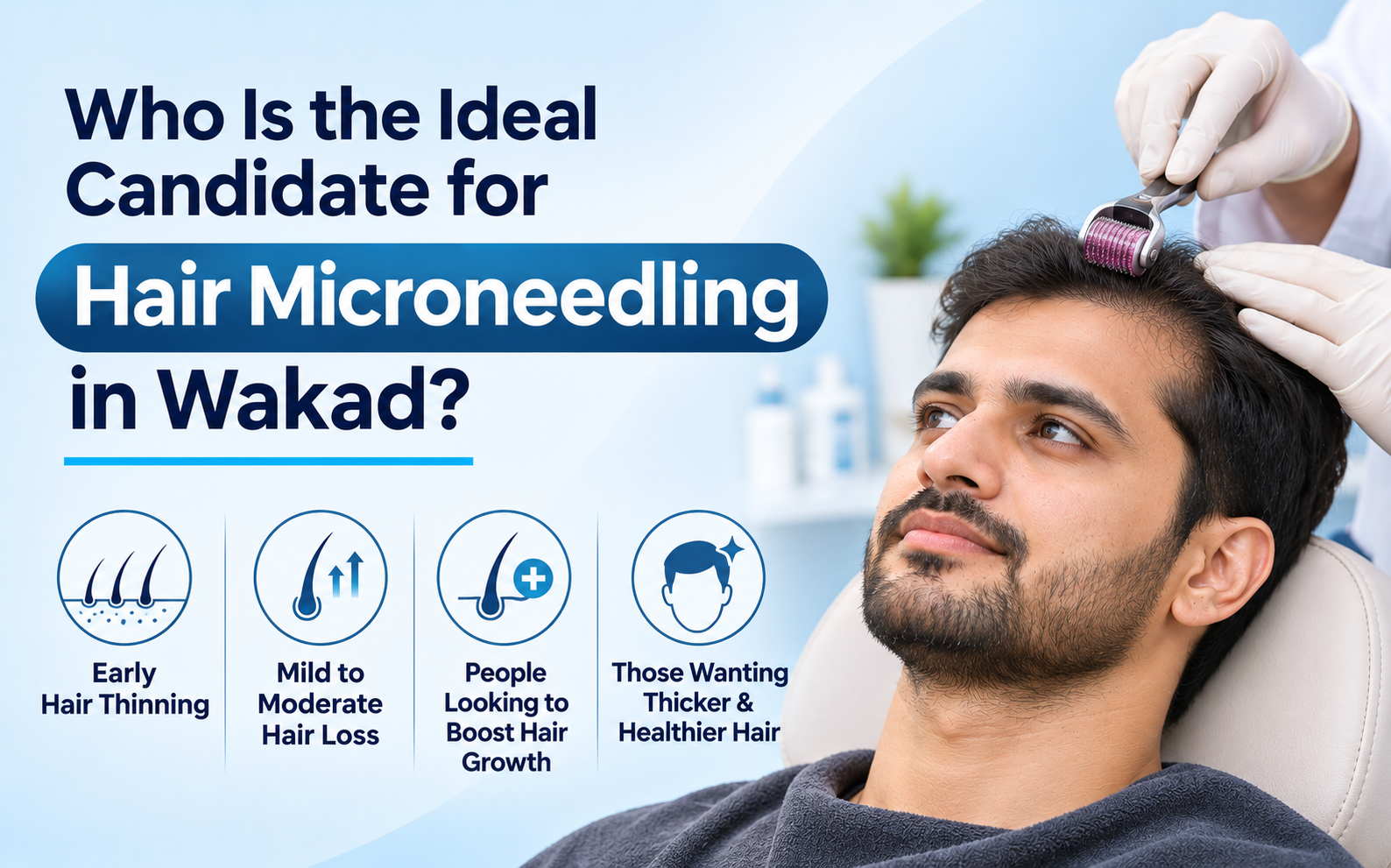
Microneedling hair loss in Wakad: Hair thinning and hair loss can affect confidence and daily life. Some people notice increased shedding, while others experience a widening part, reduced hair volume, or a receding hairline. The right approach depends on the cause of hair loss, the condition of the scalp, and how much healthy hair is still present.
Hair Microneedling in Wakad is a non-surgical treatment option that may be considered for selected people with early to moderate hair thinning. It uses a specialised device with fine, sterile needles to create controlled microchannels in the scalp. This process is intended to activate the skin’s natural repair response and may support hair-restoration treatment plans.
However, microneedling is not suitable for every type of hair loss, and it does not create new hair follicles. This guide explains who may be a suitable candidate, when another treatment may be more appropriate, and what to discuss with a qualified dermatologist before starting.
If you are considering microneedling treatment in Pune, a consultation with a qualified dermatologist can help determine whether the procedure is suitable for your skin. Treatment settings, session frequency, and aftercare should be customised according to individual skin needs.
Hair microneedling is a minimally invasive procedure performed with a professional device designed for scalp treatment. Fine needles create tiny, controlled punctures in the skin. The resulting healing response may involve the release of growth factors and changes in the local scalp environment.
Depending on the individual’s diagnosis, a specialist may consider microneedling alongside other treatments, such as topical medication or platelet-rich plasma (PRP). The combination, needle depth, session interval, and number of sessions should be decided by the treating professional. Treatment outcomes vary, and microneedling should not be presented as a guaranteed cure for hair loss.
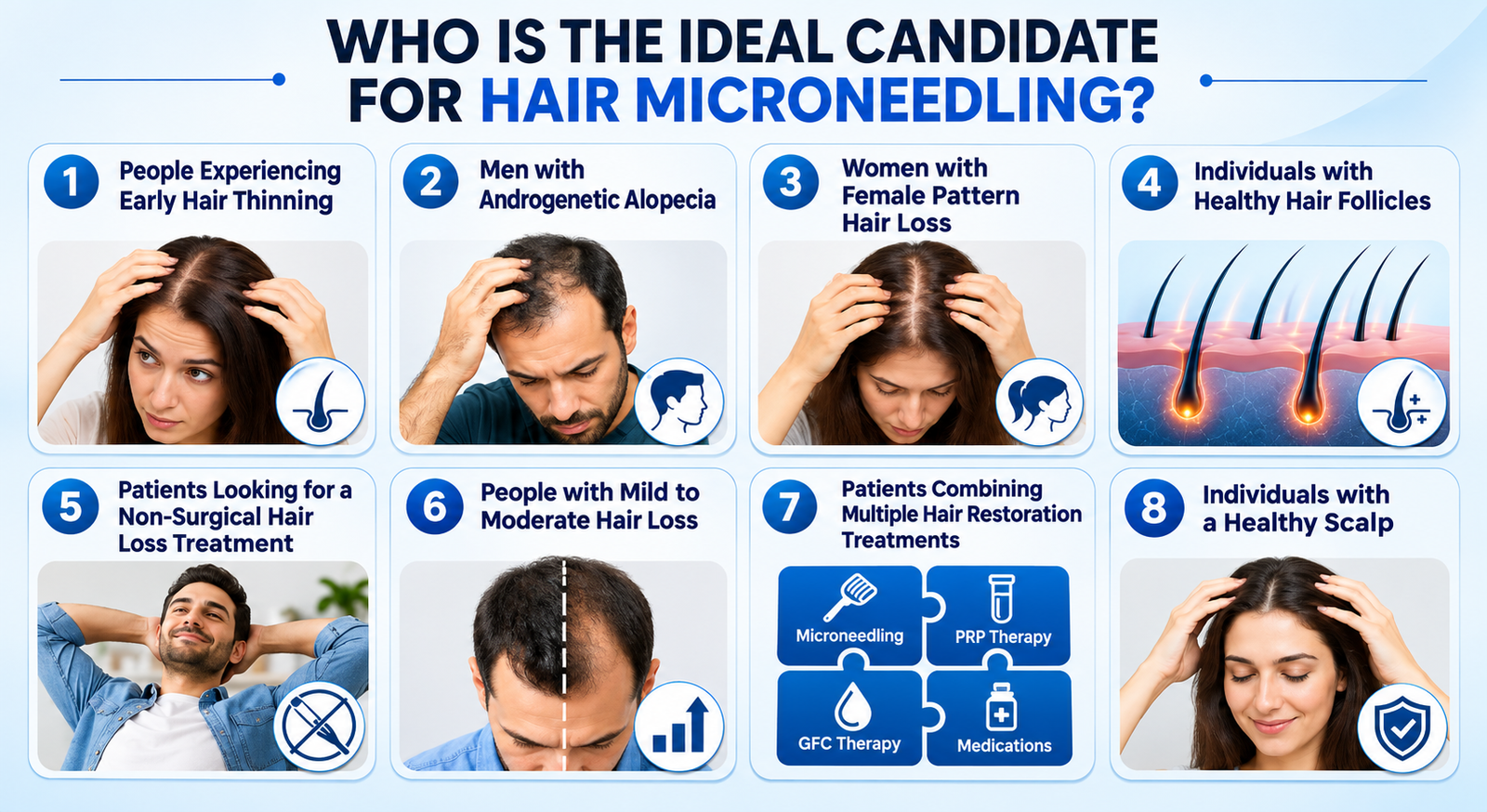
Suitability is based on the cause and pattern of hair loss, scalp health, medical history, and the condition of existing follicles. The following groups may be considered after a clinical assessment.
1. People with Early Hair Thinning
People who have recently noticed increased shedding, reduced hair volume, a widening hair part, or mild thinning may be suitable for assessment. Early evaluation is useful because it can help identify the cause before hair loss becomes more advanced. Microneedling may be considered when the follicles are still present and the diagnosis supports its use.
2. Men with Male-Pattern Hair Loss
Male-pattern hair loss can cause gradual recession at the temples, thinning around the crown, or both. Men with mild to moderate thinning and existing miniaturised follicles may be assessed for microneedling as one part of a broader treatment plan. The specialist should also discuss established medical options and whether they are appropriate.
3. Women with Certain Types of Hair Thinning
Women may experience diffuse thinning, a widening central part, or reduced overall density. Microneedling may be considered in selected cases, but hair loss after pregnancy, hormonal changes, nutritional deficiencies, thyroid conditions, and other causes need different evaluations and management. Identifying the underlying cause is an important first step.
4. Individuals Who Still Have Active Hair Follicles
Microneedling is intended to support existing follicles; it cannot generate brand-new follicles in areas where they are no longer active. People with thinning hair and visible miniaturised hairs may be more suitable for assessment than those with long-standing, completely bald areas. A scalp examination can help the doctor assess follicle activity and discuss realistic expectations.
5. People Looking for a Non-Surgical Treatment Option
Some people prefer to explore non-surgical options before considering a hair transplant. Professional microneedling does not involve transplant surgery or stitches, although it is still a procedure that requires proper technique, hygiene, and aftercare. It may be considered when the person understands its limitations and is comfortable with a treatment plan that may involve multiple visits.
6. People with a Healthy Scalp
A scalp without active infection, open wounds, or significant inflammation is generally a better starting point for a procedure. Conditions such as active psoriasis, eczema, severe irritation, or infection may require treatment first. The doctor should review any scalp symptoms before deciding whether microneedling can be performed safely.
7. People Able to Follow the Recommended Treatment Plan
Hair changes take time, and treatment response differs from person to person. A suitable candidate should be willing to attend follow-up appointments, follow the clinic’s aftercare instructions, and continue any other treatment recommended for the underlying cause. One session should not be expected to deliver a complete result.
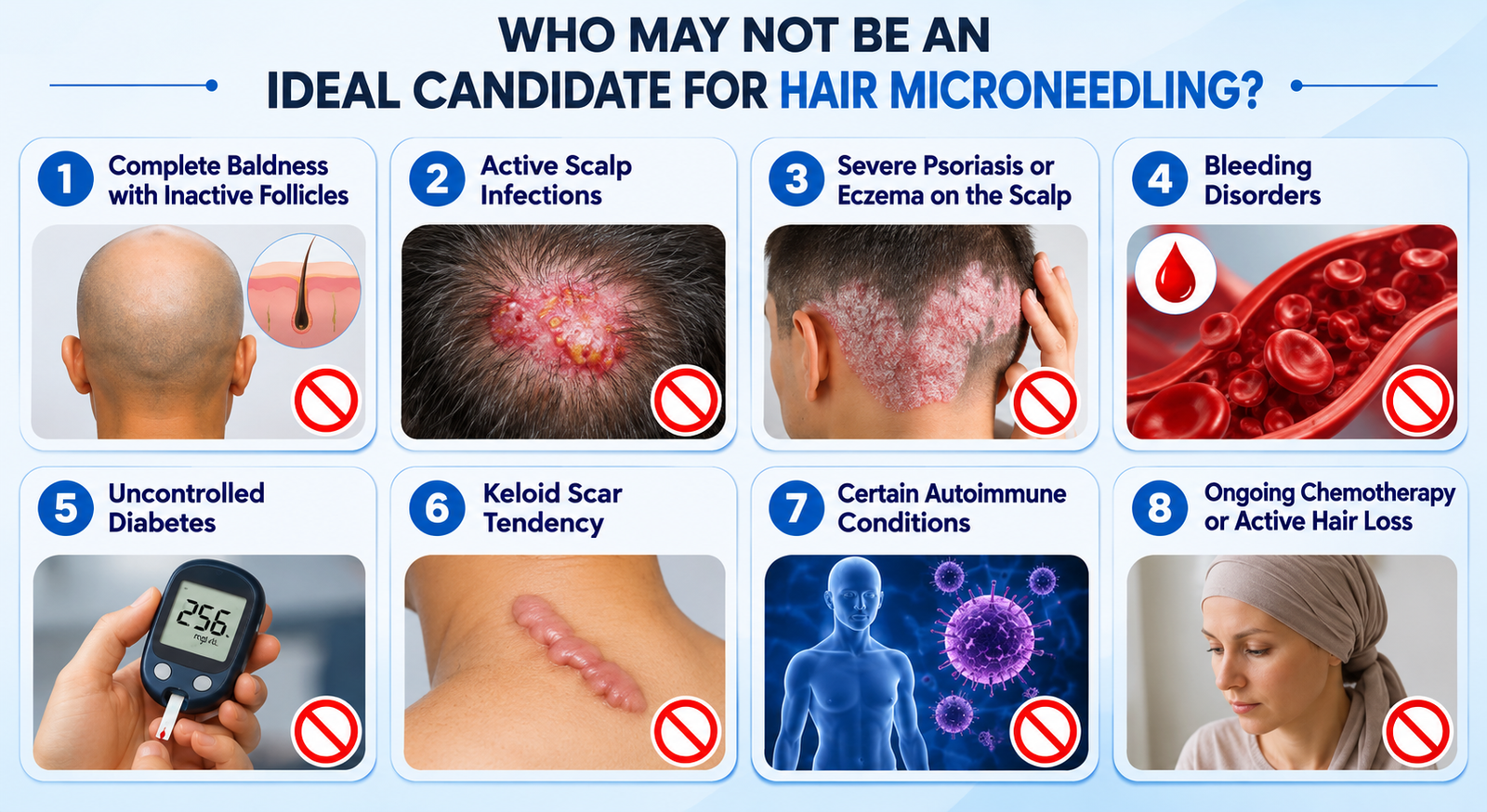
Microneedling may be unsuitable or need to be delayed for people with an active scalp infection, open wounds, significant scalp inflammation, certain bleeding or clotting disorders, a history of abnormal scarring, or medical conditions that may affect healing. Some medicines and health conditions can also change the risks.
People undergoing chemotherapy or experiencing hair loss related to a serious medical condition should seek guidance from their treating specialist before considering a scalp procedure. This list is not exhaustive. Do not start treatment without disclosing your medical history, medicines, allergies, and any scalp condition to the clinician.
A derma roller is a handheld tool with small needles that is moved across the scalp. Professional microneedling may use a specialised device that allows the practitioner to control the treatment settings more precisely. The devices, needle lengths, hygiene standards, and techniques are not necessarily equivalent.
Using a derma roller at home without appropriate training can cause skin injury, irritation, or infection, particularly if the device is shared, inadequately cleaned, or used with excessive pressure. Ask a qualified professional whether microneedling is suitable and whether any at-home scalp care is appropriate for your condition.
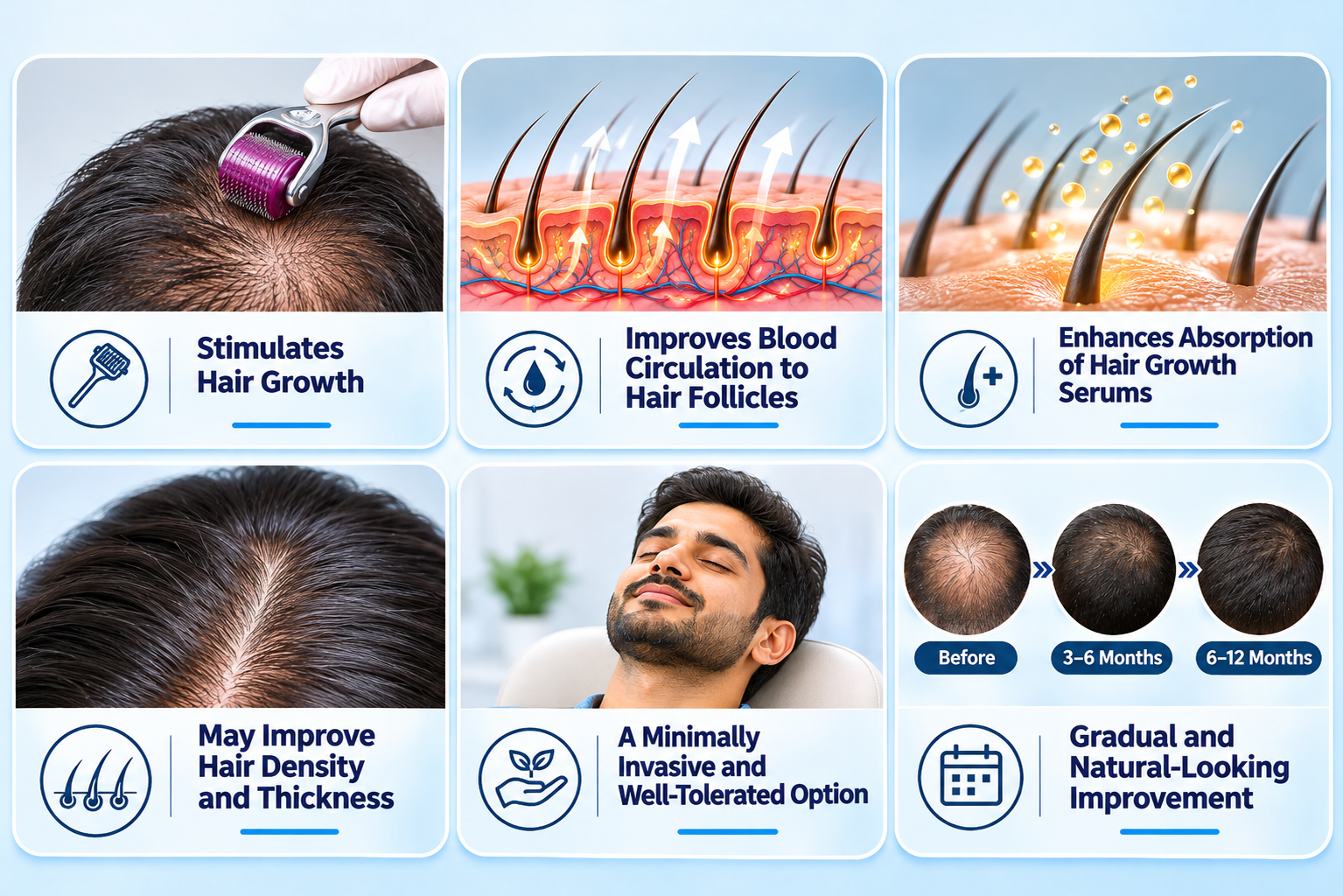
For selected patients, microneedling may be used as part of a hair-restoration plan. Potential benefits being investigated or reported include:
Results are not guaranteed. The degree of improvement depends on the diagnosis, severity and duration of hair loss, follicle condition, treatment protocol, and individual response.
In selected cases, a dermatologist may recommend combining microneedling with platelet-rich plasma (PRP). PRP is prepared from a sample of the patient’s own blood and contains a concentrated amount of platelets. Whether this combination is appropriate depends on the person’s hair-loss pattern, medical history, and treatment goals.
Other options, such as medication, GFC, or other therapies, may be discussed when clinically appropriate. More treatments do not automatically mean better results; the plan should be based on an assessment rather than a fixed package.
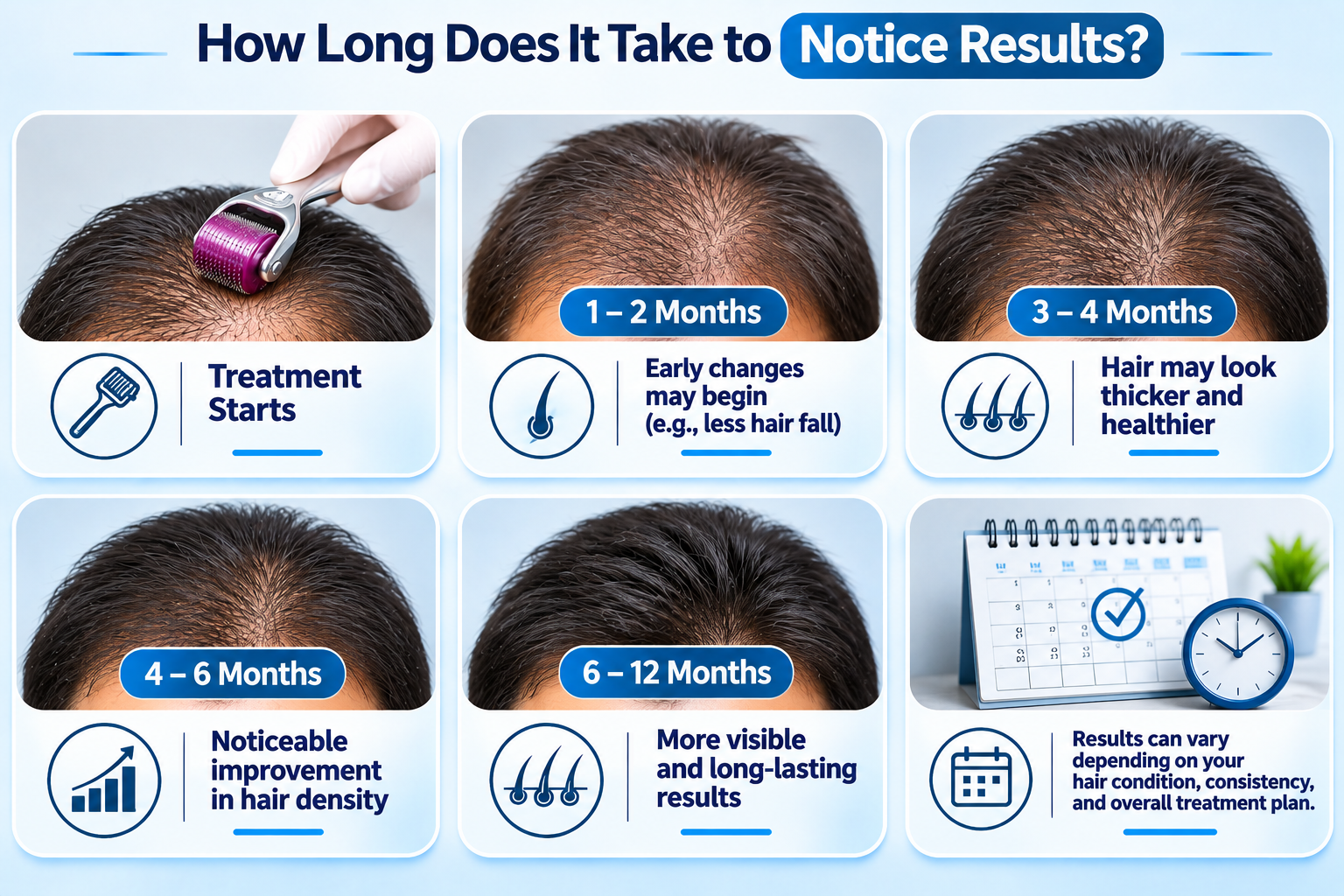
Hair growth is gradual, so visible changes should not be expected immediately. Any improvement may take several months and varies with the cause of hair loss and the overall treatment plan. Some people may not respond. Your clinician should explain what changes to monitor and when the treatment plan will be reviewed.
Choosing a qualified hair-restoration professional is important when considering a scalp procedure. Dr. Kiran Chotaliya can assess the pattern of hair loss, scalp condition, medical history, and treatment goals before discussing suitable options.
People in Wakad considering microneedling can seek a consultation to understand whether this procedure, medication, PRP, another treatment, or a combination may be appropriate. The recommended approach should be individualised, with clear guidance on expected benefits, limitations, risks, and follow-up.
Dr. Kiran Chotaliya Microneedling Treatment is a personalised dermatological approach for improving skin texture and addressing concerns such as acne scars, enlarged pores, uneven skin texture and mild signs of skin ageing. Microneedling uses fine needles to create controlled micro-injuries in the skin, which can stimulate the skin’s natural healing response and support collagen production.
Hair microneedling may be considered for selected men and women with early to moderate hair thinning, particularly when existing follicles are still active and the scalp is suitable for treatment. It is not a solution for every cause of hair loss and cannot restore follicles that are no longer active.
If you are considering Hair Microneedling in Wakad, begin with a professional scalp assessment. A correct diagnosis and personalised treatment plan can help you understand whether microneedling is appropriate or whether another hair-loss treatment may better suit your needs.
People with selected forms of early to moderate hair thinning and existing active follicles may be considered. A dermatologist must first identify the cause of hair loss and assess scalp health.
Men and women may be considered, depending on the type of hair loss, scalp condition, medical history, and treatment goals.
Microneedling does not create new hair follicles. It is unlikely to restore hair in areas where follicles are no longer active; other options may need to be discussed.
Incorrect use can cause irritation, injury, or infection. Ask a qualified professional before using a derma roller or any microneedling device on your scalp.
You can contact Dr. Kiran Chotaliya’s clinic to enquire about an assessment and discuss whether microneedling is appropriate for your hair-loss concern.
Dr. Kiran Chotaliya is a leading hair transplant surgeon in Pune, specializing in advanced techniques like FUE and FUT for natural, lasting results. His expertise and patient-centered care ensure successful hair restoration with exceptional outcomes.
© 2026 Developed & Handle By Dr. Kiran Chotaliya Clinic Team
© 2026 Developed & Handle By Dr. Kiran Chotaliya Clinic Team