Hair Loss Treatment for Men in Pune : Hair loss is one of the most common concerns affecting men of all ages. While losing 50–100 hairs a day is a normal part of the hair growth cycle, noticeable thinning, a receding hairline, or bald patches may indicate an underlying condition known as alopecia. The good news is that modern hair restoration techniques offer several effective solutions, and choosing the best hair loss treatment for men in Pune begins with identifying the exact cause of your hair loss.
As a hair transplant surgeon, I often meet patients who believe every type of hair loss requires surgery. In reality, the right treatment depends on the type of alopecia, the stage of hair loss, and the health of your existing hair follicles. Some men respond well to medical therapies, while others benefit from regenerative treatments or hair transplantation.
What Is Alopecia?
Alopecia is the medical term for hair loss from the scalp or other parts of the body. It can occur due to genetics, hormonal changes, autoimmune disorders, nutritional deficiencies, stress, infections, or certain medical conditions.
Hair grows in a continuous cycle consisting of the growth phase (anagen), transition phase (catagen), and resting phase (telogen). When this cycle is disrupted, hair may become thinner, shed excessively, or stop growing altogether.
Understanding the reason behind hair loss is the first step toward selecting the most appropriate hair loss treatment for men in Pune.
Quick Summary
Hair loss treatment for men in Pune starts with identifying the underlying cause of hair loss. Factors such as genetics, hormonal changes, stress, nutritional deficiencies, and medical conditions can all contribute to hair thinning. Once the cause is diagnosed, treatments such as medications, PRP, regenerative therapies, or hair transplantation can be recommended to restore healthy, natural-looking hair growth.
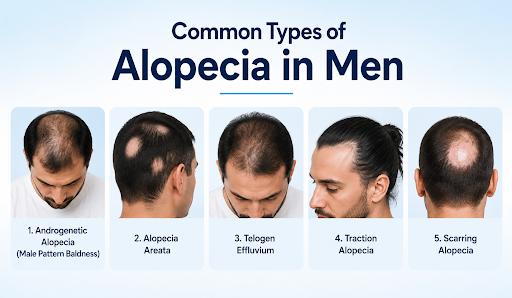
1. Androgenetic Alopecia (Male Pattern Baldness)
The most common form of hair loss in men is androgenetic alopecia, commonly known as male pattern baldness. It is an inherited condition influenced by the hormone dihydrotestosterone (DHT), which gradually causes hair follicles to shrink.
Common signs include:
A receding hairline
Thinning at the crown
Reduced hair density
Progressive baldness over time
Men experiencing these symptoms often seek Male Pattern Baldness Treatment in Pune to slow hair loss and restore hair density.
2. Alopecia Areata
This autoimmune condition causes the immune system to mistakenly attack healthy hair follicles, leading to sudden round or oval bald patches. Depending on its severity, hair may regrow naturally or require medical treatment.
3. Telogen Effluvium
Stress, illness, surgery, rapid weight loss, nutritional deficiencies, or certain medications can trigger excessive hair shedding. This type of hair loss is often temporary and improves once the underlying cause is treated.
4. Traction Alopecia
Repeated pulling of the hair due to tight hairstyles or prolonged mechanical tension may damage hair follicles. Early diagnosis helps prevent permanent hair loss.
5. Scarring Alopecia
Although uncommon, scarring alopecia permanently destroys hair follicles due to inflammation or skin disorders. Early intervention is important to preserve remaining hair.
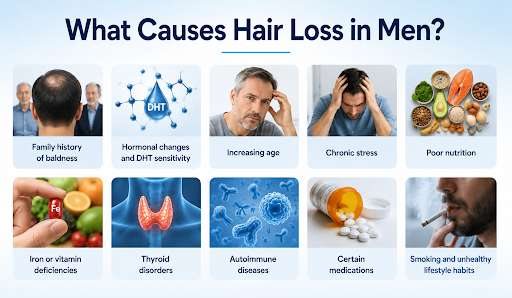
Several factors may contribute to hair loss, including:
Because different causes require different treatments, a professional scalp evaluation is essential before beginning any therapy.
Treatment depends on the cause, severity, and progression of hair loss.
Medical Therapy
For early-stage male pattern baldness, medications may help reduce ongoing hair loss and preserve existing hair follicles. Early treatment usually provides better long-term results.
PRP Therapy
Platelet-Rich Plasma (PRP) therapy uses concentrated platelets obtained from your own blood to stimulate dormant hair follicles. PRP may reduce hair shedding and improve hair thickness in selected patients.
Growth Factor and Regenerative Therapies
Advanced regenerative treatments such as Growth Factor Concentrate (GFC) and exosome therapy may support healthier follicles and improve hair quality when combined with a comprehensive treatment plan.
Lifestyle and Nutritional Management
Correcting nutritional deficiencies, maintaining a balanced diet, managing stress, improving sleep quality, and avoiding smoking can significantly support healthy hair growth and improve treatment outcomes.

Hair transplantation is generally recommended when hair follicles have permanently stopped producing healthy hair and medical treatments alone are unlikely to restore density.
Patients considering Male Hair Transplant in Pune undergo a detailed evaluation of:
The goal is to create natural-looking, long-lasting results while preserving donor hair for future needs.
For men with stable androgenetic alopecia, Hair Transplant for Male Alopecia in Pune can provide permanent restoration using healthy hair follicles taken from the back or sides of the scalp.
Modern techniques such as FUE (Follicular Unit Extraction) and DHI (Direct Hair Implantation) allow precise placement of grafts to recreate a natural hairline while minimizing visible scarring and downtime.
However, not every patient with alopecia is a suitable candidate for transplantation. Active autoimmune hair loss or uncontrolled scalp diseases should first be medically managed before surgery is considered.
Although genetic hair loss cannot always be prevented, early intervention can slow progression and preserve existing hair.
Helpful measures include:
The earlier treatment begins, the greater the chance of maintaining natural hair.
Hair loss can affect confidence and quality of life, but it is also a condition that can often be managed successfully with the right diagnosis and treatment plan. Whether your hair loss is caused by genetics, stress, nutritional deficiencies, or another medical condition, identifying the underlying cause is essential before choosing a treatment.
Today, men have access to a wide range of options, including medications, PRP, regenerative therapies, and advanced hair transplantation. The most effective approach is always individualized, taking into account the type of alopecia, the stage of hair loss, and your long-term hair restoration goals.
If you notice persistent hair thinning, a receding hairline, or increased shedding, consult a qualified hair restoration specialist for a comprehensive evaluation. Early diagnosis and the right treatment plan can help preserve your existing hair and achieve natural, long-lasting results.
The most common cause is androgenetic alopecia, also known as male pattern baldness, which is influenced by genetics and DHT sensitivity.
The best treatment depends on the cause and stage of hair loss. Options include medications, PRP, GFC, exosome therapy, and hair transplantation.
A hair transplant is usually recommended when hair follicles are permanently inactive and there is sufficient donor hair available.
Can PRP stop male pattern baldness?
PRP can help reduce hair shedding and improve hair density in suitable candidates, particularly in the early stages of hair loss.
Medical treatments help control ongoing hair loss, while transplanted hair is generally permanent. Long-term results depend on the underlying condition and continued hair care.
Dr. Kiran Chotaliya is a leading hair transplant surgeon in Pune, specializing in advanced techniques like FUE and FUT for natural, lasting results. His expertise and patient-centered care ensure successful hair restoration with exceptional outcomes.
© 2026 Developed & Handle By Dr. Kiran Chotaliya Clinic Team
© 2026 Developed & Handle By Dr. Kiran Chotaliya Clinic Team